

A clogged dishwasher often stems from a combination of organic buildup, calcification, and mechanical blockages in the filtration or drainage system. Understanding how to systematically clear these blockages and address their chemical causes restores peak performance and prevents foul odours.
Understanding the Dishwasher Drainage Path
To effectively diagnose a drainage failure, you must understand the path water takes to exit the machine. After the wash cycle, water drains through the cylindrical filter assembly at the bottom of the tub. Beneath this filter lies the sump, which houses the non-return valve and the drain pump impeller. The impeller spins rapidly to push water out through the drain hose and into your kitchen sink's waste pipe. A blockage at any point in this sequence—from a clogged mesh filter to debris binding the impeller—will cause water to pool in the bottom of the tub. Identifying the exact point of resistance is crucial before applying mechanical or chemical remedies.
Step-by-Step Clearing of Physical Obstructions
Before addressing chemical deposits, you must eliminate physical blockages. Begin by disconnecting the appliance from its power source to ensure safety. Scoop out any standing water from the tub using a small container and a sponge until the sump area is accessible.
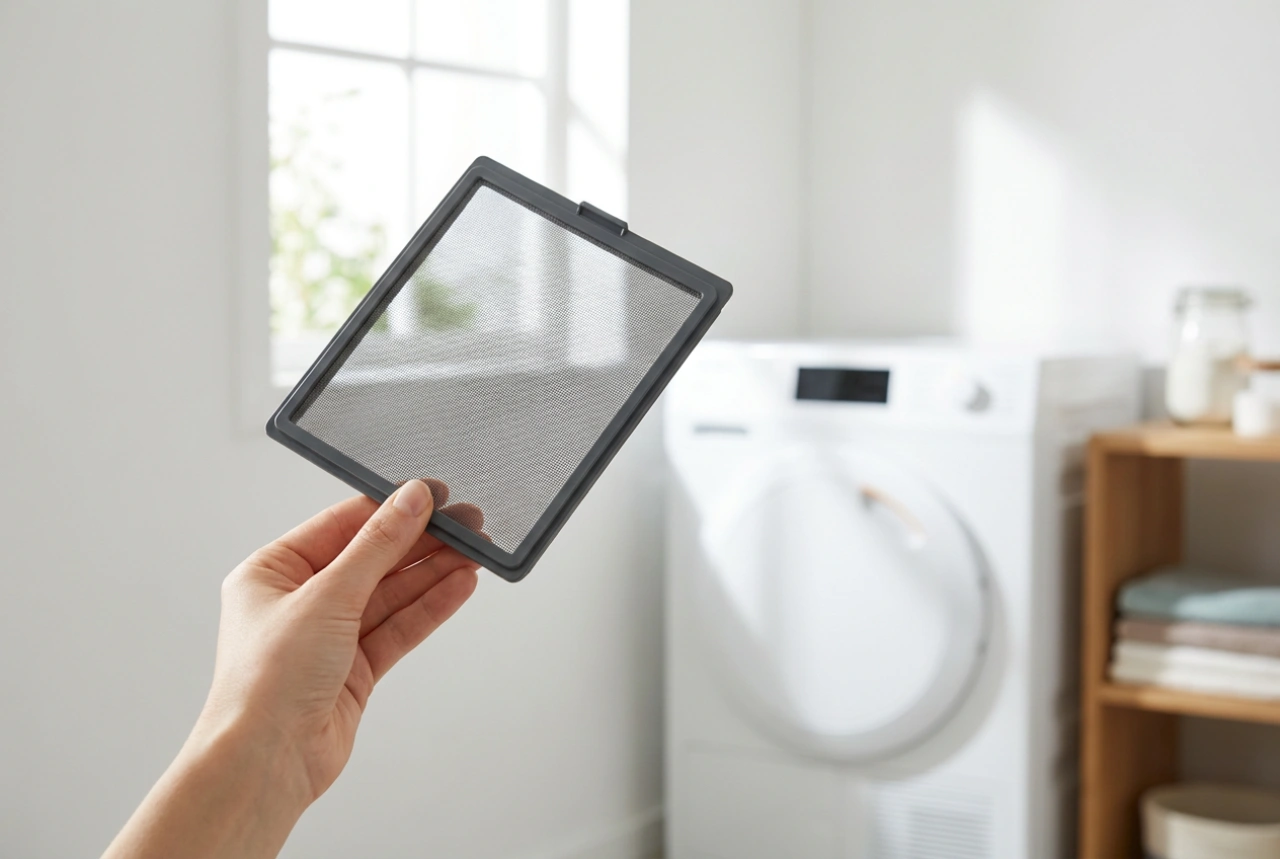
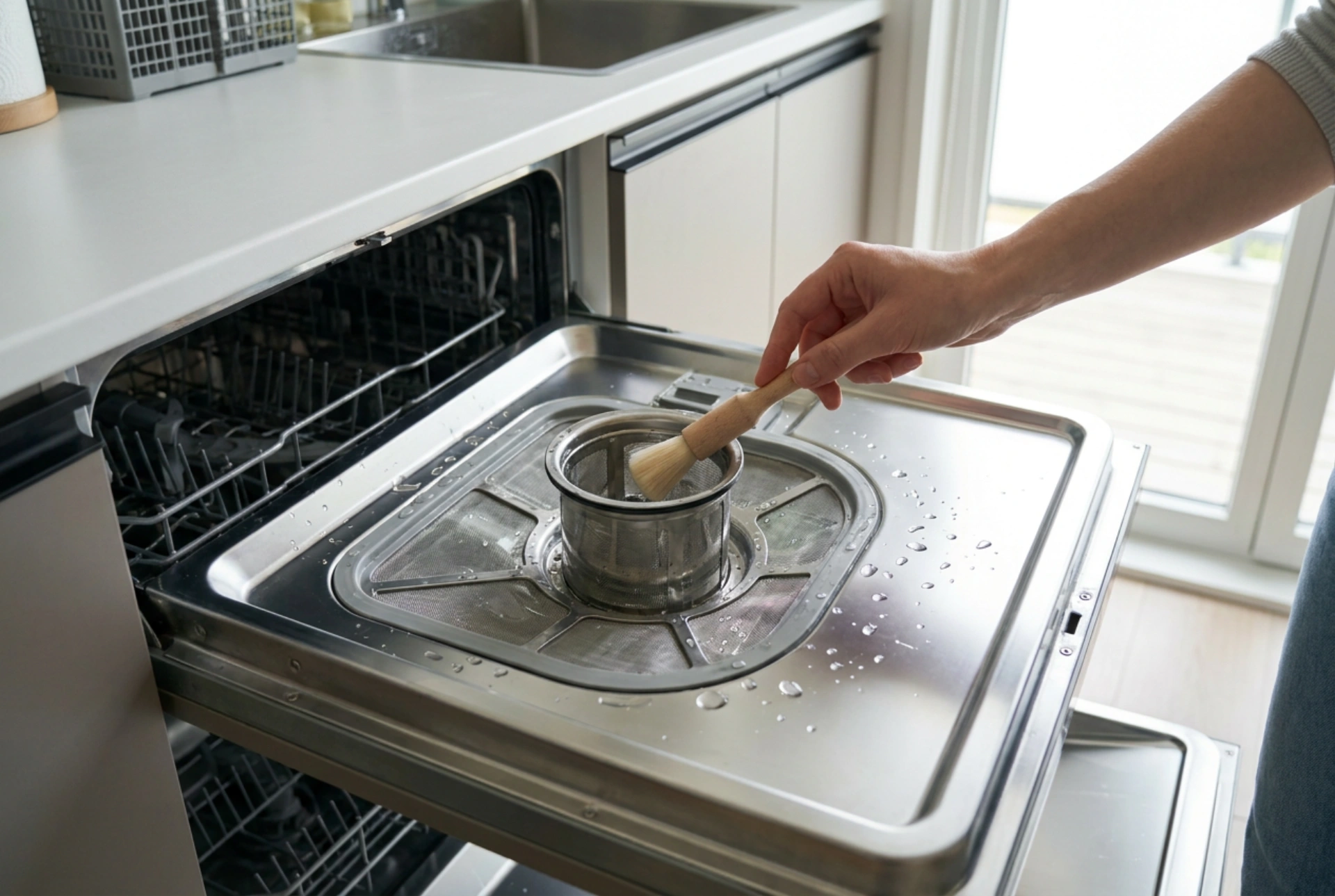
- Remove and clean the filter assembly: Twist the cylindrical filter counterclockwise and lift it out. Separate the coarse mesh from the fine micro-filter. Wash both parts under warm running water using a stiff-bristled brush and a standard degreasing dish soap to dissolve grease deposits.
- Inspect the sump and pump impeller: Look inside the cavity where the filter sits. Many models have a removable plastic cover over the pump impeller, often secured by a single screw or a clip. Remove this cover to expose the impeller blades. Use a flashlight to check for small debris such as fruit seeds, toothpick fragments, or broken glass that can lock the impeller in place. Gently spin the impeller with your finger to ensure it rotates freely.
- Verify the non-return valve: This small rubber flap prevents dirty water from flowing back into the dishwasher. If it is warped, stiff, or obstructed, water will remain in the tub. Ensure it is clean and flexible.
The Chemistry of Grease and Limescale Removal
When physical obstructions are ruled out, the clog is usually caused by a mixture of solidified animal fats, insoluble soap scum, and calcium carbonate (limescale). These substances coat the interior of the drain hose, narrowing its diameter over time.
To dissolve fatty acid deposits, sodium carbonate (washing soda) is highly effective. It raises the pH of the water, initiating a process called saponification, which converts insoluble fats into soluble soap that easily flushes away. Pour half a cup of sodium carbonate directly into the sump, followed by a litre of boiling water. Let it sit for fifteen minutes to break down the grease matrix.
If the blockage is caused by limescale, which binds organic waste into a hard concrete-like substance, an acid is required. Citric acid is ideal for this purpose. It donates hydrogen ions that react with calcium carbonate, converting it into highly soluble calcium citrate and carbon dioxide gas. Run a short, hot cycle with two tablespoons of citric acid powder placed directly in the detergent dispenser to clear the internal lines.
How to Prevent Recurrent Blockages
Preventing future drainage issues relies on maintaining the chemical balance of your wash water and adjusting your loading habits. Never pre-rinse dishes completely; modern dishwasher detergents rely on food enzymes (amylases and proteases) to function. Without food particles to bind to, the active chemistry can cause premature wear on seals or fail to foam correctly. However, you must scrape off all solid debris, bones, and seeds.
Regularly refill the water softener compartment with regeneration salt. This salt replaces calcium and magnesium ions in the ion-exchange resin with sodium ions, preventing limescale from forming in the first place. Finally, run a monthly maintenance cycle at the highest temperature setting (usually 65°C or 70°C) with an empty machine to melt and flush away low-melting-point fats that accumulate in the colder sections of the drain hose.