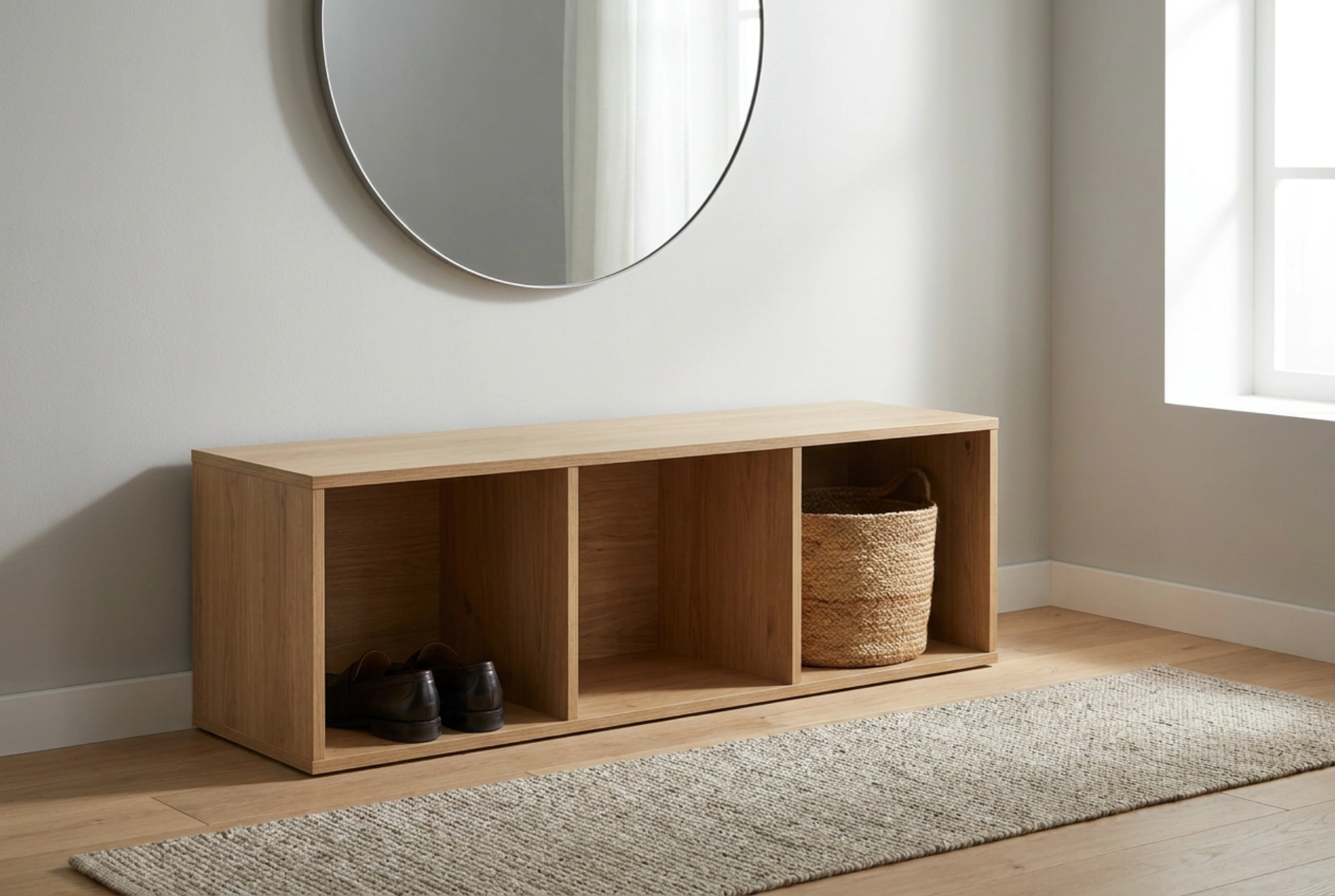


The entryway serves as the primary pressure barrier between the exterior environment and the interior microclimate of a home. Without a dedicated transitional zone, dirt, moisture, and clutter rapidly migrate inward, disrupting the flow of the household. An entryway bench with integrated storage acts as a functional anchor, combining a physical seat with structured compartments to immediately arrest the flow of outdoor elements and organize your daily essentials.
The Thermodynamics of Shoe Storage and Moisture Control
Storing footwear in enclosed, unventilated spaces creates an ideal environment for microbial proliferation. Damp shoes carry moisture from rain, dew, or perspiration. If sealed in airtight cabinets, this trapped water cannot evaporate, leading to hydrolysis of synthetic materials, degradation of natural leather, and the growth of mold and mildew. A properly designed storage bench addresses this through basic physics and convection.
Slatted shelves or open-front cubbies within a bench facilitate continuous air circulation around the entire shoe, accelerating the evaporation process. When selecting or positioning a bench, ensure there is a gap of at least two centimeters between the back of the unit and the wall to encourage air movement. For wet seasons, integrating a non-porous, removable tray made of heavy-duty polypropylene at the base of the bench catches run-off water, road salt, and dirt. This prevents moisture from seeping into the wooden structure of the bench or ruining delicate flooring underneath.
Ergonomics and the Mechanics of Footwear Preservation
The mechanical act of putting on and removing footwear exerts significant stress on both the human body and the shoe itself. Forcing feet into shoes while standing often crushes the heel counter—the rigid internal structure that maintains the shoe's shape and supports the heel. Over time, this mechanical deformation ruins the fit, weakens the material, and shortens the lifespan of the shoe.
A bench set at an ergonomic height of 40 to 45 centimeters allows the user to bend at the knees and hips comfortably, stabilizing the body. This seated position encourages the proper use of shoehorns and ensures that shoes are laced or zipped without rushed, awkward movements. Furthermore, storing shoes horizontally on flat, stable shelves prevents the warping and stretching that occurs when footwear is piled carelessly or hung by delicate loops.
Zonal Organization for Small Accessories
Beyond footwear, the entryway must accommodate various small items like keys, gloves, hats, and pet accessories. A storage bench equipped with drawers or pull-out baskets prevents these items from accumulating on flat surfaces, where they invite clutter and dust. Organizing these accessories requires a systematic zonal approach based on material properties and frequency of use.
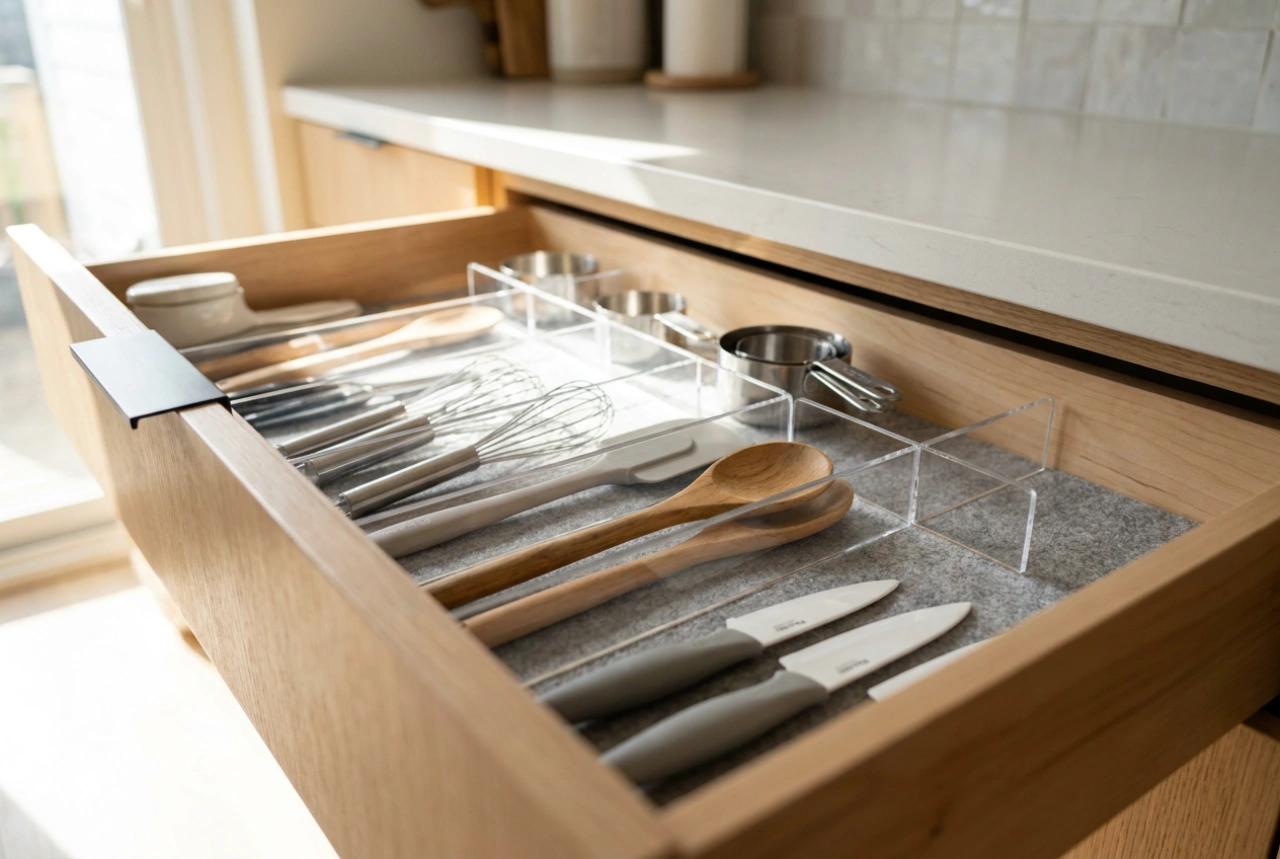
- High-Frequency Zone: Dedicate the top drawers or easily accessible baskets to daily essentials like keys and wallets. Line these compartments with wool felt or silicone mats to dampen sound and prevent hard metal objects from scratching wood or laminate surfaces.
- Seasonal Textile Zone: Store soft items such as scarves, beanies, and gloves in breathable woven baskets. This allows residual moisture from outdoor humidity to evaporate safely, preventing musty odors.
- Utility Zone: Reserve the lowest or deepest compartments for items used less frequently, such as shoe care kits, brush sets, and extra pet leashes.
Material Durability and Maintenance in High-Traffic Zones
Because the entryway is exposed to abrasive grit, water, and varying temperatures, the materials of your storage bench must be resilient. Hardwoods like oak or beech, treated with water-resistant oils or polyurethanes, offer excellent structural integrity and longevity. If using laminated particleboard, ensure all edges are sealed with high-quality ABS edging to prevent moisture from penetrating the core and causing swelling.
For the seating surface, dense upholstery fabrics with high Rub Count ratings or wipeable materials like treated leather and heavy-duty synthetic blends perform best. Regular maintenance involves wiping down the shelves with a damp microfiber cloth to remove abrasive dust particles that can wear down protective finishes, ensuring the bench remains both functional and aesthetically pleasing for years to come.