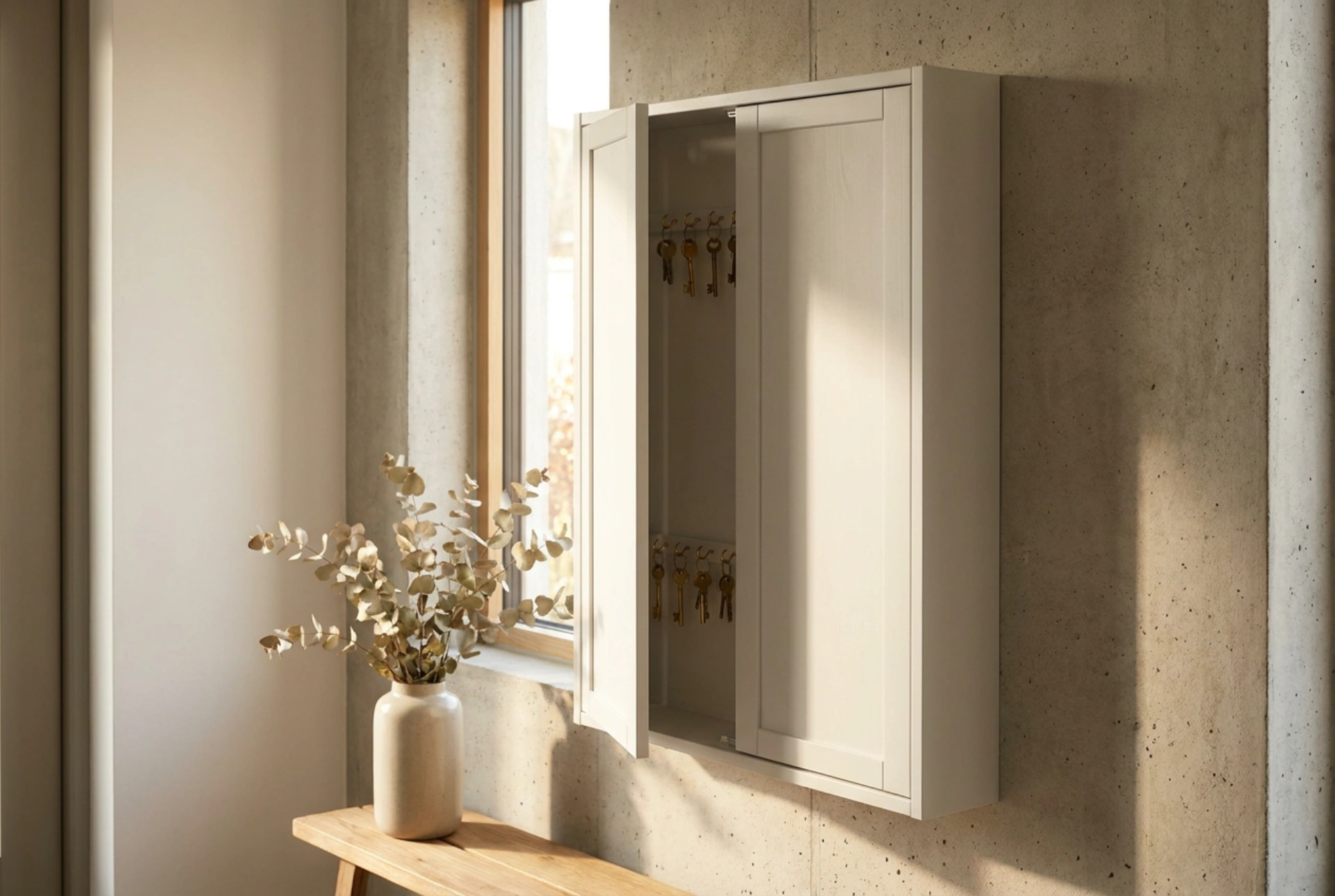


An entryway key cabinet is more than a simple storage box; it is a critical transitional hub that regulates the flow of small daily objects and prevents surface clutter. Choosing a matte white wall-mounted design allows the unit to blend seamlessly into modern walls while providing a dedicated space for systematic key management.
The Physics of Entryway Order: Reducing Visual Noise
Every home requires a transition zone where external items are categorised and stored before they penetrate deeper into the living spaces. Keys, which carry high utility but low aesthetic value when scattered, often disrupt the visual harmony of horizontal surfaces such as console tables or kitchen worktops. Incorporating a dedicated wall cabinet creates a defined physical boundary for these items.
The choice of a white finish is rooted in spatial psychology and architectural design. In most modern interiors, walls are painted in off-white, cream, or light grey tones. A matte white cabinet matching or closely mimicking the wall colour exploits the principle of low contrast. By minimising the visual boundaries between the storage unit and the wall, the cabinet effectively disappears into the vertical plane. This integration minimises visual noise, making the entryway feel larger, calmer, and more organised.
Material Science of Matte Surfaces and Maintenance
While gloss finishes reflect light directly, creating sharp highlights and revealing every fingerprint, matte surfaces diffuse light in multiple directions. This diffuse reflection is highly beneficial in entryways, where natural light from open doors or warm artificial light from ceiling fixtures can create harsh glares. However, matte finishes possess a microscopic texture that can trap oils and sebum from human hands.
To maintain the pristine look of a white matte cabinet without wearing down its textured surface into a patchy, semi-gloss sheen, a specific cleaning methodology must be applied:
- Avoid abrasive cleaners: Scouring powders or abrasive sponges act as physical micro-abrasives that will polish the matte surface over time, leaving permanent shiny spots.
- Emulsify skin oils: Use a highly diluted solution of a neutral, non-ionic surfactant (such as standard dishwashing liquid) in warm water. Surfactants lower the surface tension of water, allowing it to bind to the oils and lift them from the textured matte surface.
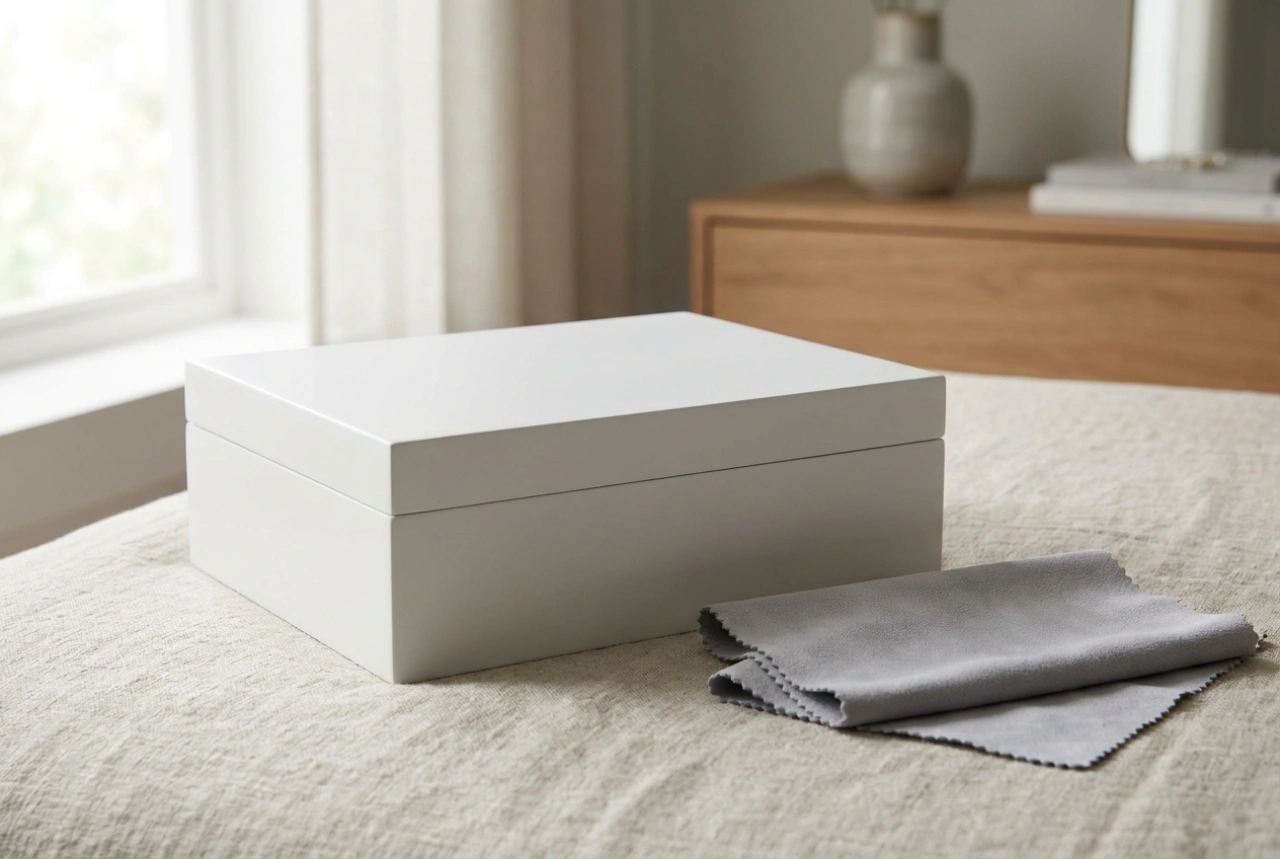
- Microfibre technique: Use a clean, damp microfibre cloth. The fine fibres lift the emulsified oils without requiring heavy physical pressure. Always dry the surface immediately with a dry microfibre cloth to prevent water spot rings caused by mineral deposits in tap water.
Mechanical Design: Hooks vs. Magnetic Retention
Inside the cabinet, the choice of storage mechanism dictates the daily user experience. Two primary systems dominate: mechanical hooks and magnetic backing panels.
Traditional hook systems rely on gravity and friction. Metal hooks, particularly those made of brass or stainless steel, offer high mechanical durability. To prevent the metallic clatter of keys against the cabinet backplate, which can cause micro-scratches on the white paint, backing plates can be lined with thin sheets of high-density felt or self-adhesive silicone dampeners. This simple addition dampens both kinetic energy and acoustic resonance during use.
Magnetic retention systems offer a sleeker alternative. Neodymium magnets embedded behind a thin white composite panel can hold metal keyrings directly. This eliminates protruding hooks, resulting in a cleaner interior aesthetic. When utilising magnetic systems, the magnetic force must be carefully balanced: it should be strong enough to hold heavy bundles of keys but not so strong that detaching them requires a force that pulls the cabinet against its wall anchors.
Ergonomic Placement and Mounting Principles
The functional success of a key cabinet depends on its physical placement. It must align with the natural kinetic path of a person entering the home. Installing the cabinet at shoulder level—typically between 140 cm and 150 cm from the floor—ensures it sits within the optimal reach zone. At this height, the human arm can naturally deposit keys without bending or overreaching, and the interior remains fully visible.
Securing the cabinet to the wall requires understanding basic mechanical anchoring. Because the door is frequently opened and closed, the mounting system must withstand repeated shear stress and pull-out forces. When mounting on plasterboard, use expanding hollow-wall anchors which distribute the load across a wider surface area of the gypsum core. For solid masonry walls, standard nylon expansion plugs paired with precision-threaded screws provide sufficient friction grip to ensure the cabinet remains securely anchored for years to come.