

Removing ballpoint pen ink from fabric requires understanding the chemical composition of the ink and selecting a solvent that dissolves the pigment without breaking down the textile fibers. Fast action and the correct mechanical technique prevent the stain from becoming a permanent part of the material's molecular structure.
The Chemistry of Ballpoint Pen Ink
Ballpoint pen ink is formulated to dry quickly and resist water. It typically consists of synthetic pigments or dyes suspended in a heavy solvent base, such as benzyl alcohol or glycol. Because these solvents are organic and hydrophobic, water alone cannot break their molecular bonds. To dissolve the ink, you must introduce a solvent with a similar chemical polarity. Isopropyl alcohol or ethanol is highly effective because their molecular structures contain both polar and non-polar regions, allowing them to weaken the forces holding the ink pigments together and liquefy the stain for extraction.
Choosing the Right Solvent for the Fabric
Before applying any chemical agent, it is essential to evaluate the fiber composition of the textile. Synthetic fibers like polyester, nylon, and acrylic are relatively resilient and can tolerate pure isopropyl alcohol or ethanol. Natural fibers, however, require more caution:
- Cotton and Linen: These cellulose-based fibers are durable and respond well to alcohol treatments, but dyed cotton can occasionally bleed. Always test a small, hidden area first.
- Wool and Silk: These protein-based fibers are highly sensitive to harsh chemicals and excessive moisture. For these materials, a milder solvent such as vegetable glycerin should be used to gently soften the ink before professional cleaning.
- Acetate and Triacetate: Avoid using acetone or strong alcohols on these synthetic fibers, as these solvents can dissolve the polymer structure of the fabric, leading to permanent structural damage.
The Step-by-Step Extraction Technique
To successfully remove the ink without spreading it across the fabric, you must use capillary action and vertical dabbing rather than circular scrubbing. Rubbing forces the dissolved pigment deeper into the yarn twist and widens the stained area.
Step 1: Prepare the Absorption Barrier
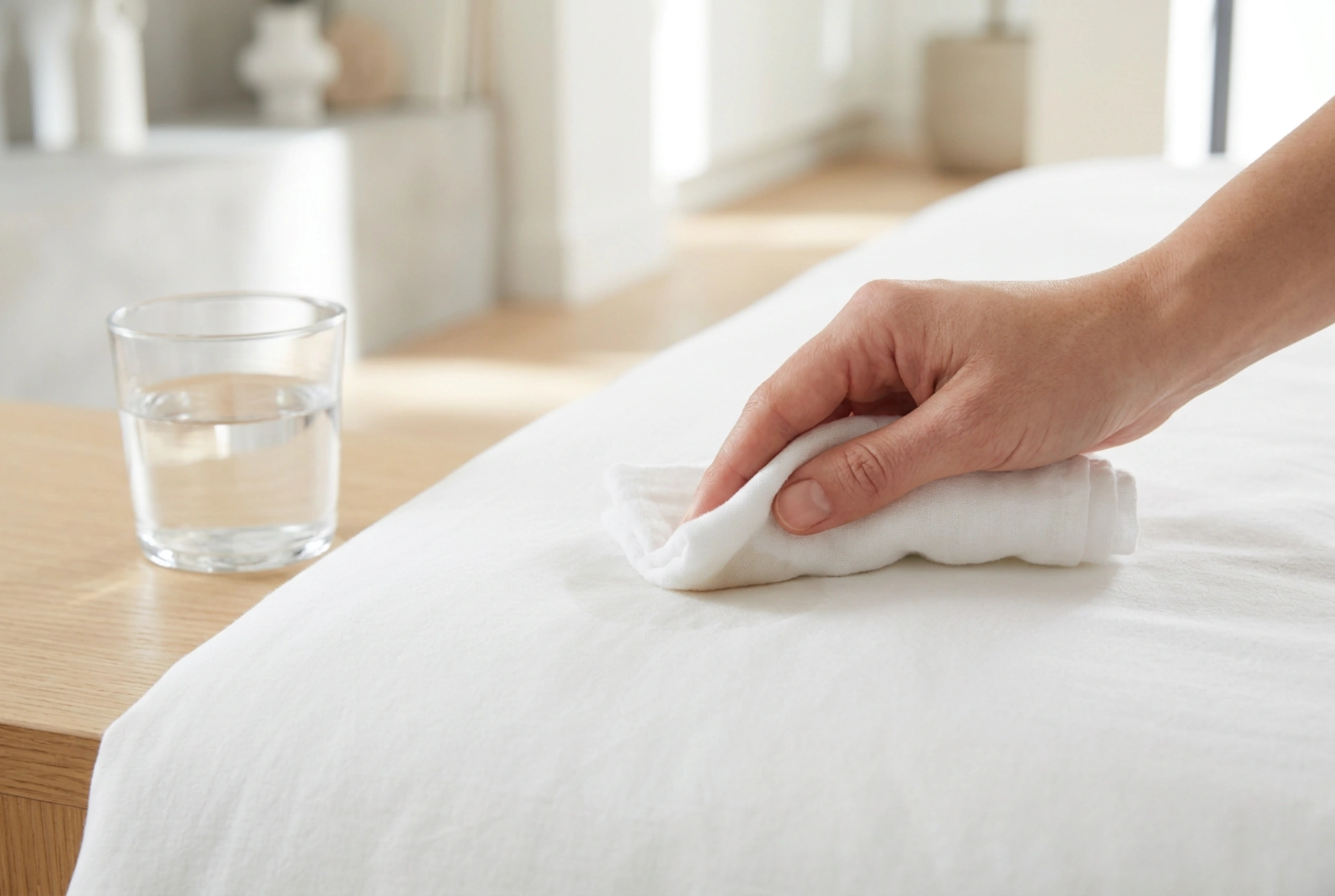
Place a clean, dry, white cotton cloth or several layers of absorbent paper towels directly underneath the stained section of the fabric. This acts as a receiver. As the solvent dissolves the ink, gravity and capillary forces will draw the liquid downward into the backing material, preventing the ink from migrating sideways into the clean areas of the garment.
Step 2: Apply the Solvent
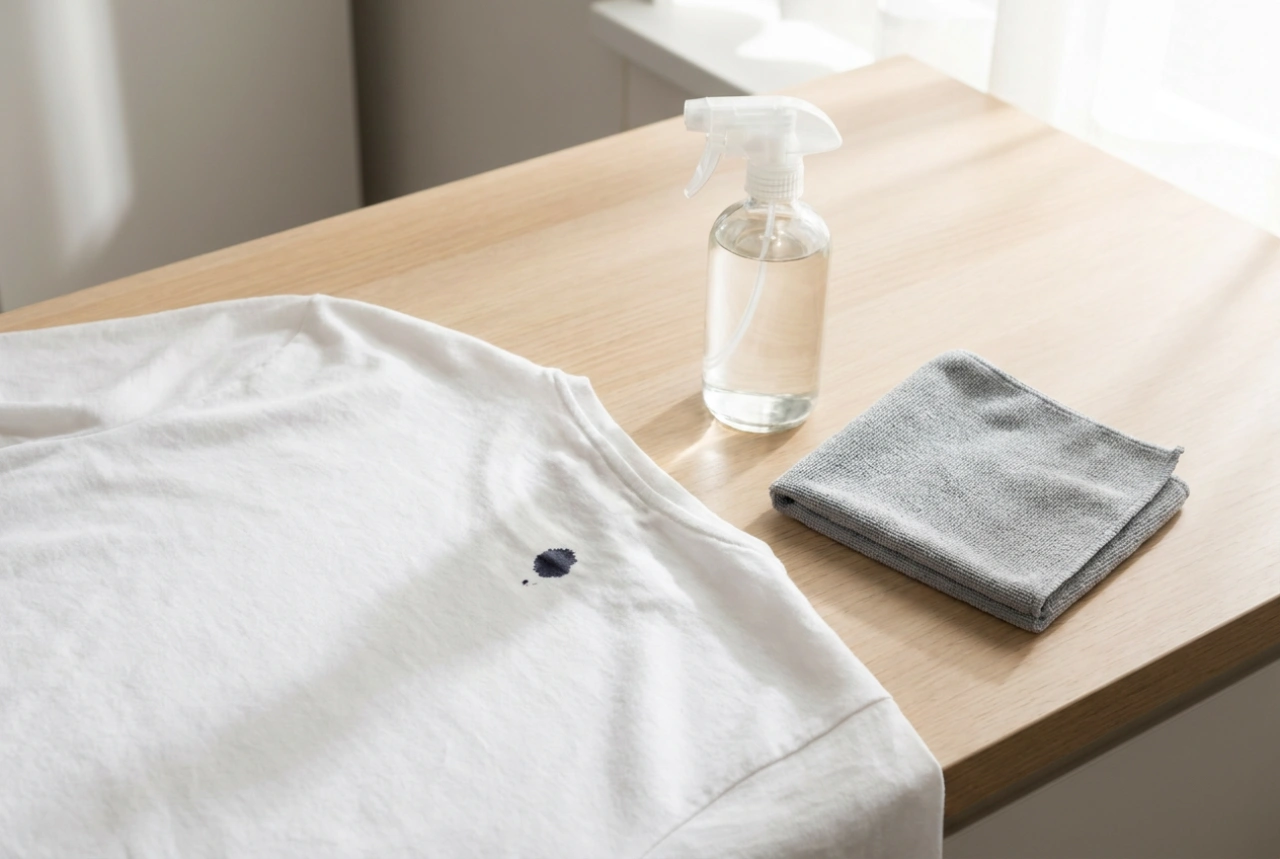
Dampen a clean cotton swab or the corner of a white microfiber cloth with isopropyl alcohol. Do not saturate the entire garment. Gently press the damp applicator onto the outer edges of the ink stain, gradually moving inward toward the center. This outward-in approach prevents the dissolved ink from spreading into clean fibers.
Step 3: Transfer the Ink
Apply firm, vertical pressure to the stain using the applicator. You will see the ink dissolve and transfer immediately onto the backing cloth underneath. Rotate the backing cloth to a clean section and use a fresh part of your applicator frequently. If you reuse a saturated portion of the cloth, you risk re-depositing the dissolved pigment back into the fabric fibers.
Saponification and the Final Wash
Once the bulk of the pigment has been transferred to the backing cloth, a faint shadow may remain. To eliminate these residual particles, apply a high-surfactant liquid detergent directly to the area. Surfactants feature a dual molecular structure: a hydrophobic tail that binds to the remaining organic ink particles, and a hydrophilic head that bonds with water molecules. Gently work the detergent into the fibers using your fingertips to encapsulate the remaining dye.
Wash the garment in the washing machine using the warmest water temperature recommended on the fabric care label. Heat helps to increase the kinetic energy of the water molecules, making the surfactant action more efficient. Always inspect the area before placing the fabric in a tumble dryer; the high dry heat of a dryer will thermally set any remaining ink pigment, making it nearly impossible to remove thereafter.