

Removing aged red wine stains from textiles requires understanding how natural pigments bind to fabric fibres over time. By using targeted chemical oxidation and controlled soaking temperatures, you can break down set-in tannins and anthocyanins without degrading the integrity of the woven threads.
The Molecular Structure of Red Wine Stains
Red wine owes its deep colour to polyphenolic compounds, primarily anthocyanins and tannins. When wine is spilled on a fabric, these compounds immediately begin to form hydrogen bonds with the hydroxyl groups present in cellulose fibres like cotton and linen. Over time, or when exposed to heat (such as from an iron or tumble dryer), these weak bonds undergo polymerisation. They transform into stable, covalent bonds that lock the pigment molecules deep within the amorphous regions of the fibre structure. This is why aged stains turn from bright purple-red to a dull, stubborn brown, making physical agitation alone completely ineffective and potentially damaging to the fabric weave.
The Role of Oxygen Bleach and Temperature in De-bonding
To release an organic stain that has polymerised, you must deploy an oxidising agent that chemically alters the chromophores—the parts of the pigment molecules responsible for absorbing light and showing colour. Sodium percarbonate, commonly referred to as oxygen bleach, is the ideal compound for this task. When dissolved in water, sodium percarbonate dissociates into sodium carbonate (washing soda) and hydrogen peroxide. The hydrogen peroxide then releases active oxygen species that break the double bonds within the anthocyanin molecules, turning them into soluble, colourless compounds.
The rate of this reaction is highly dependent on temperature. Water that is too cold (below 30°C) will not activate the sodium percarbonate efficiently, while water that is too hot (above 60°C) can cause the active oxygen to escape too quickly as gas, while potentially shrinking natural fibres or setting protein-based residues. For cotton and linen, maintaining a consistent soaking temperature of 40°C to 50°C provides the optimal kinetic energy for the molecules to penetrate the fibre matrix and initiate oxidation.
The Controlled Soaking Protocol: Step-by-Step
Restoring a stained textile through soaking is a systematic process that prioritises chemical contact time over mechanical friction. Follow these precise operational steps:
- Assess the Fibre Type: This method is highly effective for cotton, linen, and synthetic blends. For delicate protein fibres like silk or wool, avoid alkaline sodium percarbonate; instead, use a mild, pH-neutral detergent or dilute liquid hydrogen peroxide (3%) at room temperature.
- Dissolve the Agent Fully: Dissolve 1 to 2 tablespoons of sodium percarbonate powder per litre of warm water (40°C). It is critical that the powder is completely dissolved before introducing the textile. Undissolved granules resting directly on the fabric can create highly concentrated alkaline micro-environments, leading to localised colour stripping or fibre weakening.
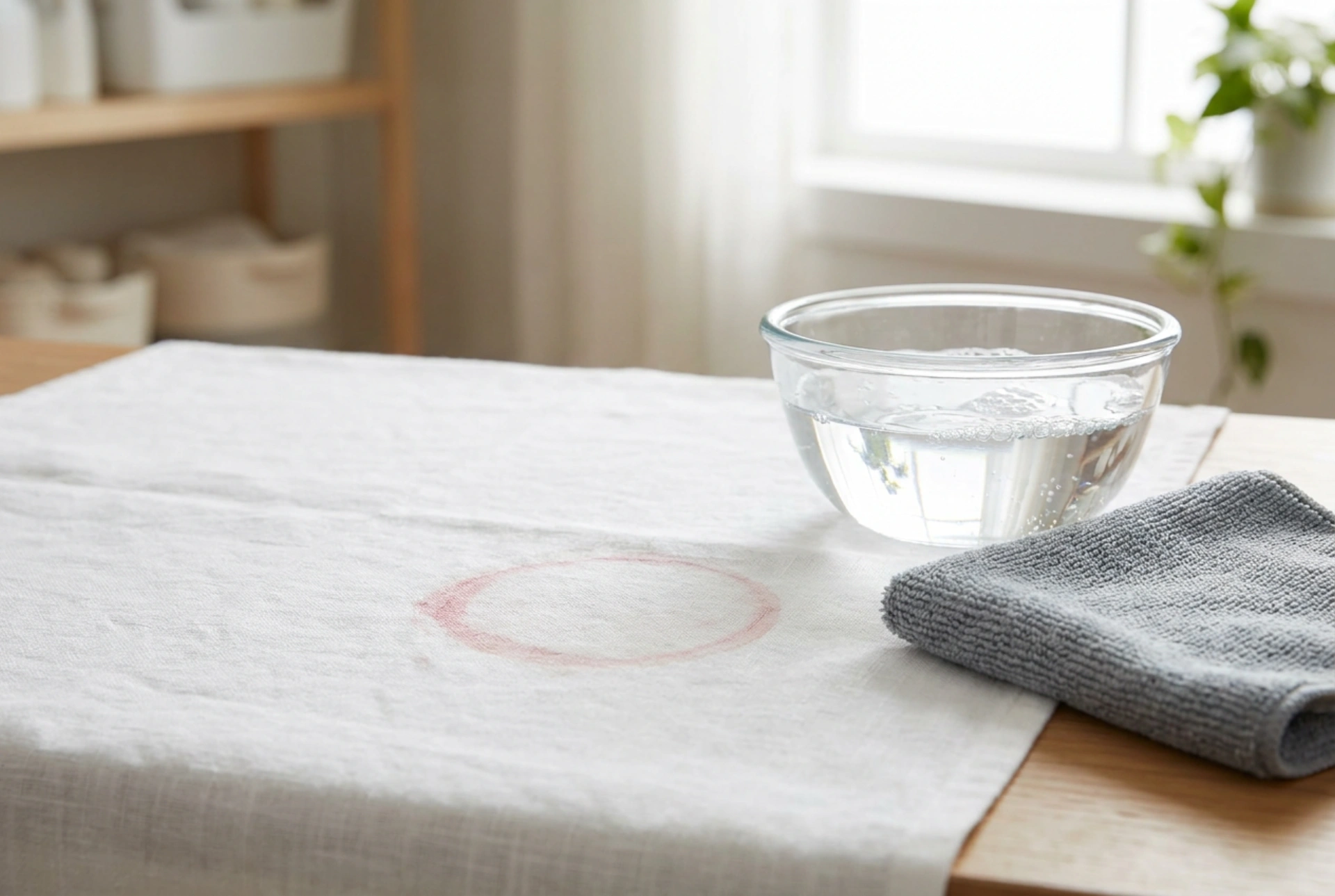
- Submerge and Saturate: Fully submerge the stained item in the solution. If the fabric floats, place a clean, heavy ceramic bowl on top to keep the stained area completely underwater. This ensures continuous, uninterrupted chemical action on the set-in pigments.
- Time the Soak: Allow the fabric to soak for at least 2 hours, and up to 6 hours for extremely old or heat-set stains. Periodically check the progress. The oxygen bubbles will work to lift the pigment out of the microscopic crevices of the yarn.
Mechanical Finishing and Rinsing
Once the chemical soak has dissolved the polymerised pigments, the remaining residues must be physically flushed out of the weave. Gently press and squeeze the stained area while it is still submerged to assist the release of the loosened particles. Never scrub or rub the fabric against itself, as this abrasive action can fray the surface fibres, causing a permanent fuzzy texture that alters how light reflects off the spot, making it look permanently stained even if the pigment is gone.
Finally, remove the fabric from the soaking bath and rinse it thoroughly under cold, running water. Cold water closes the fibres and flushes out any remaining sodium carbonate, preventing the fabric from stiffening as it dries. Hang the item to dry in a well-ventilated area away from direct sunlight or artificial heat sources until you are certain the stain has been completely eradicated.