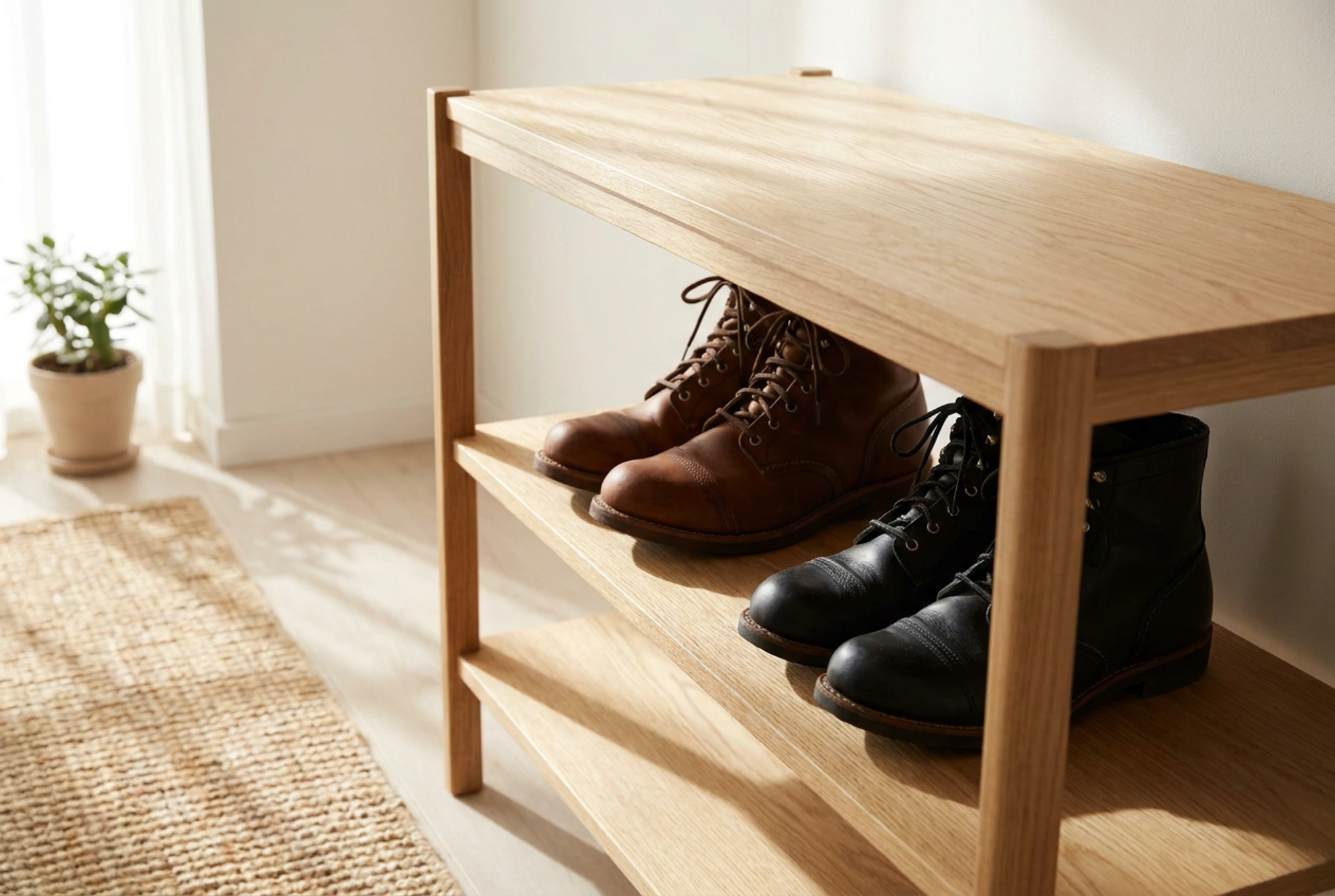


Maintaining a wooden shoe rack requires a balance between protecting the organic structure of the wood and managing the moisture, salt, and abrasive grit brought in by daily footwear. By understanding the physical properties of timber and applying systematic cleaning and protection techniques, you can preserve both the aesthetic appeal of the rack and the integrity of your footwear.
Understanding Wood's Vulnerability to Moisture and Dirt
Wood is a highly hygroscopic material, meaning it readily absorbs and releases moisture from its environment. Footwear, especially during autumn and winter, carries rainwater, melted snow, and road salt. When wet shoes are placed directly onto untreated or poorly sealed wood, the water penetrates the grain, causing the wood fibres to swell. As the wood dries, it contracts, leading to warping, cracking, and the degradation of the joint adhesives over time.
Furthermore, road salt acts as a chemical dehydrator, pulling natural moisture from the wood fibres and leaving behind unsightly white mineral deposits. To prevent this chemical and physical damage, always dry the soles of your shoes before placing them on the rack. Implementing a secondary non-porous barrier, such as a removable silicone or recycled rubber tray on the lower shelf for dripping boots, isolates moisture while preserving the airflow around the upper shelves.
The Chemistry of Cleaning Wooden Surfaces
When cleaning a wooden shoe rack, the goal is to remove organic soils, mud, and dust without stripping the protective sealant, which is usually oil, wax, or polyurethane lacquer. Alkaline cleaners or harsh synthetic detergents break down the natural oils in the wood, leaving it brittle and grey. Instead, opt for a highly diluted, pH-neutral soap solution or a specialized wood cleaner based on natural vegetable oils.
The application technique is critical. Never spray liquids directly onto the wood. Instead, dampen a microfibre cloth and wring it out thoroughly until it is barely moist. Wipe the wood following the direction of the grain to lift particles out of the natural microscopic grooves without scratching the surface. Immediately follow with a dry, lint-free cloth to absorb any residual surface moisture, ensuring the wood remains dry.
Optimising Airflow and Gravity in Shoe Storage
Proper shoe storage is a matter of thermal dynamics and air circulation. Wet shoes release moisture into the surrounding microclimate. If the shelves of your shoe rack are solid wood with no gaps, air becomes stagnant, creating a high-humidity zone that promotes the growth of mould and mildew. To avoid this, arrange your footwear with adequate spacing, ideally at least two to three centimetres between each pair.
Store heavier, wet footwear on the bottom shelves and lighter, dry shoes on the top. This vertical organisation prevents water or mud from dripping down onto clean shoes below. It also utilises natural convection, as warmer, drier air rises, assisting in the evaporation process for shoes positioned higher up.
Protecting and Reconditioning the Timber Barrier
Over time, mechanical friction from sliding shoes wears away the protective surface layer of the rack. To maintain hydrophobic properties, the wood must be reconditioned periodically. For oiled or waxed finishes, apply a thin coat of natural linseed oil or beeswax every six months. The lipids in these natural substances penetrate the porous wood structure, filling the voids and creating a durable water-resistant barrier.
Apply the oil with a soft cotton cloth, let it penetrate for twenty minutes, and then vigorously buff away any excess product. This ensures the surface remains smooth and non-sticky, preventing dust and grit from adhering to the wood during daily use.