

Maintaining a pristine, smooth iron soleplate is essential for drag-free ironing and preventing ruined garments. This guide explains how to dissolve burnt-on synthetic fibres and mineral deposits using non-abrasive chemical principles, preserving the delicate non-stick or ceramic coating of your appliance.
Understanding Soleplate Residue: Why Friction is the Enemy
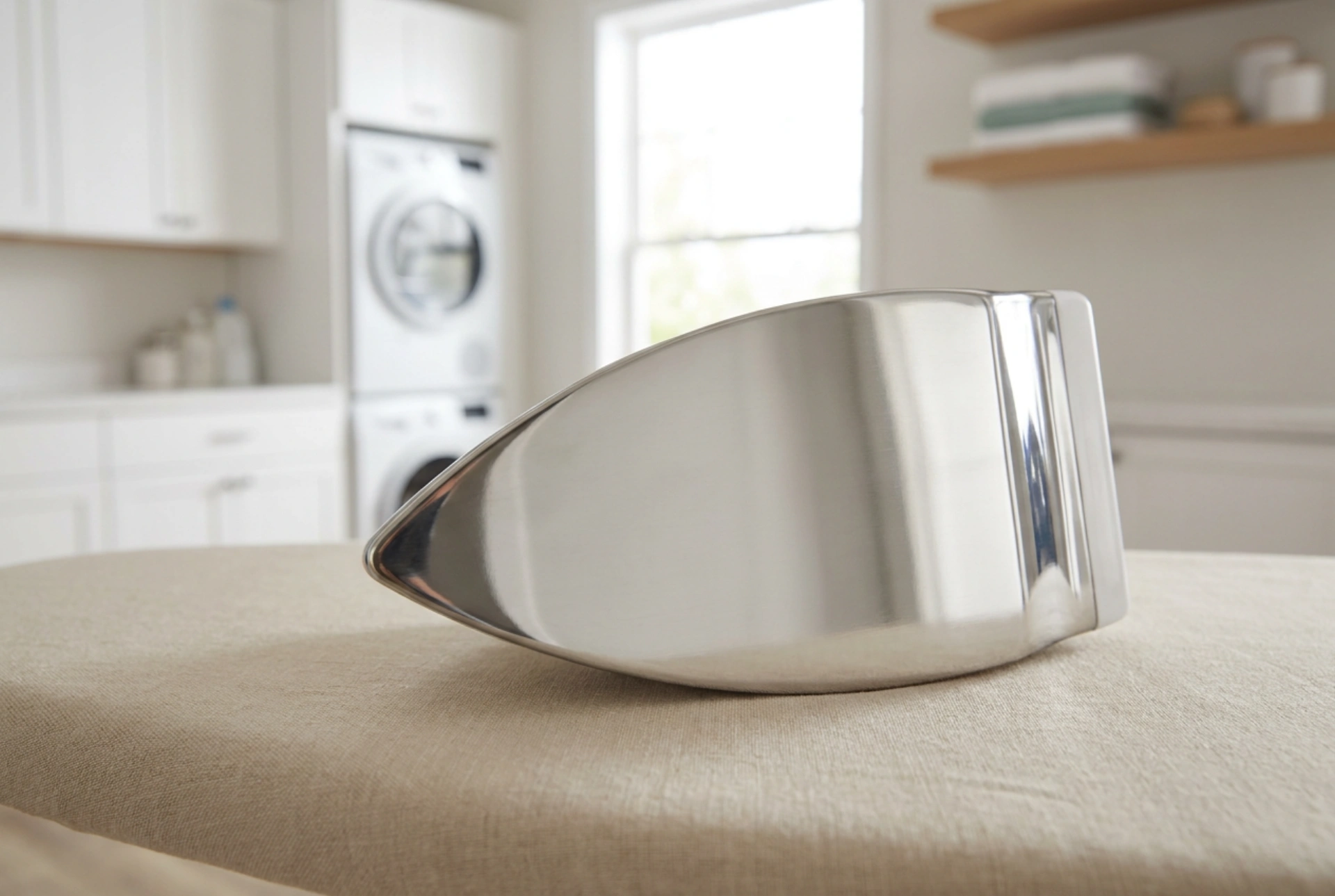
Modern iron soleplates are precision-engineered from materials such as polished stainless steel, anodised aluminium, or specialized ceramic and fluoropolymer coatings. These surfaces are designed to minimise friction, allowing the iron to glide effortlessly over textiles. However, two primary culprits disrupt this smooth interface: melted synthetic polymers (such as polyester, nylon, or acrylic) and mineral scale (calcium carbonate) exiting from the steam vents.
When these residues build up, the instinctive reaction is often to scrub them off. However, using mechanical abrasives like metal scourers, steel wool, or harsh scrubbing powders is highly destructive. These materials create micro-scratches on the soleplate. Once scratched, the metal loses its low-friction properties, snagging delicate fabrics and creating microscopic crevices that collect even more melted plastic and mineral scale. To restore the iron without damage, we must rely on chemical dissolution and thermal properties rather than mechanical force.
The Chemistry of Scale and Polymer Removal
To safely dissolve mineral scale and organic deposits, we must target their chemical structures. Calcium carbonate is alkaline and insoluble in water, but it reacts readily with weak acids. White vinegar, which contains diluted acetic acid, converts insoluble calcium carbonate into highly soluble calcium acetate, water, and carbon dioxide gas. This chemical transformation liquefies the crusty buildup blocking steam vents without degrading the underlying metal or non-stick coating.
For organic residues, such as scorched fabric fibres, the goal is to soften the polymer chains. Sodium bicarbonate (baking soda) serves as an excellent, mild amphoteric cleaner. When mixed with a small amount of water to form a dense paste, it acts as an ultra-mild polishing agent. On the Mohs hardness scale, sodium bicarbonate rates at approximately 2.5, making it significantly softer than stainless steel, aluminium oxide, or ceramic coatings. This difference in hardness ensures that the sodium bicarbonate paste cannot physically scratch the soleplate, even when applied with mild pressure, yet it remains firm enough to lift softened organic residues.
Step-by-Step Non-Abrasive Cleaning Protocol
To safely restore your iron's soleplate to its original polished state, follow this structured, temperature-controlled procedure:
- Step 1: The Acid Soak. Ensure the iron is completely cold and unplugged. Saturate a thick, clean cotton towel with undiluted white vinegar. Place the towel on a flat surface and lay the iron soleplate directly down onto the wet fabric. Allow it to sit undisturbed for 30 to 45 minutes. The acetic acid will break down mineral scale and loosen surface grime. Wipe the plate clean with a damp microfibre cloth.
- Step 2: Apply the Sodium Bicarbonate Paste. For stubborn, burnt-on synthetic patches, mix two parts sodium bicarbonate with one part water in a small container to create a thick, spreadable paste. Apply this paste directly to the affected areas of the cool soleplate using your fingertips or a soft silicone spatula. Let the paste sit for 10 minutes to penetrate the burnt fibres.
- Step 3: Gentle Circular Buffing. Take a damp, clean microfibre cloth and gently buff the paste-covered areas using light, circular motions. Avoid pressing hard; allow the microscopic structure of the sodium bicarbonate to lift the softened organic matter. Wipe away all paste residues with a fresh, damp cloth.
- Step 4: Purging the Steam Vents. If any cleaning paste or dissolved mineral scale has entered the steam vents, fill the iron's water reservoir with distilled water. Plug the iron in, set it to the maximum temperature and steam setting, and hold it horizontally over a sink or a waste towel. Press the steam burst button repeatedly. The rapid thermal expansion and high-pressure steam will flush out any remaining particulates from the internal chambers.
Prevention Through Material Awareness
Preventing buildup is far more efficient than cleaning it. Always match your iron's temperature setting to the fabric type. Synthetic fibres melt at relatively low temperatures (135°C to 190°C) compared to natural cotton or linen (which can withstand up to 200°C). Ironing a synthetic garment at a cotton setting causes the fibres to liquefy instantly and bond to the hot metal.
Furthermore, always empty the water reservoir after every ironing session. Leftover tap water evaporates slowly inside the chamber, leaving behind concentrated calcium deposits. Using distilled or demineralised water entirely prevents mineral accumulation, ensuring that both the internal heating elements and the external steam vents remain perfectly clean and free of scale.