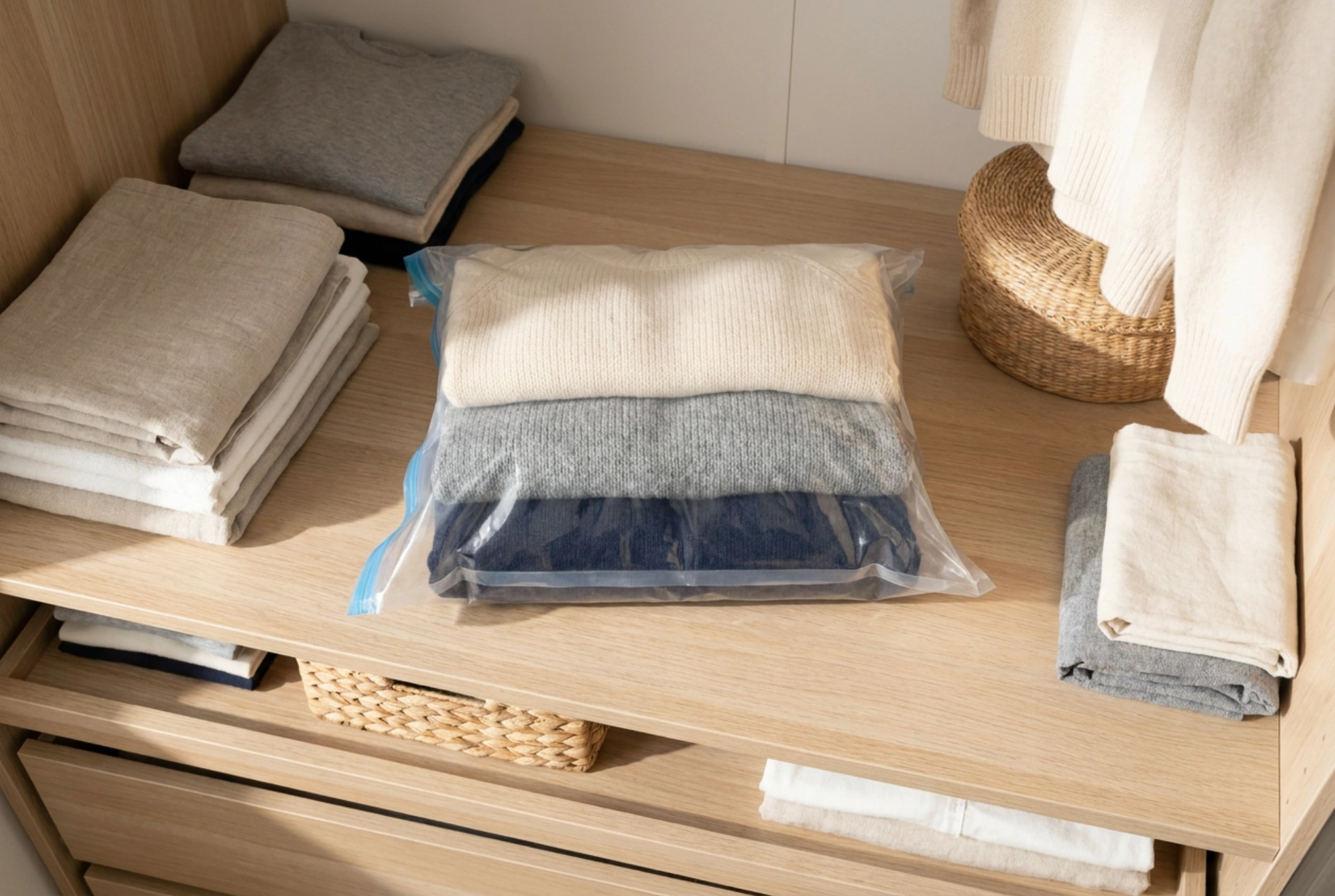


Vacuum packing seasonal clothes is an exceptionally efficient space-saving technique, but executing it incorrectly can trap damaging moisture or permanently ruin delicate fibers. Understanding the physics of compression and fiber structure ensures your garments emerge from storage as fresh and structured as when they went in.
The Material Science of Fabric Compression
Not all fabrics react to vacuum sealing in the same way. Natural fibers like wool, cashmere, and down rely on trapped air pockets (known as loft) to provide insulation and maintain their structural integrity. When you evacuate air from a bag, you remove these insulating pockets. While synthetic materials like polyester and nylon recover their shape easily, natural animal proteins can suffer from fiber fatigue if compressed too tightly for more than six months.
Down jackets and duvets should never be compressed past 50% of their original volume. Crushing the delicate feather shafts can permanently destroy their loft and thermal properties. Wool and cashmere can tolerate higher compression but require a gentle decompression phase. Always evaluate your garment composition before applying maximum vacuum pressure, and avoid vacuuming heavy wool coats to their absolute flat limit.
Preventing Anaerobic Microenvironments
The greatest threat to vacuum-packed garments is residual moisture. When you seal a bag, you create a completely isolated microclimate. If even a fraction of a percent of relative humidity remains in the fabric, anaerobic bacteria and mildew will thrive in the oxygen-depleted, dark environment. This leads to musty odors and fabric rot.
- Wash thoroughly: Clean all garments beforehand using a mild, residue-free surfactant detergent. Avoid fabric softeners, as they leave a hydrophobic lipid coating that traps moisture inside the fibers.
- Complete evaporation: After washing, dry the clothes thoroughly. Even if they feel dry to the touch, let them air in a low-humidity room for an additional 24 hours to ensure all core fiber moisture has fully evaporated.
Folding Geometry and Air Extraction Techniques
Proper folding prevents structural creasing under high atmospheric pressure. Avoid rolling garments tightly, as this creates high-stress shear points along the fabric folds. Instead, fold clothes flat, aligning seams to distribute the pressure evenly. Place heavier, more resilient items like denim at the bottom of the bag, and delicate knits on top.
When filling the bag, leave at least 10 centimetres of space below the zip closure to allow for proper sealing. Run the sealing clip across the zip at least three times, applying firm, even pressure to ensure a complete hermetic seal. When attaching the vacuum nozzle to the valve, do not extract the air at maximum speed. A slow, steady extraction allows the fabrics to settle naturally without creating sharp, structural creases in the plastic sheet that could puncture the bag during storage.
Ideal Storage Parameters and Safe Decompression
Once sealed, store the bags in a temperature-stable environment. Avoid uninsulated attics or damp basements. Extreme temperature fluctuations cause the plastic to expand and contract, which can micro-fracture the seals and allow moisture-laden air to seep back in. Store bags horizontally to prevent the contents from shifting and settling under gravity.
When the season changes and you retrieve your wardrobe, open the valve slowly to let air re-enter gradually. After removing the garments, hang them in a well-ventilated space for 48 hours. This allows the natural moisture in the atmosphere to re-hydrate the dry fibers, restoring their natural spring and shape before you wear or wash them again.