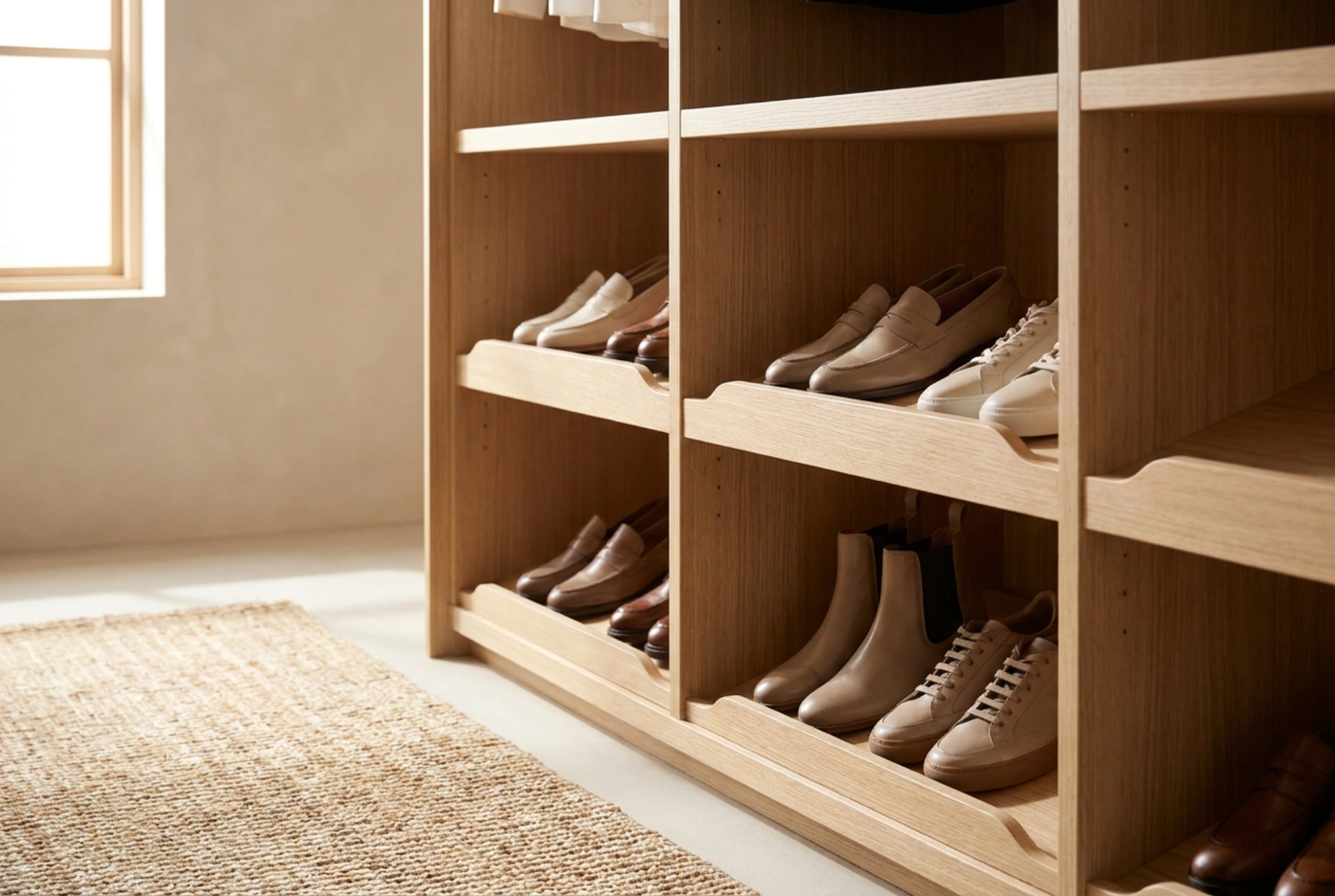


Keeping shoe pairs neatly separated and organised in a dressing room is not just about aesthetics; it prevents material abrasion, maintains shape, and extends the lifespan of your footwear. By applying basic principles of spatial geometry, material science, and friction control, you can establish an efficient storage system that keeps every pair securely in place.
The Physics of Shoe Storage: Preventing Friction and Scuffing
When shoes are thrown loosely onto a shelf, they slide, collide, and rub against one another. This constant contact causes mechanical wear, especially on delicate materials like suede, polished calfskin, or soft patent leather. The friction between different finishes can transfer dyes or leave permanent scuffs that ruin the material surface.
To mitigate this, you must control the kinetic movement within the cabinet. Shoes slide because shelf surfaces often lack sufficient traction. Applying thin, non-slip silicone or rubberised liners to your wooden or laminate shelves increases the coefficient of friction, keeping soles firmly rooted. Additionally, maintaining a physical gap of at least two to three centimetres between different pairs prevents lateral contact during retrieval.
The Toe-to-Heel Alternation Technique
One of the most effective spatial techniques for maximising shelf capacity without letting pairs intermingle is the toe-to-heel alignment. By storing one shoe facing forward and its partner facing backward, you exploit the natural geometry of footwear.
The widest part of a shoe is the toe box, while the heel counter is significantly narrower. Placing them side-by-side in opposite directions allows the wide toe box of the first shoe to sit adjacent to the narrow heel of the second. This configuration saves up to twenty-five percent of horizontal shelf space. More importantly, it creates a natural nesting shape that minimises lateral sliding, keeping the pair locked into its designated boundary without touching adjacent pairs.
Implementing Physical Barriers and Compartmentalisation
For high-traffic dressing rooms, relying on alignment alone might not prevent pairs from drifting. Physical dividers offer a permanent solution by isolating each pair into its own structural micro-zone.
- Custom Wooden Dividers: Installing thin timber inserts creates rigid slots for each pair. Wood, particularly untreated cedar or beech, also acts as a natural humidity regulator.
- Adjustable Tension Rods: Placing small, spring-loaded tension rods vertically between shelves creates customisable boundaries that can be shifted depending on the width of the footwear.
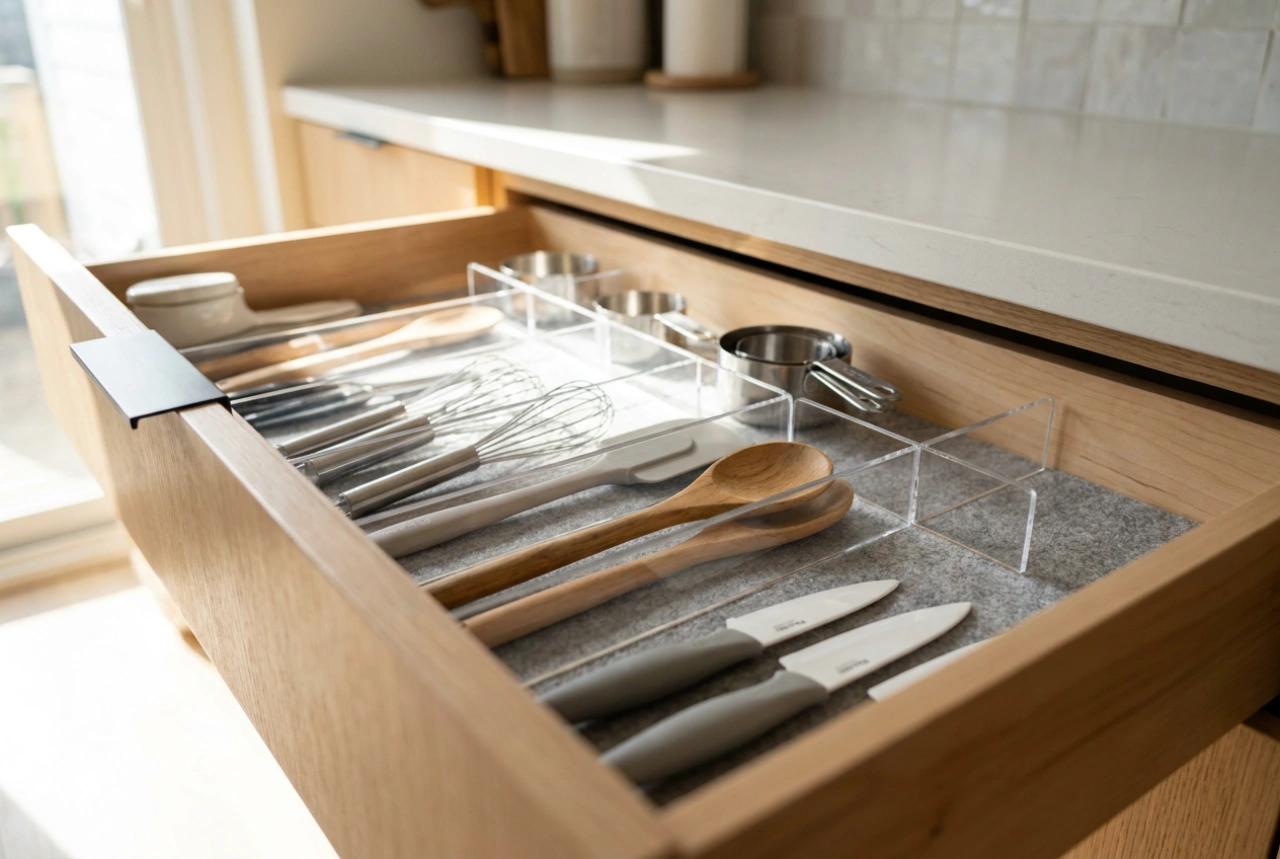
- Individual Shoe Trays: Plastic or felt trays keep the dirt from the soles contained and define a strict physical boundary that a shoe cannot slide out of.
When designing these compartments, categorise your footwear by height and volume. High-top trainers, ankle boots, and heels require taller vertical spacing than flat loafers or sandals. Adjust your shelf heights so there is no wasted vertical space, which further discourages the temptation to stack shoes on top of one another.
Microclimate Control: Moisture and Material Integrity
Organising shoes is not only about layout but also about preserving the structural integrity of the materials. When shoes are worn, they absorb moisture from the feet. Storing damp shoes immediately in a closed cabinet creates a humid microclimate that softens leather, weakens adhesive bonds, and promotes fungal growth.
Always allow shoes to air out in a well-ventilated space for at least twelve hours before placing them back on the shelf. To maintain the shape of the upper leather and prevent toe-box collapse, insert wooden shoe trees. The spring tension of a quality shoe tree holds the leather taut, preventing the shoe from curling or leaning into its partner, which is a common cause of pairs becoming jumbled.
Establishing an Ergonomic Ordering System
To ensure your organisation system remains intact over time, arrange your footwear according to weight and frequency of use. Place heavy boots and outdoor footwear on the lowest shelves. This lowers the centre of gravity of the cabinet, prevents shelves from bowing under load, and keeps dirty soles close to the floor.
Store daily footwear at waist height for easy, ergonomic access, reducing the likelihood of careless tossing when returning home. Reserve the highest shelves for seasonal or formal footwear, which should be stored with protective dust bags to prevent dust accumulation while maintaining their dedicated positions on the shelf.