

Fitting a top-loading washing machine requires more than simply checking if the appliance fits into a designated corner; it demands precise calculations of both static physical dimensions and dynamic operational clearance.
1. Establishing the Base Three-Dimensional Envelope
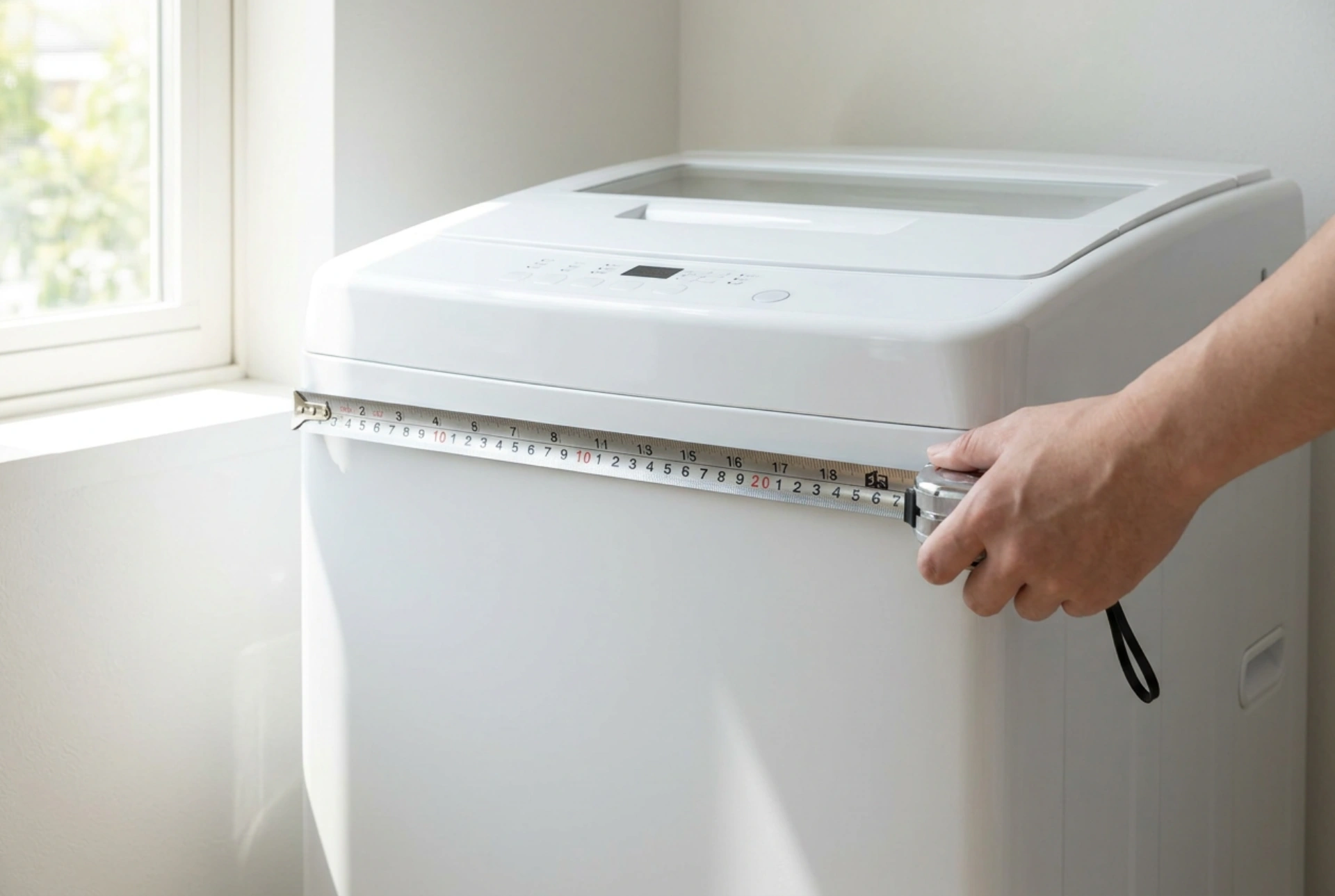
To begin, you must measure the raw width, depth, and height of the target installation space using a high-quality metal tape measure. When measuring the width, take readings at three different points: near the floor, at mid-height, and near the top. Walls are rarely perfectly plumb, and even a minor inward slope can prevent the machine from sliding into place. For the depth, measure from the rear wall to the front boundary of the designated area. The most critical static dimension for a top-loading machine, however, is the vertical clearance. Unlike front-loaders, top-loaders require unobstructed space above the unit. Measure from the floor to the lowest hanging obstacle, such as cabinetry, shelving, or light fixtures. You must ensure that the total height available exceeds the height of the machine with its lid fully opened at a 90-degree angle, allowing comfortable physical access for loading and unloading textiles without restriction.
2. Managing Kinetic Energy and Vibration Tolerance
Washing machines operate on principles of high-speed centrifugal force, particularly during the spin cycle when rotational speeds can reach up to 1400 RPM. This rapid rotation creates kinetic energy that causes the chassis of the appliance to vibrate. If a washing machine is installed flush against walls or adjacent cabinetry, these vibrations will transfer directly into the building structure, causing loud structural noise and potential material fatigue. To mitigate this physical impact, always factor in a lateral buffer. You must maintain a minimum clearance of 2.5 centimetres (approximately 1 inch) on both the left and right sides of the machine. This air gap isolates the kinetic energy of the machine, preventing physical contact with surrounding surfaces during heavy spin cycles.
3. Calculating Rear Depth for Utility Connections
The physical depth of the machine chassis is not the actual depth required for installation. The rear of the appliance houses critical utility inlets and outlets, including the high-pressure water supply hoses, the corrugated drain hose, and the electrical power cord. Forcing a washing machine too close to the back wall compresses these components. Bent or kinked water hoses restrict flow and increase internal water pressure, which can lead to premature material failure and leaks. A pinched drain hose restricts wastewater evacuation, forcing the internal pump to work harder and potentially overheat. To ensure safe operation, allocate an additional 10 to 15 centimetres of depth behind the machine. This space allows the hoses to maintain their natural bending radius, preventing structural kinks and ensuring unhindered fluid dynamics.
4. Mapping the Transport Pathway
A common oversight is measuring only the final installation spot while ignoring the route required to transport the appliance into the home. Before purchasing, map out the entire physical path from the delivery vehicle to the laundry area. Measure the narrowest points along this route, including exterior door frames, interior hallways, stairwells, and tight corners. Take into account any permanent fixtures like radiators, handrails, or low-hanging light fixtures. The machine must clear these structures with at least a few centimetres of tolerance to prevent physical damage to both the appliance and the interior walls of your home during transport.
5. Levelling and Floor Stability
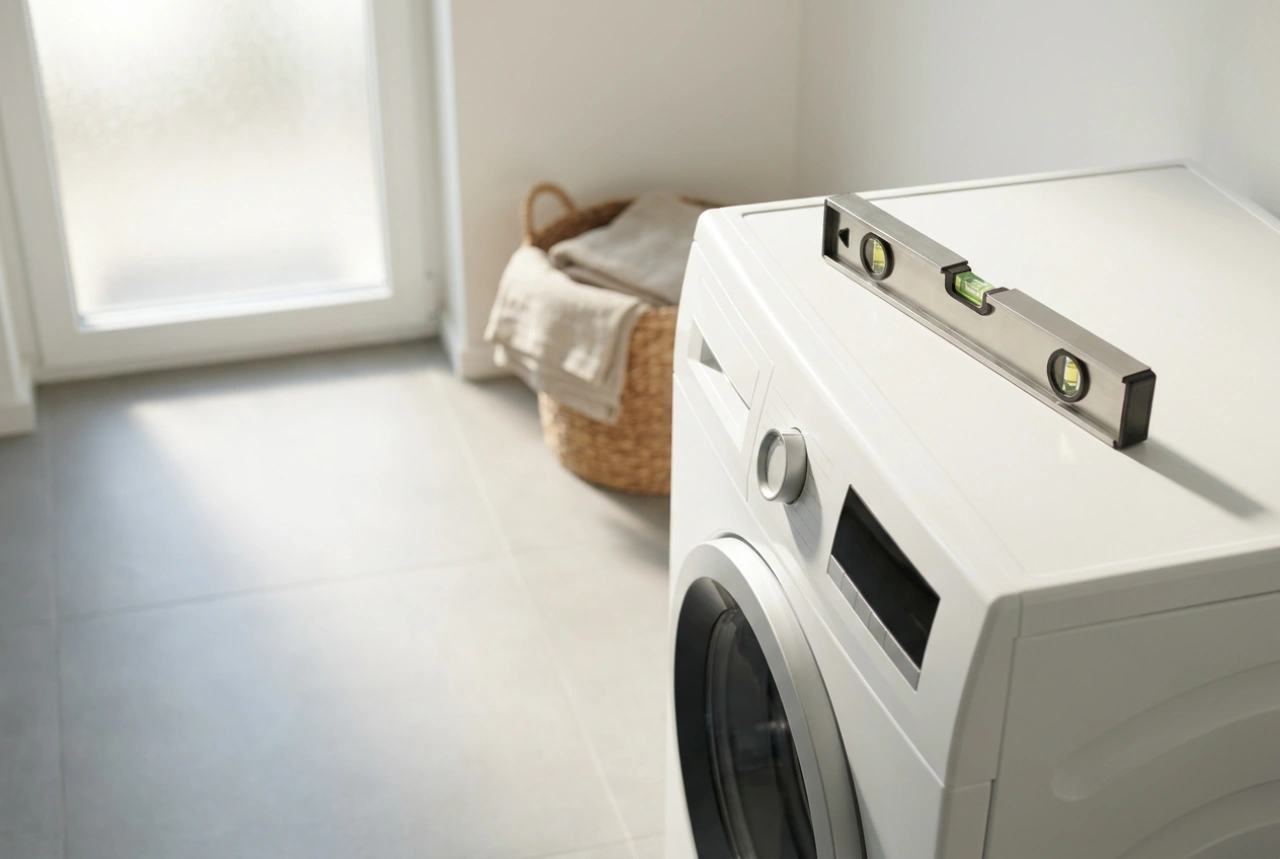
The stability of the floor directly affects how the machine distributes its weight during operation. Use a spirit level on the floor surface before installation to detect any slopes. Modern top-loaders feature adjustable levelling feet, but these are designed for fine-tuning rather than compensating for highly uneven floors. The surface must be rigid and level to prevent the appliance from walking or shifting under centrifugal load, which can alter your carefully calculated clearances over time.