

An efficiently structured desk organiser serves as a physical support system for a child's developing executive functions, reducing cognitive friction during independent study. By arranging tools according to frequency of use and physical accessibility, you can foster a self-regulating workspace that minimises distractions.
The Cognitive Science of Workspace Organisation
When a child sits down to study, their working memory is actively processing new information. Visual clutter in the direct line of sight competes for neural representation, meaning every unnecessary item on the desk taxes their cognitive load. To combat this, the desk organiser must limit visible choices. Instead of displaying every coloured pencil or marker, curate a high-utility selection of essential writing instruments. Reducing the density of items on the desk lowers sensory stimulation, helping the brain transition into a focused state. The physical layout should direct attention naturally toward the task at hand rather than the tools surrounding it.
Zoning the Organiser: Active vs. Passive Storage
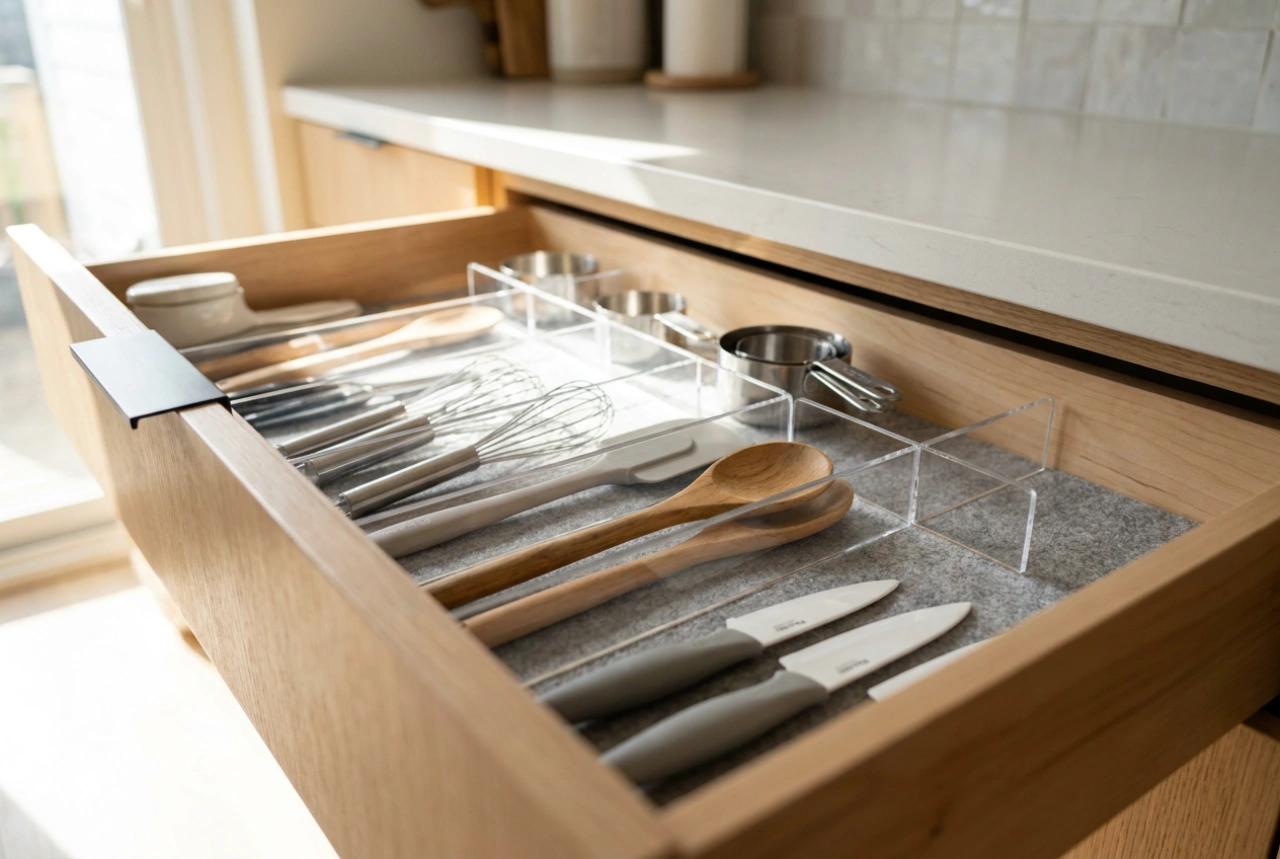
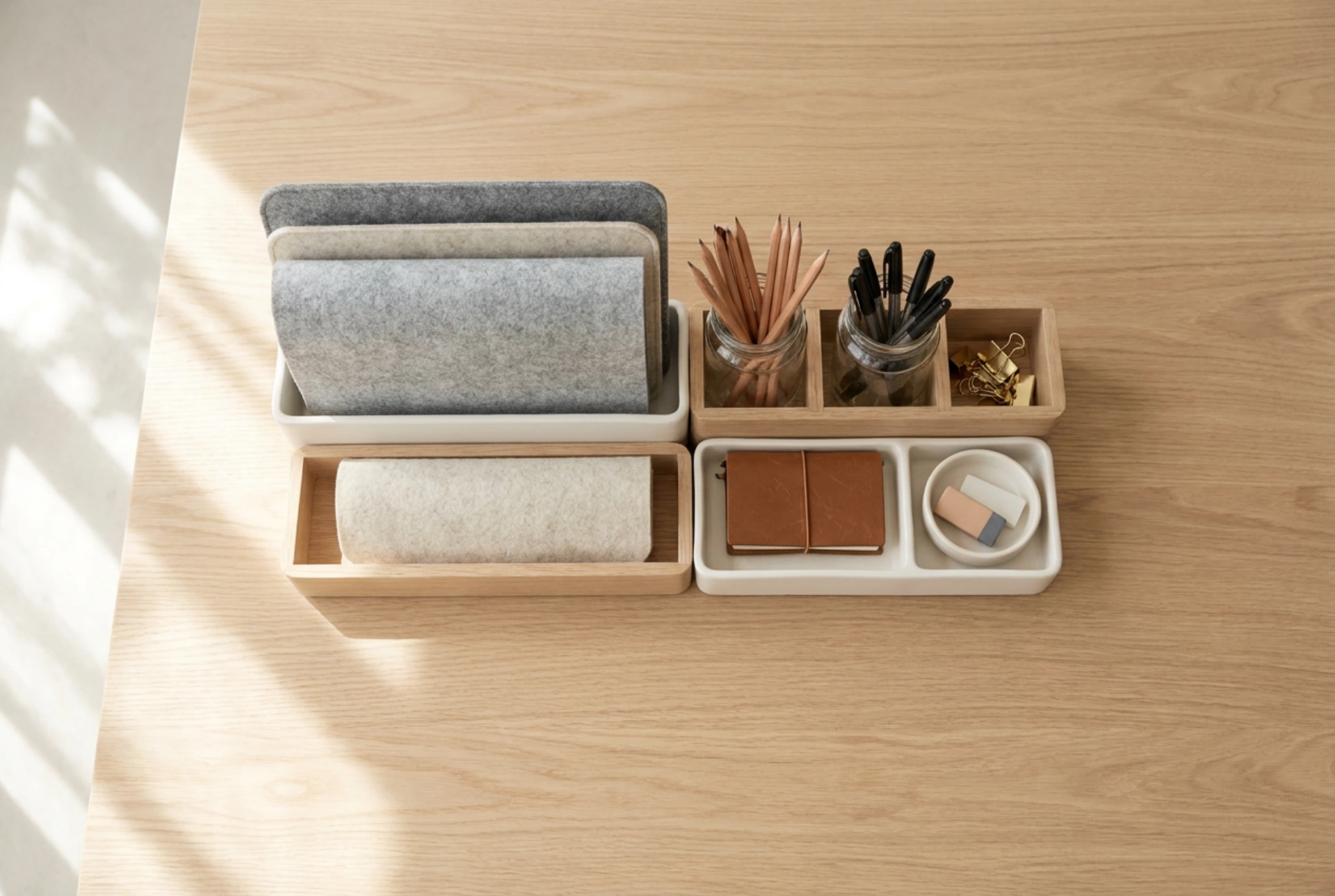
An effective desktop arrangement relies on distinct zones based on the reach and physical capabilities of a child. The organiser itself should be positioned in the secondary reach zone—just beyond the primary workspace where the child's arms move naturally when writing. Within the organiser, tools must be categorised into three precise categories. Active tools, such as the primary pencil, eraser, and ruler, require immediate, single-handed access. Secondary tools, like highlighters or safety scissors, belong in adjacent, slightly deeper compartments. Passive tools, including spare refills or geometry sets, should be kept entirely out of the main organiser, stored in drawers to prevent visual pollution. Modular containers made of heavy, stable materials like solid timber or dense felt prevent tipping when a child reaches for a tool with one hand.
Material Physics and Sensory Regulation
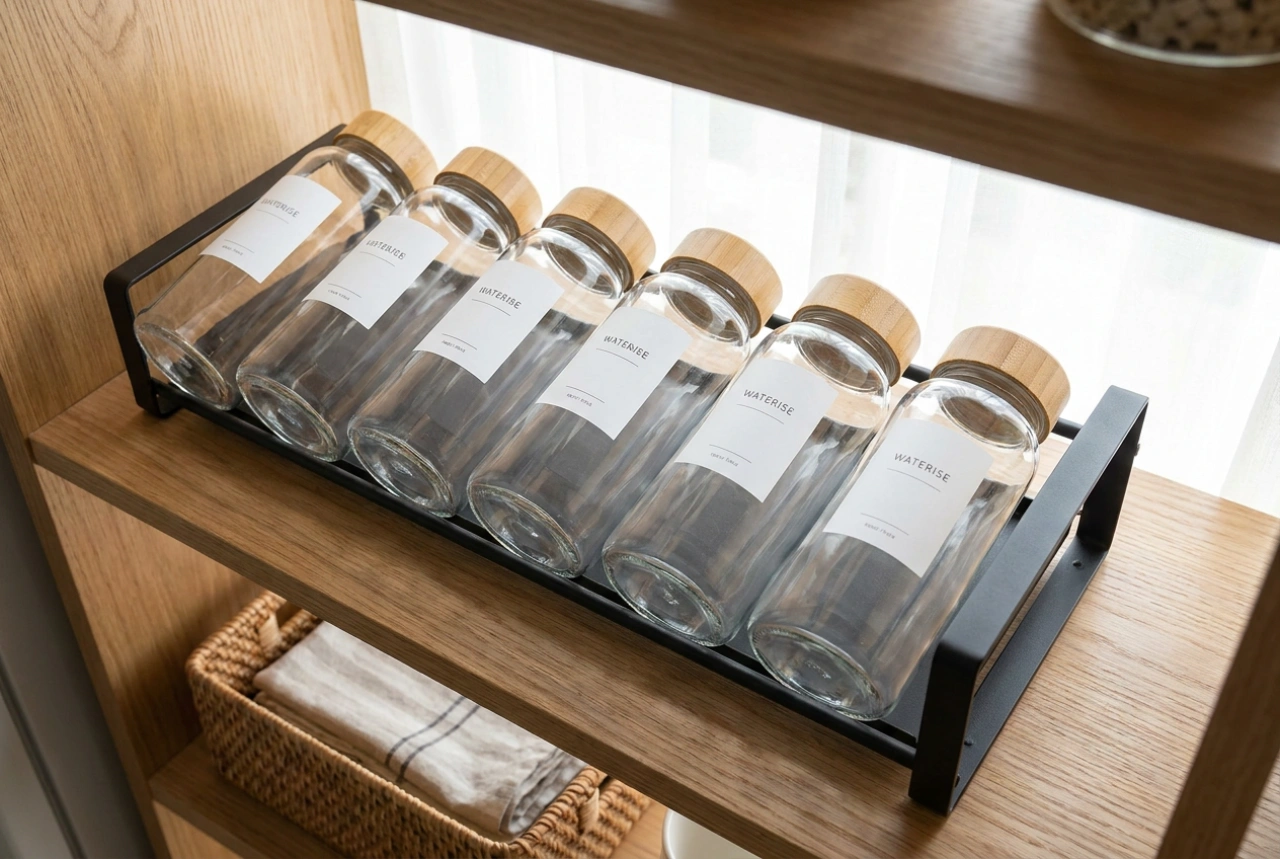
The materials chosen for a desk organiser play a subtle but critical role in maintaining focus. Brightly coloured plastic containers reflect overhead light, creating glare that can cause visual fatigue. They also produce high-pitched, sharp noises when hard plastic pens are dropped inside, which can break a child's concentration. Opting for natural, sound-dampening materials like dense felt linings, natural timber, or frosted glass alters the acoustics of the workspace. Heavy glass jars or wooden blocks with milled slots provide tactile resistance and stability, preventing the organiser from sliding when a tool is pulled out. The weight of the organiser should be sufficient to resist lateral forces, ensuring it remains a fixed, predictable anchor point on the desk surface.
The Ergonomics of Tool Placement
To facilitate smooth, independent transitions between tasks, the physical orientation of tools must match the child's dominant hand. For a right-handed child, the organiser should sit slightly to the right of the central workspace, angled inward at approximately thirty degrees. Pens and pencils should be stored vertically with the writing tip pointing downwards, protecting the lead or nib while exposing the colour-coded endcap for quick identification. Compartments must be shallow enough that the top third of each tool remains visible and graspable. If a container is too deep, the child must fish for the tool, disrupting their physical flow and mental focus. For rulers and scissors, utilise flat, vertical slots that align with the natural upward-and-outward pulling motion of the arm.
Establishing Kinetic Routines for Workspace Maintenance
An organiser only remains effective if the child can maintain it independently. This requires building physical muscle memory through consistent, simple routines. At the end of each study session, implement a tactile reset protocol. The child should return each tool to its designated compartment, a process simplified by matching the shape of the compartment to the function of the tool. When every object has a precise, physically constrained home, the cognitive effort required to tidy up is virtually eliminated. Over time, this repetitive kinetic action becomes automatic, signaling to the brain that the study session has concluded and allowing the child to transition smoothly away from learning mode.