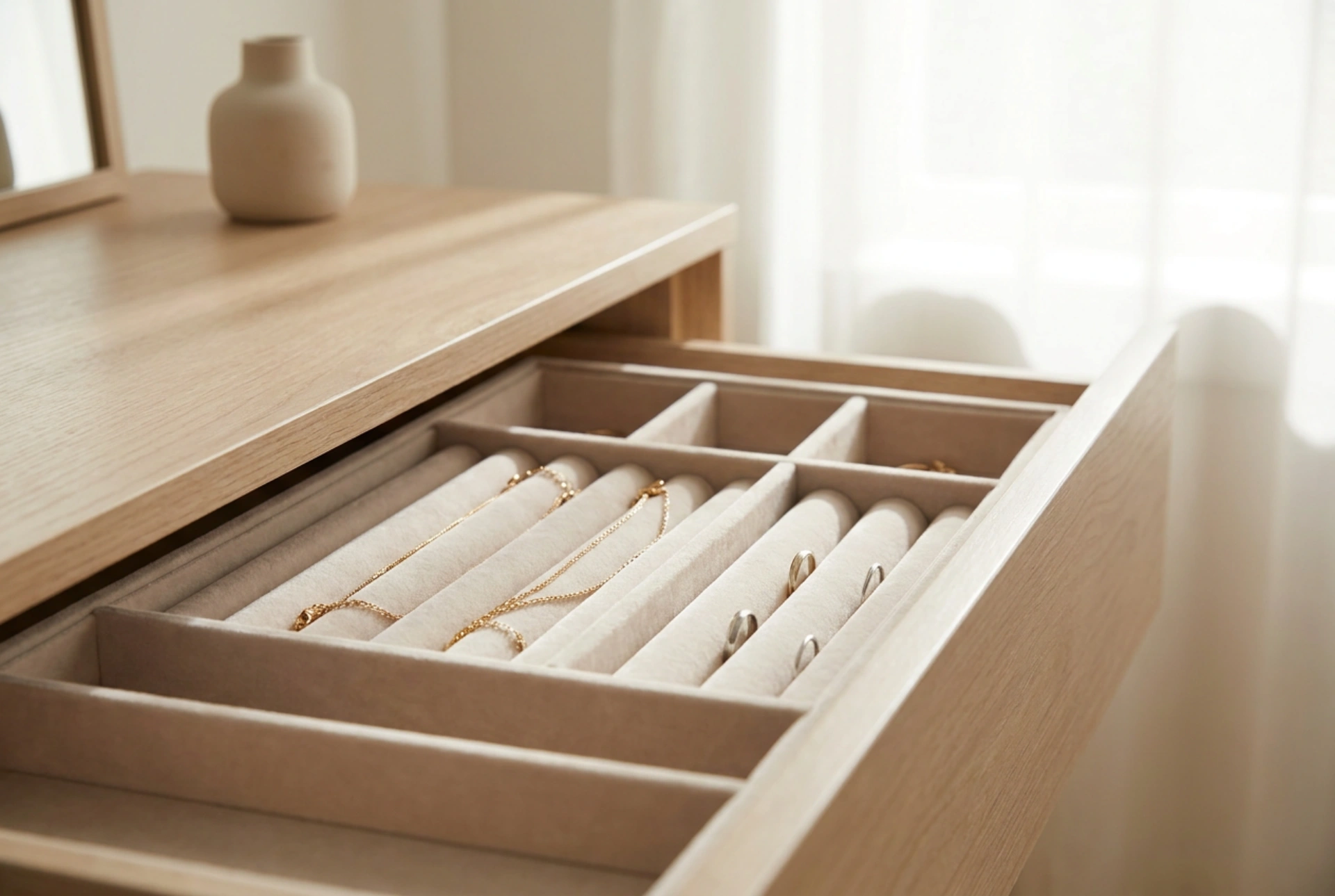


Selecting the right jewelry drawer insert is not merely an aesthetic choice; it is a critical preventive measure against chemical degradation, physical abrasion, and structural deformation of delicate metals and gemstones. A scientifically optimized storage solution controls microclimatic variables and eliminates mechanical friction, ensuring your valuables remain pristine over time.
The Chemistry of Tarnish: Why Material Science Matters
Metallic jewelry, particularly sterling silver and low-karat gold alloys, is highly susceptible to chemical reactions with ambient air. Silver reacts with trace amounts of hydrogen sulfide to form silver sulfide, the black film known as tarnish. Moisture and atmospheric pollutants accelerate this electrochemical process. Therefore, the lining material of your drawer insert acts as your first line of defense.
When choosing an insert, avoid cheap plastics, adhesives, and acidic cardboard backings. Standard manufacturing adhesives often off-gas volatile organic compounds (VOCs) and sulfur-containing chemicals, rapidly tarnishing metals. Instead, opt for inserts lined with high-quality, dense cotton velvet, microfiber, or specially treated anti-tarnish fabrics. These materials are free from harmful acids and can absorb trace atmospheric moisture. High-end inserts may feature fibers embedded with microscopic copper particles that actively attract and neutralize corrosive gases before they reach your jewelry.
Mechanical Protection and the Mohs Hardness Scale
Physical damage occurs when pieces of varying hardness contact one another. Gemstones and metals are rated on the Mohs hardness scale, ranging from talc (1) to diamond (10). A diamond (10) will easily scratch a sapphire (9), a ruby (9), or precious metals like gold (2.5 to 3) and platinum (4 to 4.5). Organic gemstones, such as pearls (2.5 to 4.5) and amber (2 to 2.5), are exceptionally vulnerable to surface scratching.
To mitigate this mechanical risk, your insert must provide absolute isolation. Individual compartments are mandatory. Ring rolls utilize compressive physics; the elastic deformation of the foam core holds the ring shank securely, preventing lateral movement without applying excessive pressure. For necklaces, specialized hooks or elongated channels are necessary to prevent chain link friction and knotting, which can stretch or snap delicate metal alloys under tension.
Structural Geometry: Selecting Compartment Layouts
A functional insert should feature a logical, task-oriented layout. Flat, shallow compartments lined with plush velvet are optimal for rigid bracelets and bangles, preventing warping. Watches require cylindrical pillows to maintain proper strap tension and protect delicate internal mechanical movements from shock. Deep compartments should be reserved for larger, non-reactive items, while small, modular grids are ideal for earrings. By matching the compartment geometry to the specific physical dimensions of each jewelry type, you eliminate the risk of items sliding and colliding during drawer acceleration and deceleration.
Microclimate Control and Maintenance
Even the highest quality insert cannot fully protect jewelry if the surrounding environment is hostile. High relative humidity (above 50%) accelerates oxidative processes. To maintain an ideal microclimate, place a high-grade silica gel packet beneath the insert to absorb excess moisture. Ensure the drawer is situated away from direct heat sources, such as radiators, and out of direct sunlight. Rapid thermal fluctuations cause physical expansion and contraction, which can weaken gemstone settings and dry out organic materials like pearls and opals, causing them to crack or lose their luster.
When cleaning the insert itself, never use liquid cleaners or water, which can degrade the underlying adhesives and introduce unwanted moisture. Instead, use a dry, soft-bristled brush or a low-suction hand vacuum with a micro-nozzle attachment to remove atmospheric dust and microscopic debris that could act as abrasives against polished metal surfaces.