

Evaluating an ironing board's structural integrity, thermal properties, and surface composition ensures efficient heat transfer and prevents physical strain during frequent laundering. This guide details the essential physical and material features to inspect before integrating an ironing board into your daily household routine.
Frame Stability and Structural Mechanics
To withstand the lateral forces applied during vigorous ironing, a board requires a robust structural foundation. Inspect the leg geometry; a wide T-leg or a four-leg stance provides superior lateral stability compared to narrow frames. Check the weld joints and rivets for micro-gaps or play, as any looseness under pressure can cause the board to wobble or collapse under the weight of a heavy steam generator. The locking mechanism must feature a positive engagement system, such as a spring-loaded lever or a deep notch track, to guarantee the height remains fixed under downward force. High-quality frames are treated with an electrostatic powder coating to prevent oxidation caused by exposure to humid air and steam.
Steam Permeability and Base Construction
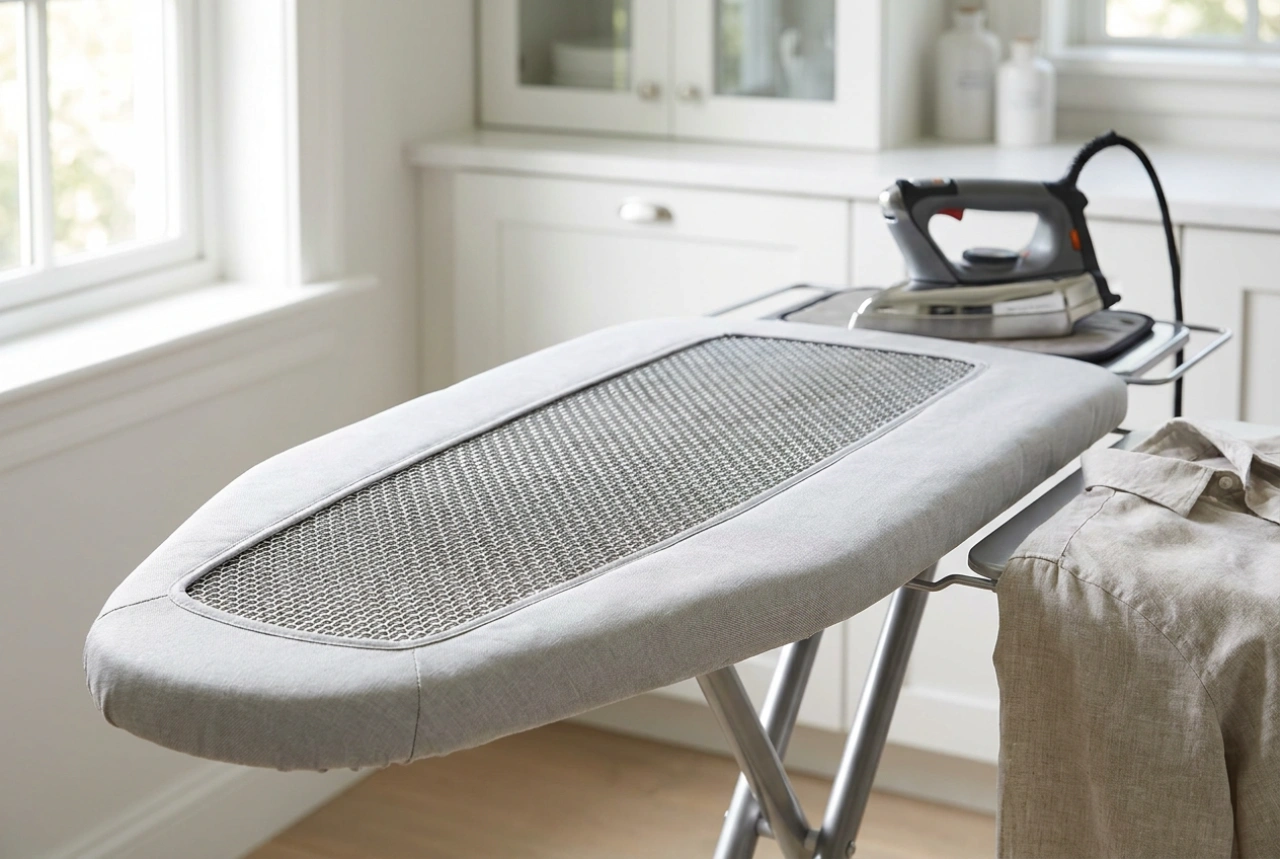
The substrate of the ironing surface directly dictates thermodynamic efficiency. Solid wood or plastic bases trap moisture, leading to condensation build-up, damp garments, and eventual structural degradation or mold. A professional-grade board utilizes a perforated steel mesh surface. This mesh allows steam to pass freely through the fabric and dissipate downward, preventing moisture from pooling on the board surface. When assessing the mesh, ensure the perforations are dense and evenly distributed, and that the metal is rigid enough to resist flexing when downward pressure is applied during pressing.
Cover Material and Padding Density
The interaction between the iron, the garment, and the board padding determines how effectively creases are removed. Cheap covers and thin padding can lead to poor heat distribution and permanent imprinting of the metal mesh on fabrics.
Cover Fabric Composition
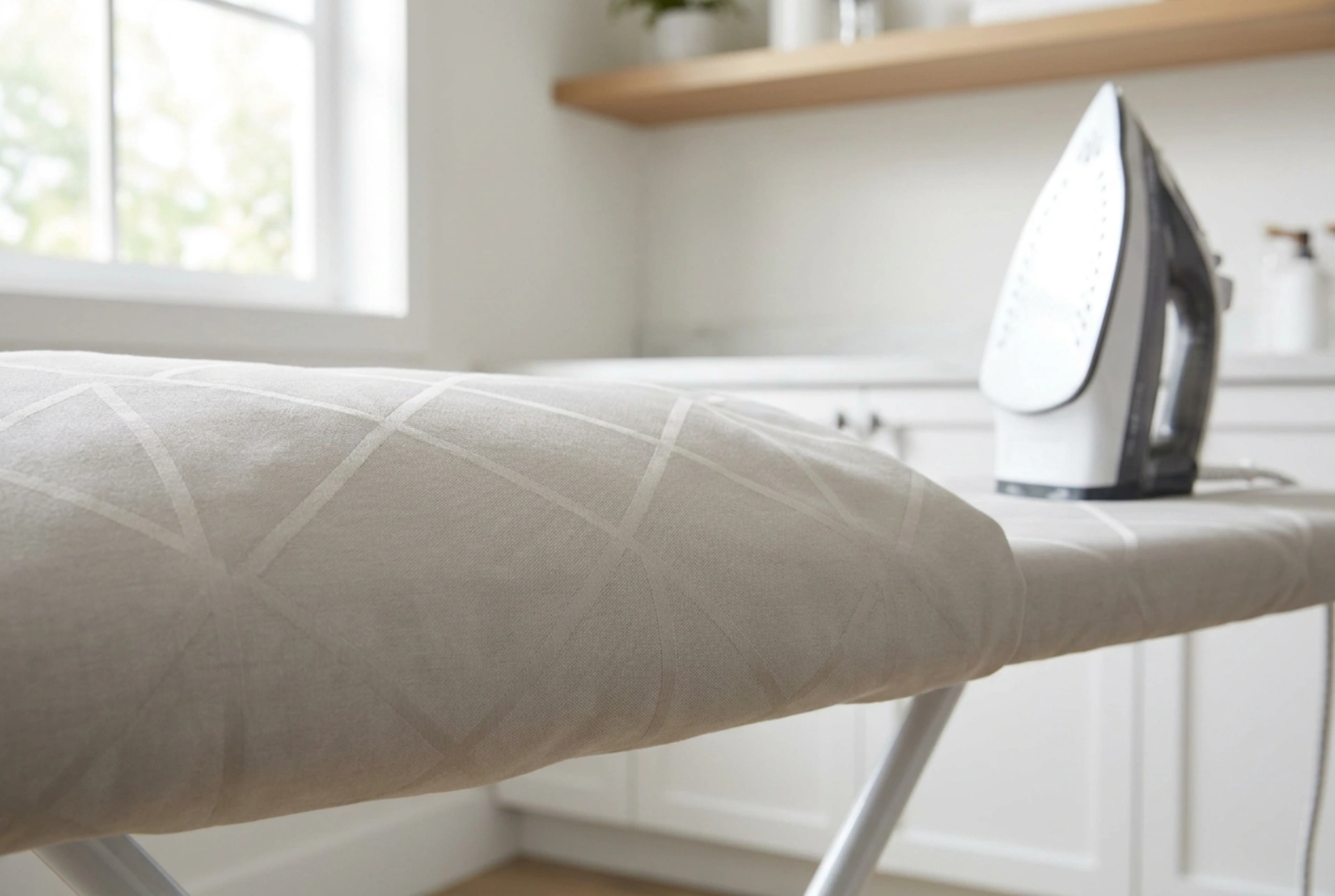
Look for 100% natural cotton. Cotton offers natural friction, holding garments in place, and can withstand temperatures up to 220 degrees Celsius without melting or scorching. Avoid synthetic covers like polyester, which can degrade or transfer melted polymer fibers onto delicate clothing. Some high-performance covers incorporate metallised heat-reflective coatings, which bounce heat back through the garment, effectively accelerating the wrinkle-smoothing process from both sides.
Padding Substructure
Underneath the cover, the padding must balance cushioning and firmness. Low-grade foam degrades quickly under high heat, flattening out and exposing the metal mesh pattern to your garments. A dual-layer system combining a dense needle-punched felt underlay with a resilient polyurethane foam layer provides the optimal resistance. This prevents the metal grid pattern from transferring onto your clothes while retaining enough firmness to allow the iron to glide smoothly over seams and buttons.
Height Adjustment and Ergonomic Mechanics
Daily ironing can cause musculoskeletal fatigue if the board is not set to the correct height. The adjustment mechanism should offer a continuous range of heights or closely spaced increments, allowing you to set the surface level with your hip joint. This alignment reduces the load on your lower back and shoulders during extended sessions. Furthermore, verify the presence of non-slip rubber or silicone feet. These feet do not just protect your flooring; they increase the coefficient of friction against the floor, absorbing the kinetic energy of your ironing stroke and keeping the entire assembly securely anchored.