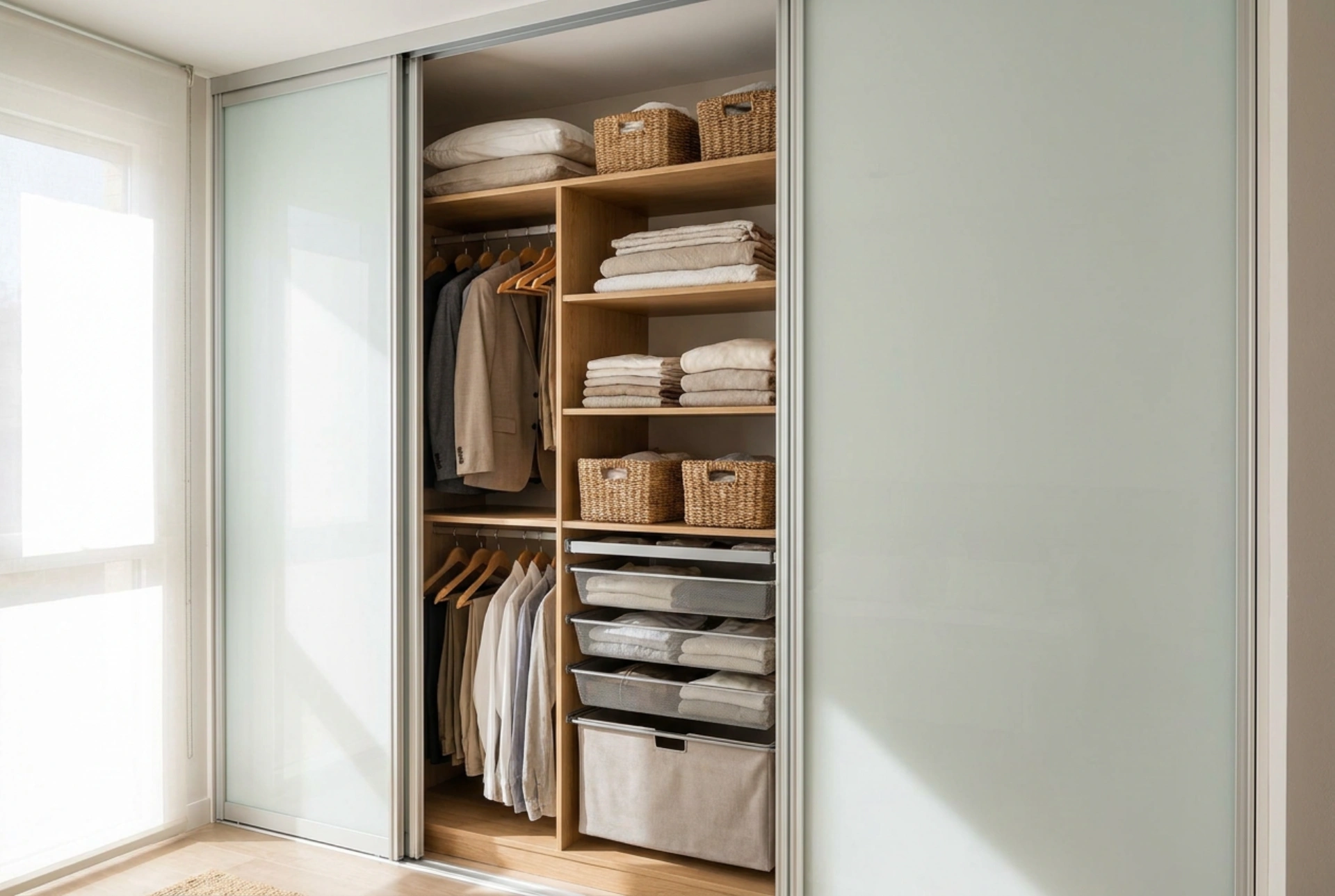


Maximising a floor-to-ceiling hallway wardrobe requires more than just stacking boxes; it demands a systematic approach based on ergonomics, weight distribution, and microclimate control. By understanding how to utilise vertical space efficiently, you can transform a chaotic entryway into a highly functional transition zone that protects your garments and streamlines your daily routine.
The Ergonomics of Vertical Zoning
To design an efficient tall wardrobe, you must categorise your storage into three distinct physical zones based on the frequency of access and human biomechanics. The active reach zone, stretching from thigh to eye level (approximately 70 cm to 170 cm from the floor), should be reserved for items used daily. This includes active seasonal coats, keys, bags, and frequently worn shoes. Placing these items within this golden zone minimises bending and stretching, reducing physical strain during busy morning transitions.
The lower zone (floor to 70 cm) is ideal for heavy items and footwear. Storing heavy objects lower down keeps the wardrobe's centre of gravity low, which structural physics dictates is essential for the stability of tall, freestanding or semi-fitted furniture. The upper zone (170 cm to the ceiling) is the passive storage area. Reserved for off-season clothing, spare bedding, or holiday gear, this zone requires mechanical aids—such as a sturdy stepladder or a pull-down wardrobe rail—for safe access.
Microclimate Control: Combating Humidity and Stagnant Air
Hallways are primary transitional spaces where outdoor moisture meets indoor heating. Wet coats, damp umbrellas, and dirty shoes introduce significant humidity into a closed wardrobe. Without proper air circulation, this trapped moisture creates a microclimate ripe for the proliferation of mould, mildew, and musty odours that can ruin natural fibres like wool and leather.
To mitigate this risk, avoid solid particle-board shelving for damp items. Instead, opt for powder-coated wire baskets or slatted wooden shelves. These designs allow air to circulate freely around the items, accelerating the evaporation process. Additionally, ensure that your wardrobe doors have a tiny clearance gap at the top and bottom to facilitate natural convection currents. For deep cupboards, placing reusable calcium chloride dehumidifying sachets on the middle shelves will actively absorb excess moisture from the air, maintaining a relative humidity level below 50 percent, which is the threshold for mould growth.
Optimising the Top Tier for Long-Term Storage
The space close to the ceiling is often wasted or cluttered with poorly organised boxes. To utilise this area effectively, use lightweight, breathable canvas or fabric containers rather than airtight plastic bins. While plastic bins protect against dust, they trap residual moisture inside, which can lead to dry rot in natural fabrics over long periods. Canvas allows the fabrics to breathe while shielding them from UV light and dust.
When storing technical outerwear or down-filled coats in the upper zone, avoid high-compression vacuum bags. While vacuum sealing saves space, compressing down feathers or synthetic insulation for months destroys their loft—the air pockets that trap heat. Once the loft is crushed, the garment loses its thermal efficiency. Instead, fold these items loosely or hang them on wide, contoured hangers using a mechanical pull-down rail (wardrobe lift) that leverages a gas-spring mechanism to bring high-hanging clothes down to a comfortable handling height.
The Bottom Zone: Managing Footwear and Dirt
The lowest section of a hallway wardrobe bears the brunt of outdoor dirt, grit, and moisture. To protect the structural base of your wardrobe from water damage and swelling—common issues with melamine-faced chipboard—install heavy-duty, removable polypropylene trays at the very bottom. These trays catch water, mud, and road salt, and can be easily taken out and washed.
For shoe storage, angled metal racks are superior to flat shelves. The angle allows dirt to slide off onto a collectable surface rather than accumulating inside the shoe soles, and it maximises depth efficiency, allowing longer shoes to fit into shallower cabinets. When storing tall leather boots, always insert plastic or wooden boot trees. Without internal support, the leather ankles crease and crack over time due to gravity and moisture loss, permanently damaging the material integrity of the footwear.
A Quick Checklist for Tall Wardrobe Organisation
- Place heavy items at the base to maintain a low, stable centre of gravity.
- Use wire shelving and breathable storage boxes to encourage continuous air circulation.
- Keep the active reach zone (70–170 cm) clear for daily essentials and outer garments.
- Store seasonal down jackets loosely rather than in vacuum-sealed bags to preserve loft.
- Protect the base from moisture damage using removable plastic trays under shoe racks.