

The hallway serves as the critical transition boundary between the controlled indoor environment and the unpredictable outside world. When dealing with a narrow hallway cabinet, space constraints require a highly systematic approach to storage, turning this compact piece of furniture into an efficient transition zone for your home.
The Ergonomics of Vertical Stratification
To maximise a narrow cabinet, you must organise items based on the physics of human movement and frequency of use. This is known as vertical stratification. The human body naturally interacts with furniture at different heights with varying degrees of physical effort.
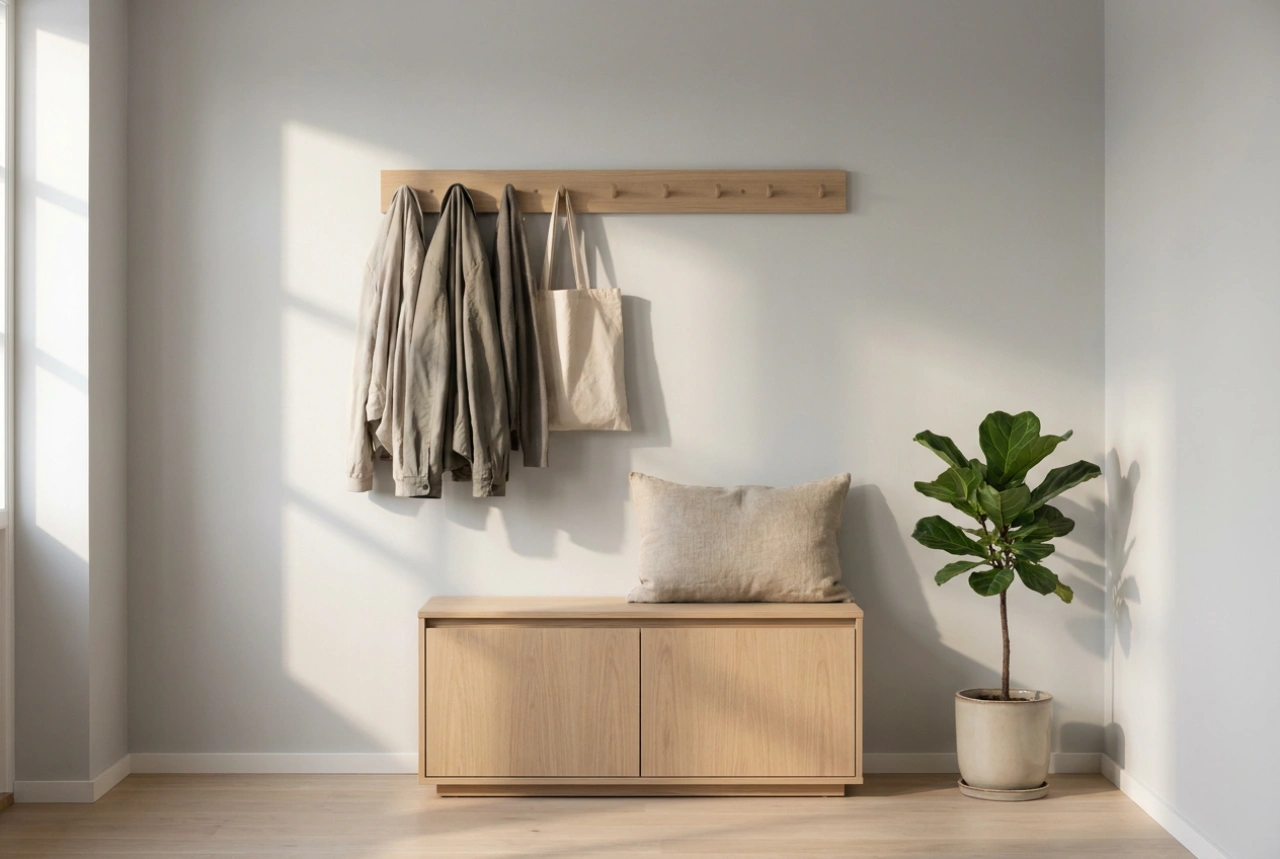
- The Eye-Level Zone (Top Surface): This is your primary transition deck. Reserved for immediate, high-frequency items like keys, outgoing letters, and active transit cards. Keeping these items visible reduces cognitive load during departure.
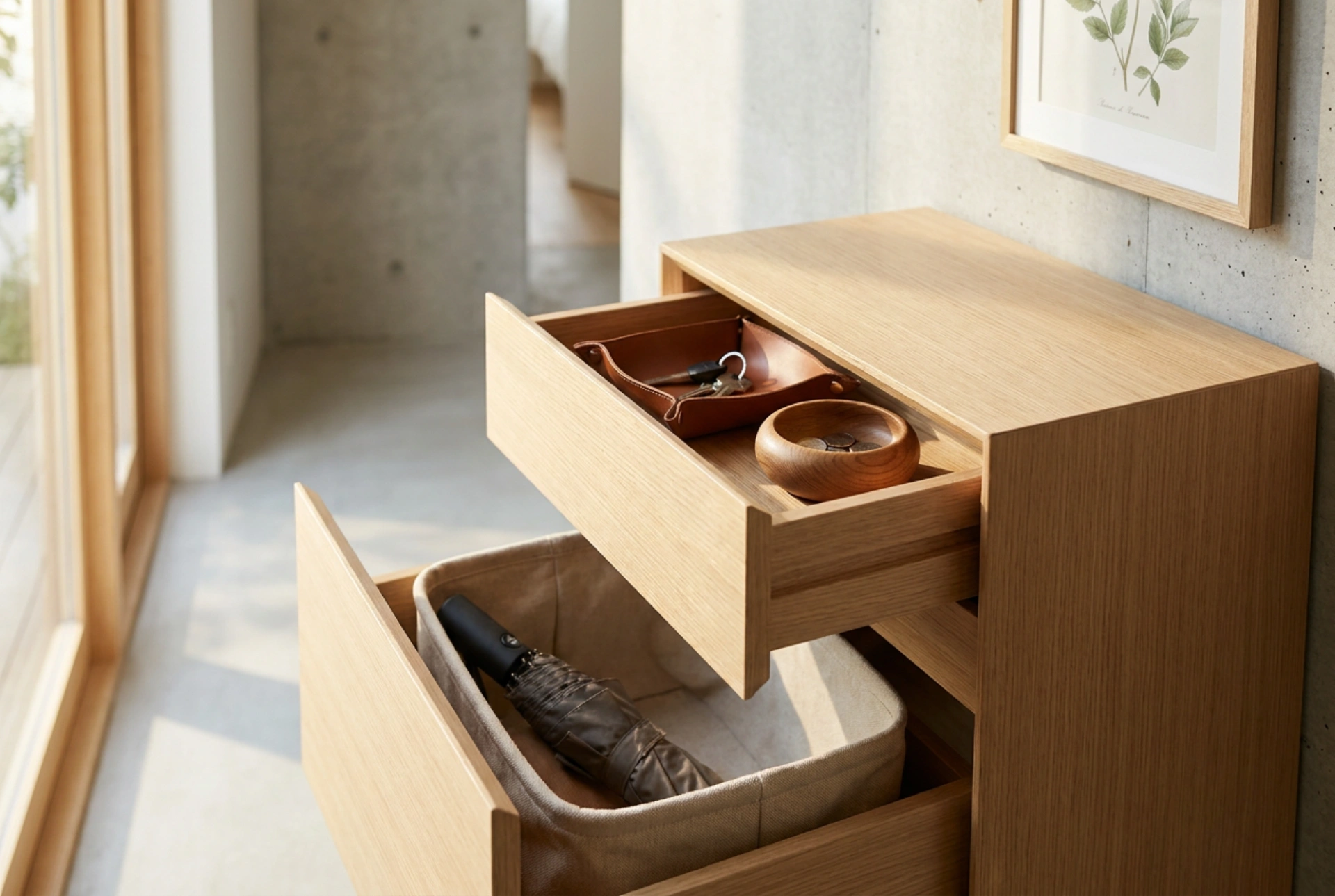
- The Comfort Zone (Upper Drawers): Located between hip and chest height, this area requires minimal bending. It is ideal for daily personal items such as wallets, sunglasses, and pocket tissues.
- The Reach Zone (Lower Drawers and Shelves): Requiring physical bending, this zone should house secondary essentials. This includes seasonal items like gloves or compact folding umbrellas, which are only retrieved under specific weather conditions.
Material Selection for Noise and Surface Protection
The items we carry daily—metal keys, coins, plastic cards, and heavy glass sunglasses—can easily damage the internal surfaces of a wooden or lacquered cabinet. Furthermore, the acoustic clatter of metal on hard wood creates unnecessary sensory irritation during busy mornings. Selecting the right internal lining materials is a matter of practical physics and material science.
Using heavy-wool felt or genuine leather trays inside drawers serves a dual purpose. First, these materials have high impact-absorption properties, dampening the kinetic energy of dropped keys and preventing scratches on the cabinet structure. Second, natural felt is highly breathable, preventing micro-condensation from forming under metallic objects. Avoid cheap synthetic plastics that generate static electricity, which can attract household dust and cling to paper receipts or transit cards.
Micro-Categorisation and Compartmentalisation
Without physical boundaries, a narrow drawer quickly descends into entropy. Items slide around every time the drawer is opened, leading to visual clutter and physical damage. Implementing rigid dividers or modular inserts creates dedicated boundaries that hold items securely in place.
When organizing, group items by their functional destination rather than their physical type. Create an outbound kit containing everything needed for a specific daily routine. For example, keep dog-walking essentials (leads, waste bags, small torch) in one designated wooden tray, and commuter essentials (pass, work badge, earphones) in another. This functional grouping eliminates the need to search multiple compartments, streamlining your departure sequence.
Managing Moisture and Outdoor Contaminants
Because the hallway cabinet sits at the boundary of the outdoors, it frequently encounters moisture and debris. Wet keys, damp pocket umbrellas, and dust-coated sunglasses can introduce moisture into closed drawer environments, leading to musty odours or wood swelling.
To counteract this, use hydrophobic or non-porous materials in zones dedicated to damp items. A small ceramic or glazed clay bowl is excellent for holding keys, as it can be easily wiped dry and does not absorb water. For folding umbrellas, line the bottom of the dedicated compartment with a removable, washable silicone mat. Additionally, placing a small, breathable bag of natural silica gel or active charcoal in the lower drawers will actively absorb excess ambient humidity, protecting both your accessories and the cabinet timber from moisture damage.