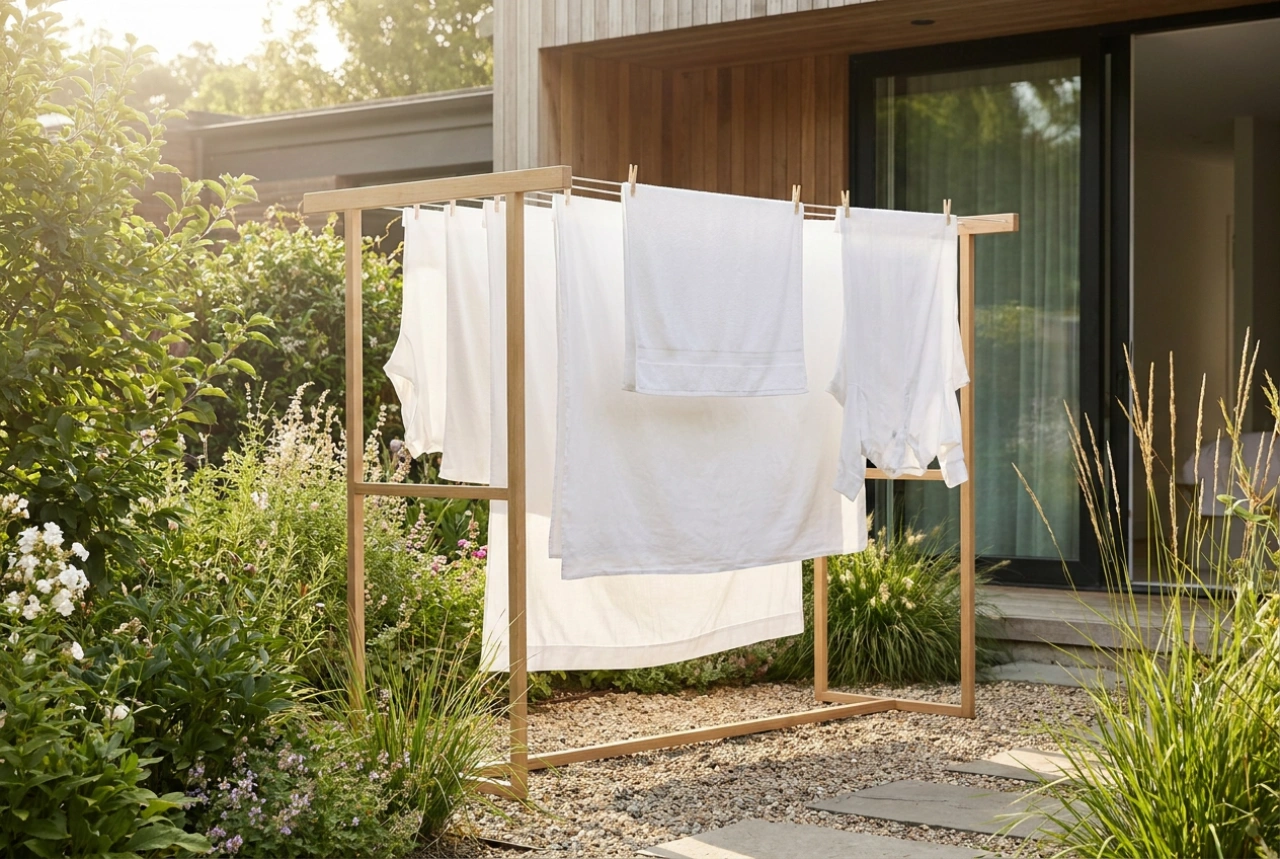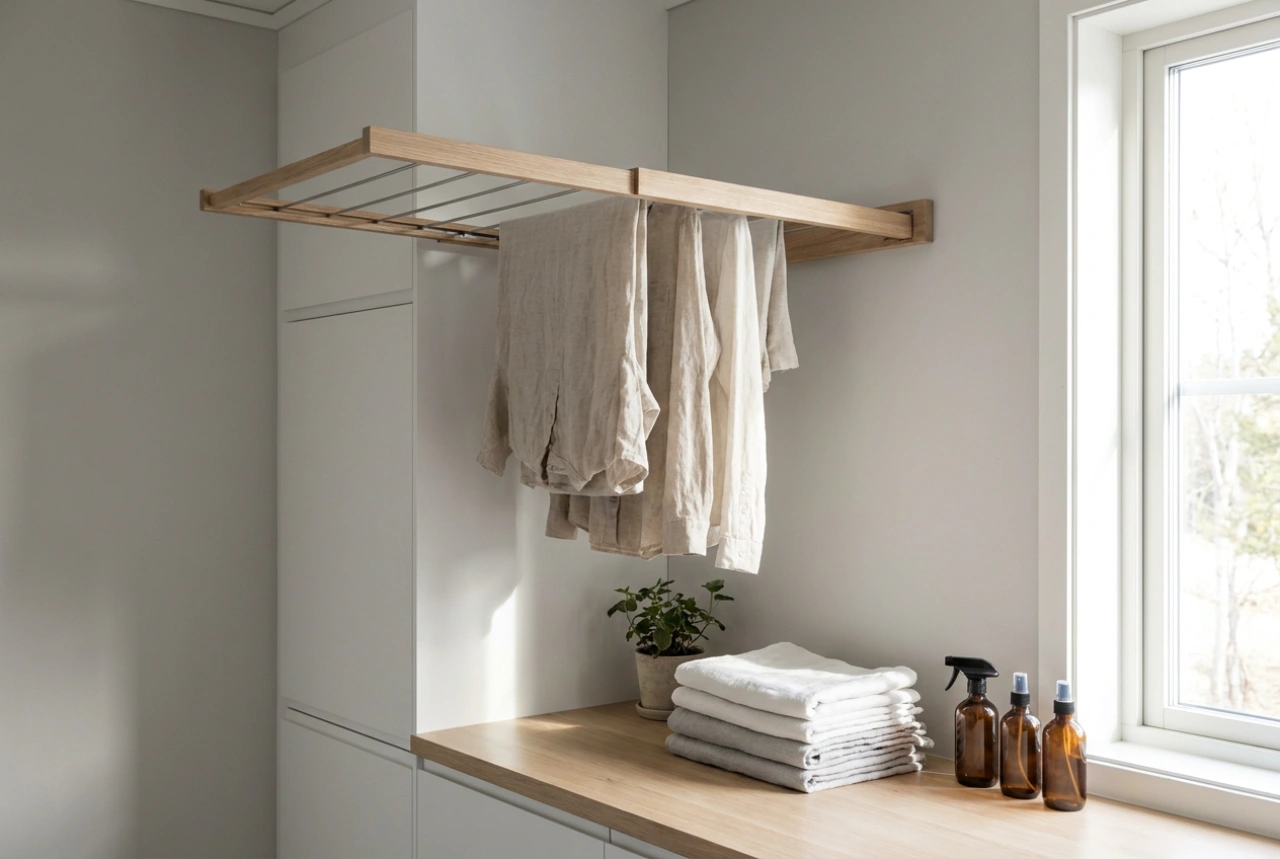


Hanging laundry on a freestanding drying rack is an exercise in thermodynamics and material science that directly dictates how quickly fabrics dry and how well they retain their shape. Optimising this process requires understanding how airflow, ambient humidity, and gravitational tension act upon wet fibers to prevent damp odours and eliminate stubborn creases naturally.
The Science of Evaporation: Airflow and Spacing
To understand how clothes dry, one must look at the boundary layer of air surrounding wet fabric. As water evaporates from the fibers, it creates a localized zone of high relative humidity immediately around the garment. If this air remains stagnant, the rate of evaporation drops significantly, prolonging the drying time and allowing microbial growth to occur. To break this boundary layer, continuous air circulation is required.
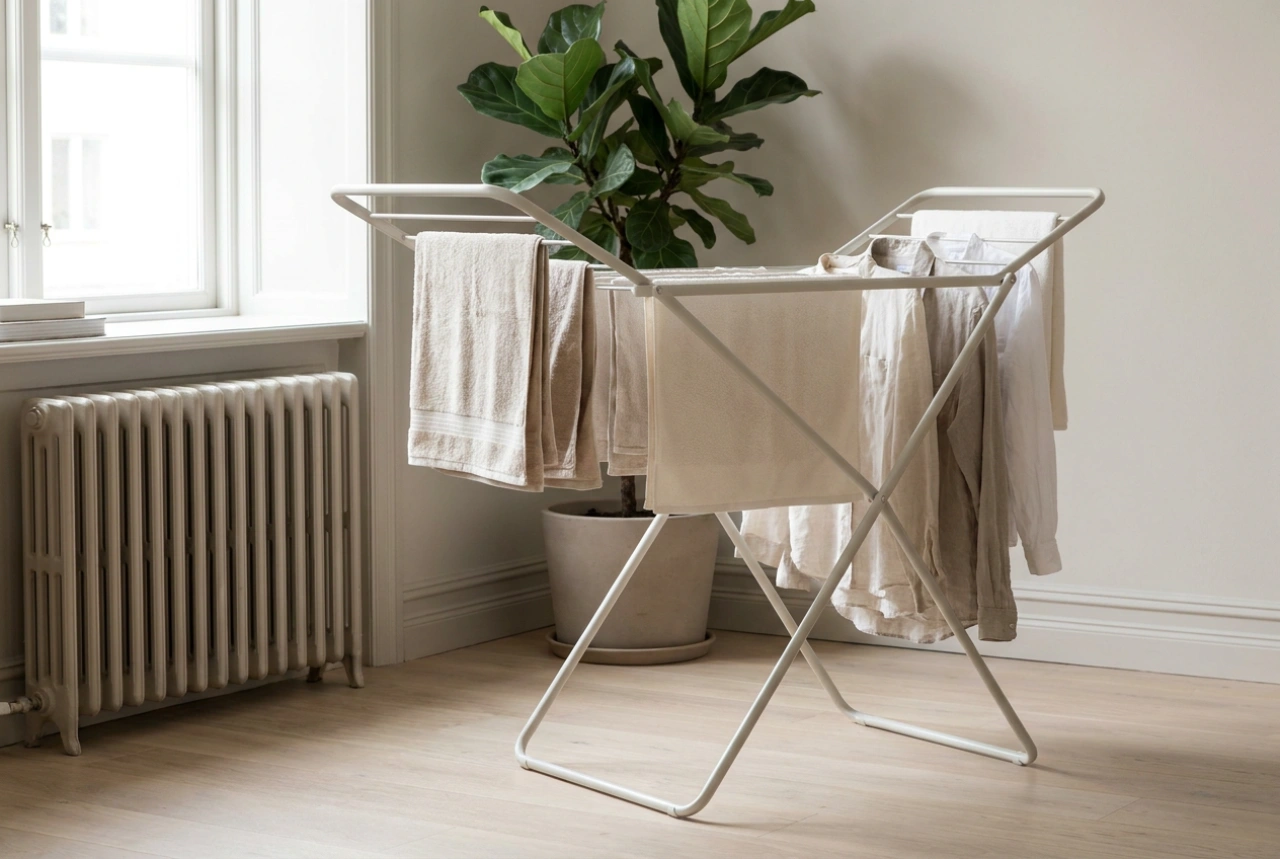
When positioning garments on a standing drying rack, the distance between items is critical. Cramming clothes together restricts airflow, trapping moisture. Maintain a minimum of three centimeters of open space between each hanging item. If space permits, drape items over two parallel rails rather than one. This creates an open "U-shape" that allows air to flow freely through the interior of the garment, doubling the exposed surface area and accelerating evaporation.
Additionally, position the rack in a location with active convection currents, such as near a doorway, hallway, or a ventilated room. Placing the rack directly against a cold wall should be avoided, as the lack of air movement combined with cold surfaces can lead to localized condensation and structural dampness.
Gravity, Tension, and Fabric Preservation
Water significantly increases the mass of wet textiles, which subjects the fibers to high gravitational tension while they dry. While this tension can be leveraged to pull out wrinkles naturally, it can also permanently warp delicate materials if applied incorrectly.
- Heavy Knits and Wool: Never hang wet woollen sweaters or heavy cotton knits vertically. The weight of the water retained in the fibers will pull the garment downward, permanently stretching the shoulder seams and lengthening the torso. These items must be dried flat across the top horizontal rails of the rack, supported by a clean dry towel to absorb excess moisture.
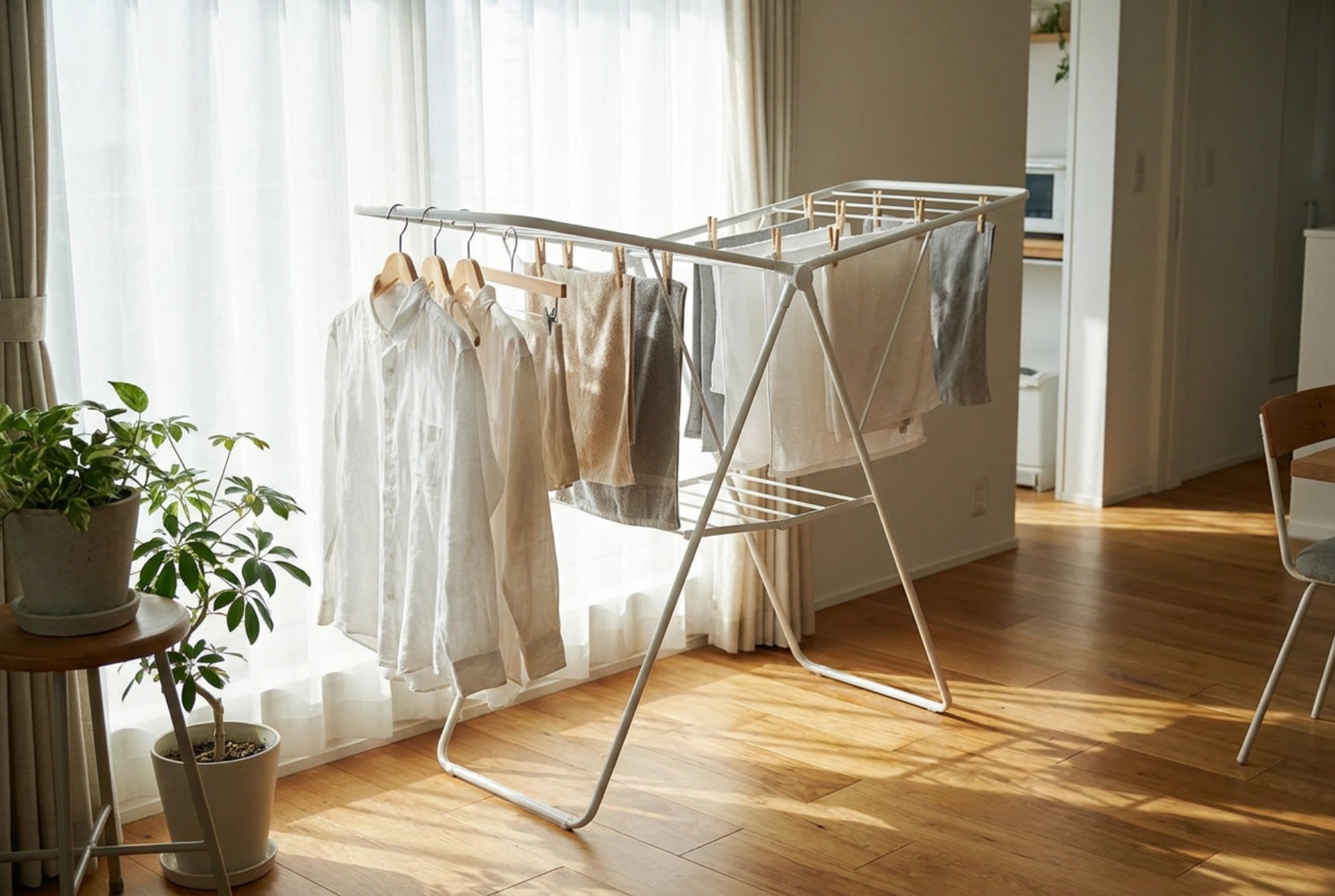
- Woven Cottons and Linens: Shirts and trousers benefit from controlled gravity. To minimize ironing, shake each garment vigorously before hanging to realign the fibers. Hang shirts from their bottom hems using pegs on the seam line, or place them on wide-shouldered plastic hangers hooked onto the outer frame of the rack. Hang trousers by their cuffs; the heavy waistband will pull the legs straight as they dry, smoothing out wrinkles.
Strategic Layout: Managing the Microclimate of the Rack
A standing drying rack creates its own microclimate, with the highest concentration of humidity typically settling in the center and lower sections. To maximize efficiency, you must arrange your laundry strategically based on material thickness and drying times.
Always place thin, synthetic materials—which retain very little water—on the inner rungs. Because synthetics dry rapidly, they will quickly stop contributing to the rack's microclimate humidity. Heavy fabrics like denim, thick cotton towels, and fleece should occupy the outermost rails or the top wings. This ensures they receive maximum exposure to ambient room air currents and do not trap moisture over lighter items below.
For double-sided folding racks, balance the load weight evenly. Asymmetrical loading not only risks tipping the structure but also alters the tension of the frame, which can cause subtle warping of the metal or wooden joints over time.
Preventing Microbial Growth and Damp Odours
The distinct, musty smell often associated with indoor-dried laundry is caused by volatile organic compounds produced by bacteria and fungi, such as Moraxella osloensis. These microorganisms thrive in dark, warm, and damp environments, multiplying rapidly if fabric remains wet for more than twelve hours.
To prevent this, ensure that your drying environment maintains a relative humidity level below 60%. If drying indoors during winter, brief, intensive ventilation (opening windows fully for five minutes) removes moisture-laden air without chilling the walls. Avoid drying laundry in unheated rooms, as cold air holds less moisture, severely delaying the evaporation process and encouraging mold growth on both the fabrics and the surrounding walls.