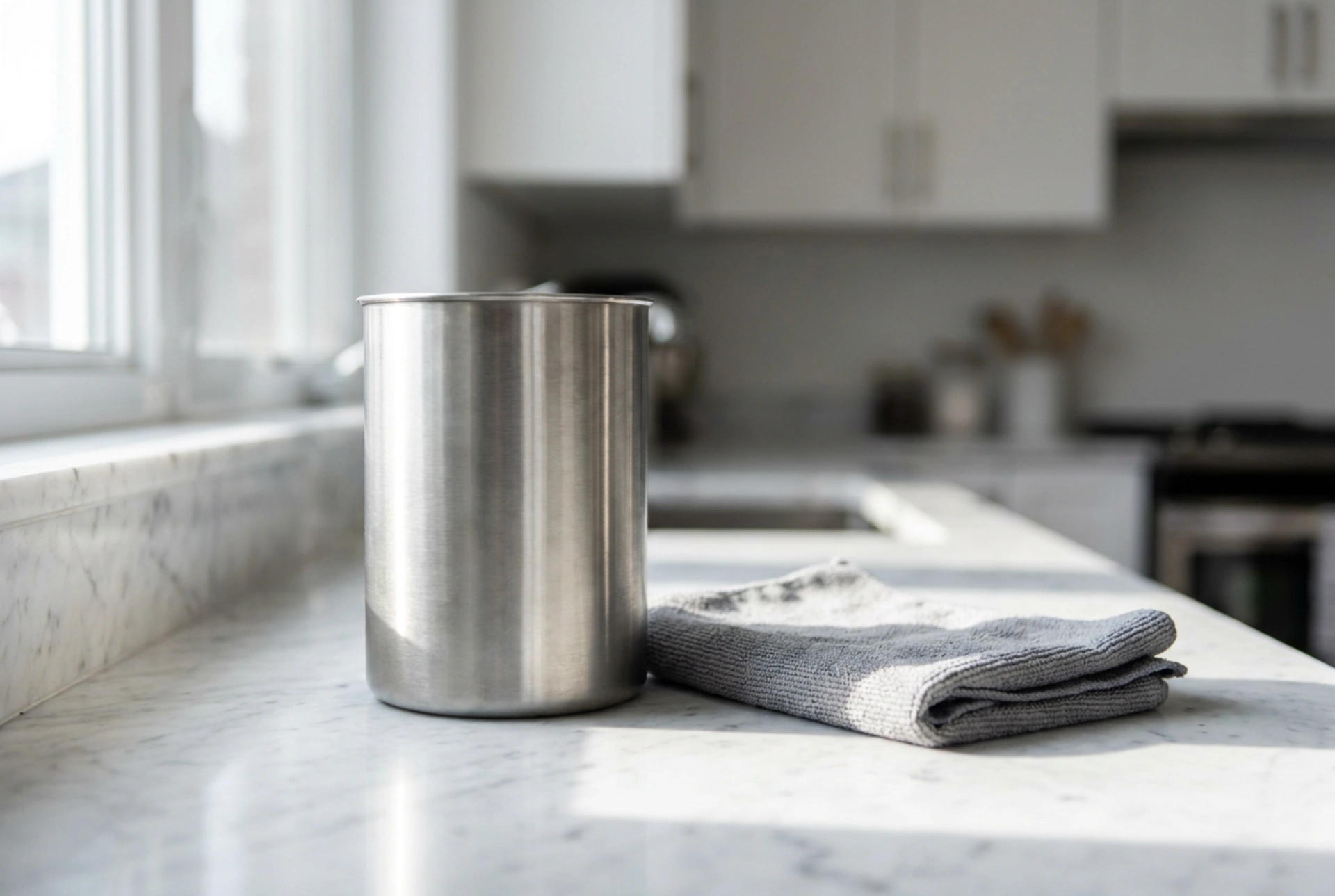


Positioning a standing cutlery organizer strategically is the key to preventing stagnant water accumulation and simplifying your kitchen maintenance routine. By understanding the principles of airflow, capillary action, and evaporation, you can minimize the formation of limescale and biological films on your utensils and holder.
The Physics of Placement: Airflow and Microclimates
Every kitchen has distinct microclimates defined by humidity, temperature, and airflow. Placing your standing cutlery organizer too close to the sink exposes it to constant splashing and high local humidity, which significantly slows down the evaporation of water from recently washed utensils. Conversely, placing it too close to the cooking range exposes it to airborne vaporized fats, which combine with dust to form a sticky, hard-to-clean film.
To optimize evaporation, position the organizer in a zone with active air circulation, such as near a window or along an open stretch of countertop, at least 30 to 40 centimeters away from the sink edge. Maintain a clearance of at least 2 centimeters between the back of the organizer and the kitchen backsplash. This gap creates a chimney effect, allowing air to circulate freely around all sides of the container, carrying away moisture before it can settle and stagnate.
Material Dynamics and Capillary Action
Standing organizers, particularly those made of stainless steel or dense plastics, are highly susceptible to capillary action. When wet cutlery is placed inside, water runs down the metal shafts and pools at the bottom. In tight spaces where cutlery elements rest close together, surface tension draws water upward or holds it in tight droplets, preventing evaporation.
Stainless steel resists corrosion but is highly prone to unsightly mineral spotting caused by calcium carbonate deposits left behind as hard water evaporates. Ceramic organizers retain heat, which can marginally aid drying, but their glazed surfaces can trap moisture inside if there are no drainage holes. Always select an organizer with a perforated base and a detachable drip tray. This physical separation prevents the cutlery from sitting in a pool of standing water, eliminating the anaerobic conditions that encourage bacterial growth.
Optimal Loading and Orientation for Rapid Drying
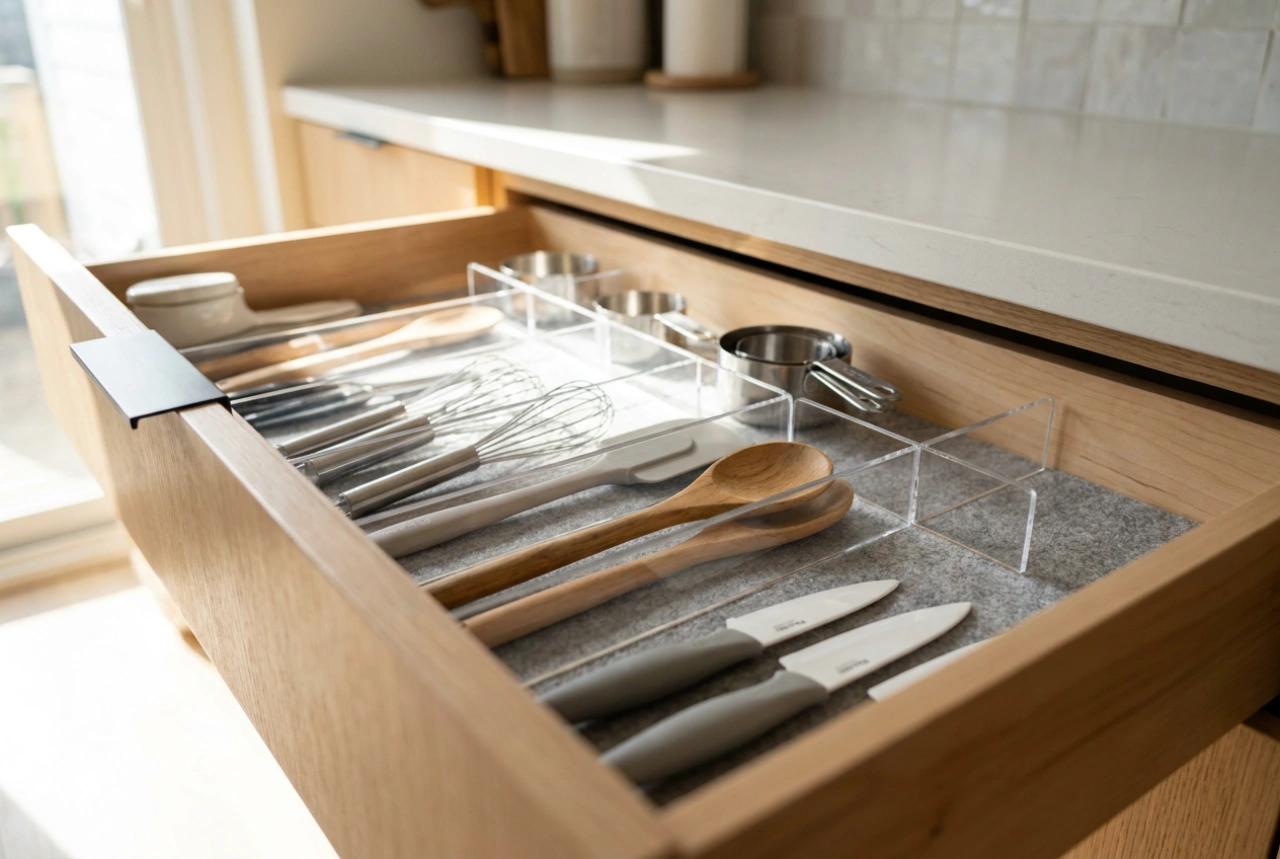
The way you arrange your cutlery inside the organizer directly impacts how easily the holder can be cleaned. Loading utensils haphazardly restricts airflow and traps moisture in dense pockets. Implement these structural habits to maximize air exposure:
- Spoons and Forks: Place them with the handles facing upward. This keeps the functional, food-contact ends elevated in the open air where evaporation is fastest, while also preventing touch contamination when retrieving them.
- Knives: Place blades downward for safety, but ensure they are spaced out to allow water to run down the flats of the blades unimpeded.
- Density Control: Never overfill a single compartment. Distribute the weight and volume evenly across all sections of the organizer to prevent capillary trapping between flat surfaces.
The Chemistry of Deep Cleaning Your Organizer
Over time, even the best-positioned organizer will accumulate a thin layer of limescale and organic residue. Cleaning should rely on targeted chemical reactions rather than abrasive scrubbing, which can scratch surfaces and create microscopic crevices where bacteria can harbor.
To dissolve calcium carbonate (limescale) deposits, use a mild acid solution. Dilute citric acid powder in warm water (at a ratio of two tablespoons per half-liter of water) or use plain white vinegar. The acid reacts with the insoluble calcium carbonate, converting it into soluble calcium citrate or calcium acetate, which easily rinses away. Allow the solution to sit in the organizer or drip tray for ten minutes to dissolve the bonds.
For organic residues and oils, use a surfactant-rich dish detergent. Surfactants lower the surface tension of water, allowing it to bind with oil molecules and suspend them so they can be washed away. Rinse the organizer thoroughly with hot water; the thermal energy of hot water lowers its viscosity, enabling faster runoff and accelerating the final evaporation process. Dry the exterior and interior immediately with a clean microfiber cloth to prevent new water spots from forming.