

A sluggish bathtub drain and a dull, limescale-encrusted plug are common household nuisances that stem from a combination of mineral precipitation and organic build-up. Restoring optimal water flow and a pristine metallic shine requires understanding the chemical synergy between hard water minerals and daily hygiene products.
The Anatomy of a Clog: Why Drains Slow Down
When you bathe, a complex chemical reaction occurs in your drain. Tap water contains dissolved minerals, primarily calcium and magnesium carbonates. When this hard water mixes with soap (which contains sodium salts of fatty acids), an insoluble precipitate known as calcium soap, or soap scum, is formed. This sticky substance adheres to the internal walls of the drain pipe and the components of the drain plug mechanism.
As hair, skin cells, and cosmetic oils enter the drain, they become trapped in this sticky soap scum matrix. Over time, this mixture solidifies, narrowing the pipe diameter and restricting water flow. The drain plug, especially modern pop-up or click-clack designs, acts as a primary catching point for these debris matrices, leading to rapid build-up and slow drainage.
How to Safely Remove and Disassemble the Drain Plug
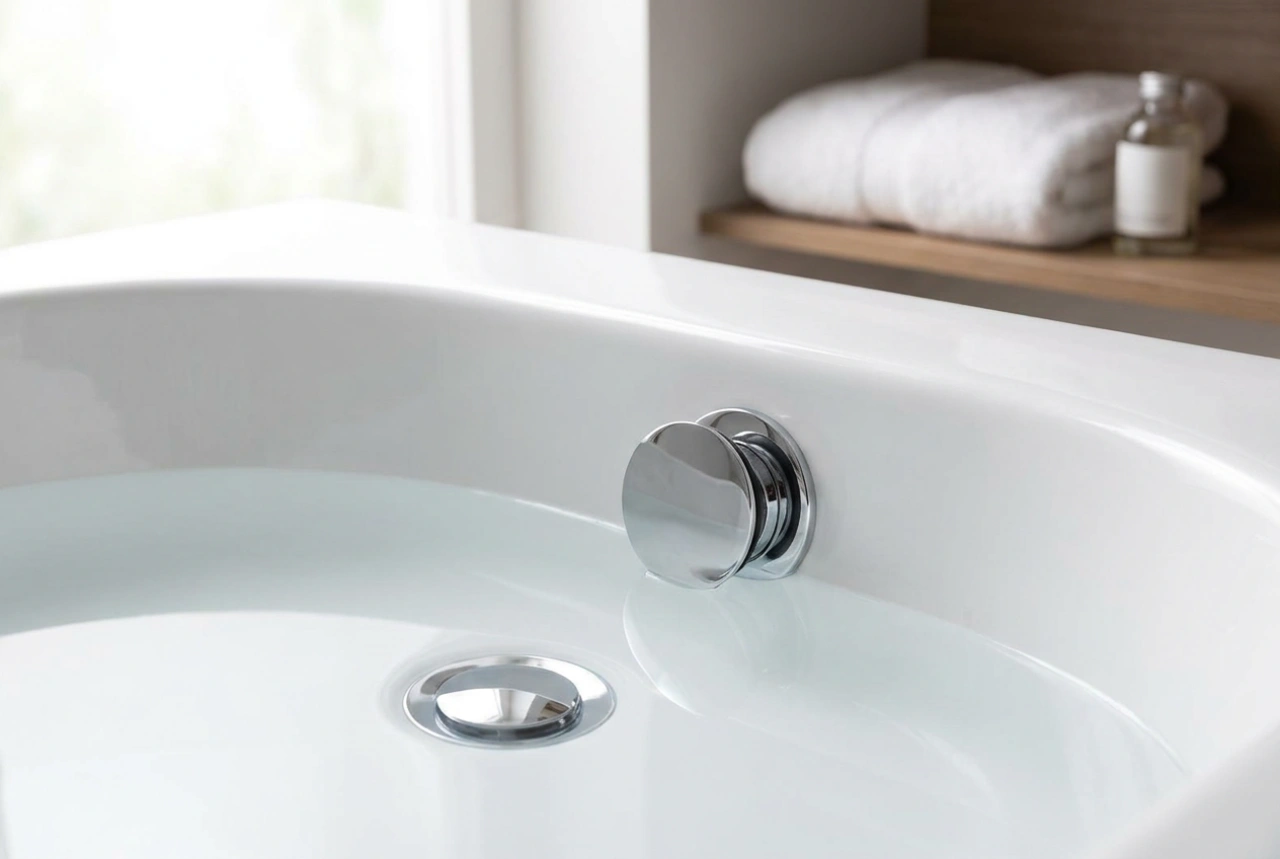
Before applying any cleaning agents, physical access to the mechanism is essential. For traditional rubber plugs, this is simple, but modern click-clack or pop-up plugs require careful removal to avoid damaging the delicate seals and threads.
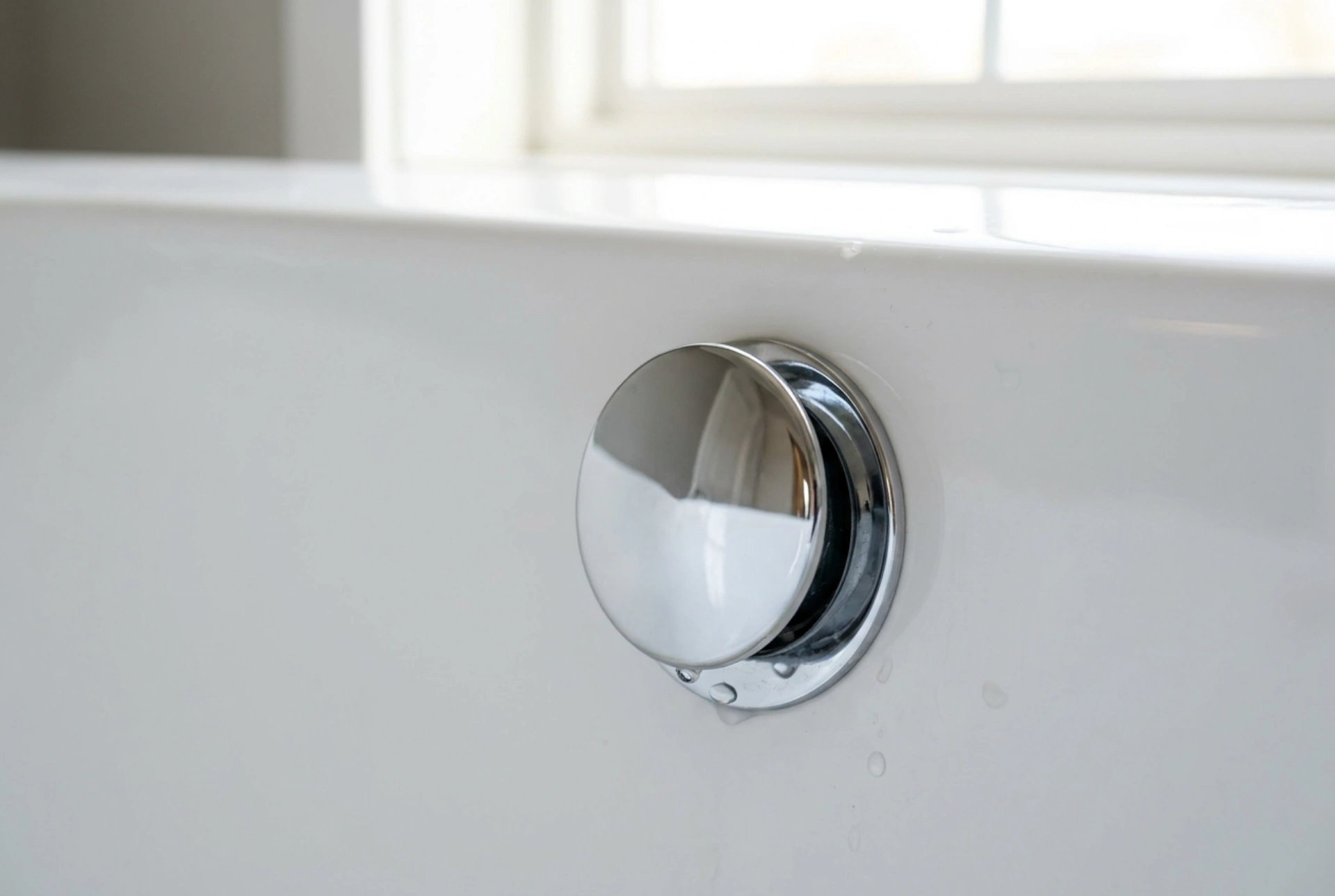
- Click-clack plugs: Most click-clack plugs can be removed by turning the metal cap counterclockwise. If the cap spins without unscrewing, gently pull it upward while turning to engage the internal thread.
- Lever-operated plugs: These are connected to a metal rod assembly beneath the tub. To remove them, set the lever to the open position and pull the plug straight up. You may need to wiggle it slightly to free the rocker arm.
Once removed, inspect the rubber O-ring or gasket. If the rubber is cracked or brittle, it will lose its sealing capabilities and should be replaced to prevent water from slowly leaking out of the tub during use.
Dissolving Limescale and Scum: Chemical Solutions
Chrome-plated brass and stainless steel are highly durable, but they can be permanently dulled or etched by harsh industrial acids. To dissolve calcium carbonate (limescale) and break down soap scum safely, use a weak organic acid such as citric acid or white vinegar (acetic acid).
Create a soaking solution by dissolving two tablespoons of citric acid powder in 500 ml of warm water. Submerge the disassembled plug mechanism in this solution for 30 to 60 minutes. The acid reacts with the calcium carbonate, converting it into soluble calcium citrate and carbon dioxide gas. This chemical breakdown loosens the bond between the limescale and the metal surface, allowing you to easily wipe away the residue with a soft microfibre cloth. Avoid using stiff wire brushes or steel wool, as these will scratch the thin chrome plating, leaving the underlying brass vulnerable to corrosion.
Clearing the Subsurface Blockage
Cleaning the plug itself is only half the battle; the pipe beneath must also be addressed. Avoid pouring highly corrosive sodium hydroxide (caustic soda) down the drain if you have older pipes or flexible plastic corrugated hoses, as the extreme exothermic reaction can warp or melt plastic components.
Instead, use a physical retrieval tool, such as a flexible plastic drain snake (often called a hair clog remover), to pull out trapped hair. Insert the tool gently, rotate it to catch the hair fibres, and pull it straight up. Follow this by flushing the drain with a generous amount of near-boiling water to liquefy and wash away any remaining grease and soap fats that have accumulated further down the pipe.
Preventative Habits for Long-Term Flow
To prevent future build-up, establish a simple maintenance routine. Once a week, flush the drain with hot water to prevent oils from solidifying. Additionally, consider installing a low-profile stainless steel hair catcher over the drain opening during showers. By stopping hair from entering the system, you eliminate the framework upon which soap scum and limescale can build, ensuring your bathtub drains quickly and remains hygienically clean.