

The exterior panel of an integrated dishwasher is constantly exposed to kitchen grease, water droplets, and high-temperature steam. Maintaining this surface requires an understanding of material science to prevent micro-scratches, dulling, and the breakdown of protective coatings.
Understanding Your Panel’s Surface Chemistry
Integrated dishwashers feature front panels made either of stainless steel or furniture laminates that match the surrounding kitchen cabinetry. Stainless steel owes its corrosion resistance to a microscopic, self-healing passive layer of chromium oxide. Harsh chemicals or abrasive scrubbing can strip this thin layer away, exposing the raw metal to moisture and oxygen, which leads to localized oxidation. On the other hand, modern matt and high-gloss acrylic panels are highly prone to micro-scratching. Understanding the molecular structure of these surfaces dictates that physical force should never replace chemical dissolution when removing daily grime.
The Science of Removing Fingerprints and Kitchen Grease
Fingerprints consist primarily of sebum, an oily substance made of lipids, wax esters, and sweat. Because sebum is hydrophobic, plain water will only smear it across the panel. To clean this effectively without damaging anti-fingerprint coatings, you must employ mild surfactants or polar solvents like isopropyl alcohol diluted with distilled water. Surfactants possess dual hydrophilic and lipophilic properties; they surround the grease molecules, lift them from the surface, and allow them to be suspended in water and wiped away. Distilled water is crucial here because tap water contains calcium and magnesium ions that leave behind mineral deposits, known as limescale, upon evaporation.
The Correct Physical Technique and Material Choice
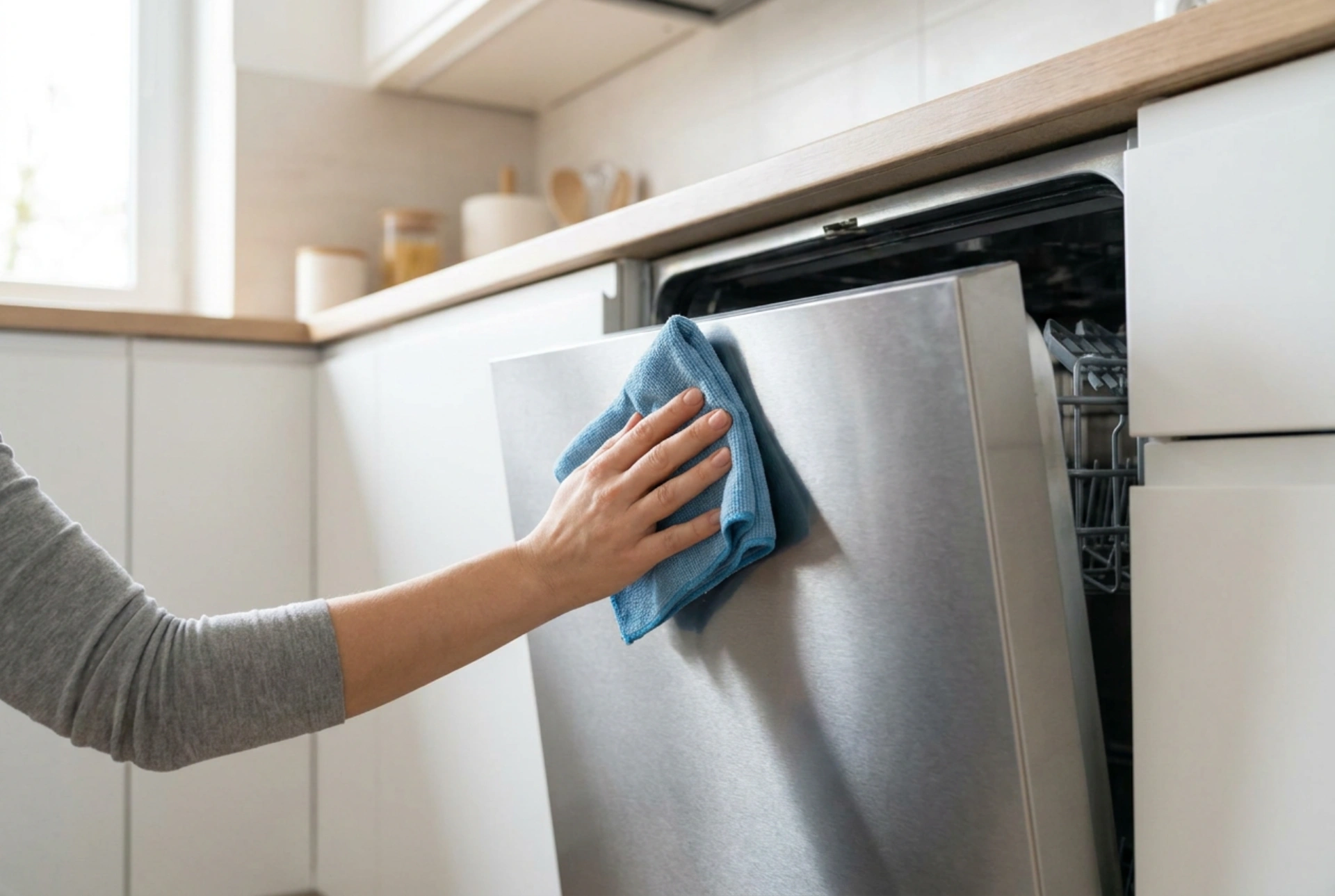
The method of physical contact is just as important as the cleaning solution. Always use a clean, high-density microfiber cloth. The split fibres of microfiber create a capillary action that traps dust and grease within the cloth rather than dragging them across the panel. When cleaning brushed stainless steel, always wipe parallel to the grain of the metal. Crossing the grain can push microscopic particles of dirt into the crevices, causing permanent fine scratches and dulling the metallic lustre. For high-gloss or matt lacquer panels, use extremely light pressure in sweeping, linear motions rather than circular rubbing, which concentrates friction and can create visible swirl marks.
Managing Steam and Heat Exposure
The most severe environmental threat to an integrated dishwasher's external panel occurs at the end of the washing cycle. When the door is opened, hot, moisture-saturated air escapes rapidly. If your kitchen layout allows steam to pool under the worktop or settle on the front panel, it can cause wood-based laminates to swell and delaminate, or accelerate the degradation of protective coatings on metal. To mitigate this, ensure the condensation strip (usually a metal or plastic shield mounted under the worktop edge) is properly aligned. Avoid leaving the dishwasher door slightly ajar while the contents are piping hot; instead, either keep it fully closed until the internal temperature drops and condensation settles on the tub walls, or open it fully to allow the steam to dissipate quickly into the room volume.
Chemicals to Avoid to Protect the Finish
Many standard household cleaners can cause irreparable damage to dishwasher panels. Avoid any formulations containing chlorine bleach, as chloride ions are notorious for penetrating the passive layer of stainless steel, causing pitting corrosion. Acidic cleaners, including concentrated vinegar or lemon juice, can etch plastic laminates and strip protective sealants. Similarly, alkaline substances like sodium bicarbonate should not be used as scouring pastes on polished or lacquered surfaces because their crystalline structure acts as an abrasive, permanently altering the surface texture and light-reflecting properties.