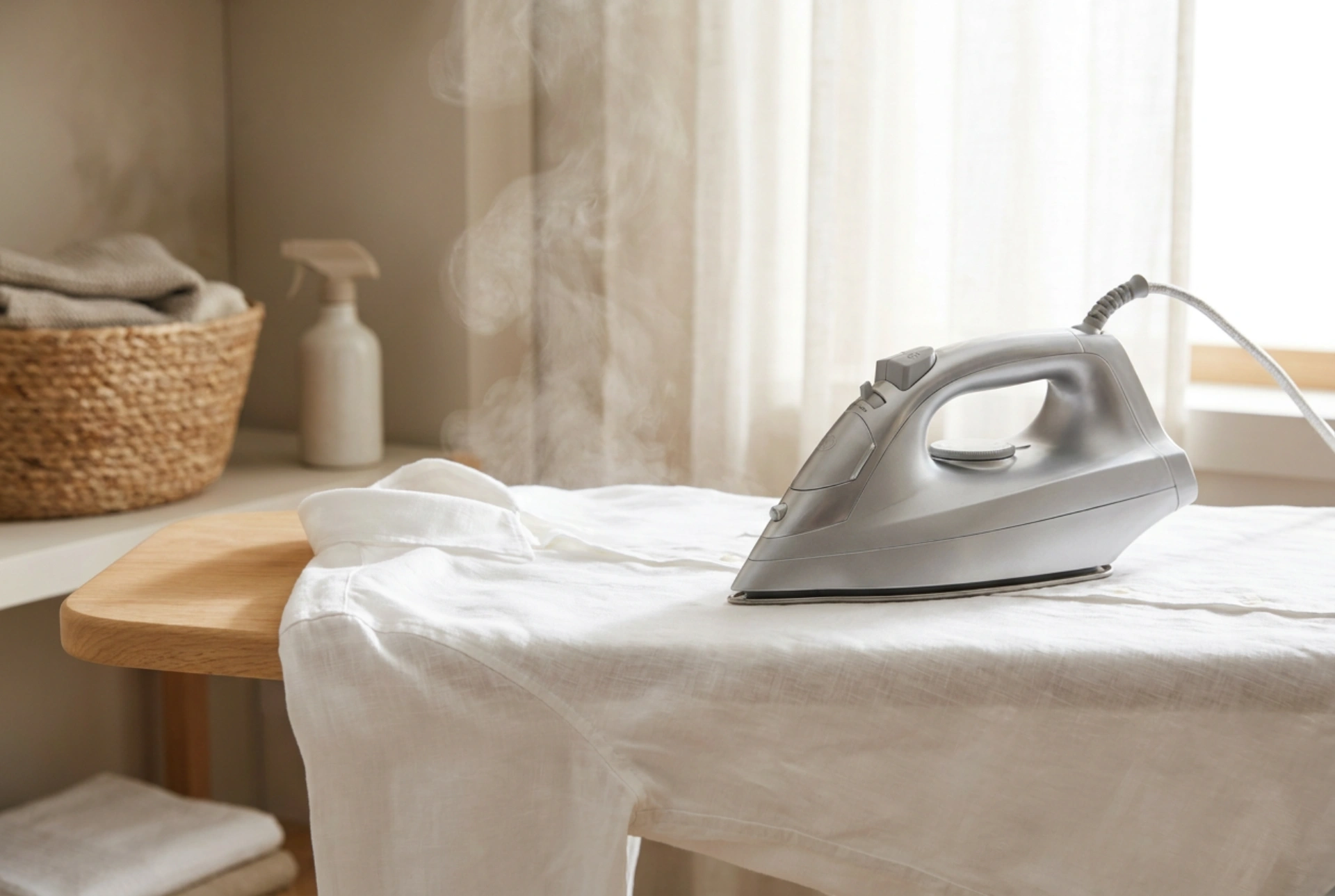


Using a pressurised steam generator transforms garment care from a tedious chore into an efficient, scientific process of molecular realignment. To achieve pristine, crease-free results without dampness, you must understand the relationship between pressurised vapour, fibre physics, and the thermodynamic properties of your ironing surface.
The Molecular Physics of Steam Ironing
At the molecular level, fabrics like cotton, linen, and wool consist of polymer chains held together by hydrogen bonds. Creases form when these bonds lock into irregular patterns through heat and pressure during wear or washing. To remove these creases permanently, the existing hydrogen bonds must be broken, rearranged, and set in a flat state.
This is where the steam generator excels. Unlike traditional dry irons, a steam generator produces high-pressure vapour that penetrates deeply into the textile core. The moisture temporarily weakens the hydrogen bonds, while the high temperature makes the fibres pliable. Once the fibres are relaxed, the mechanical pressure of the iron plate aligns them. Crucially, the process is only complete when the fabric cools and dries in its new, flat position. Without a dry phase, the fibres re-absorb atmospheric moisture and revert to their creased state.
The Role of the Ironing Board in Vapour Management
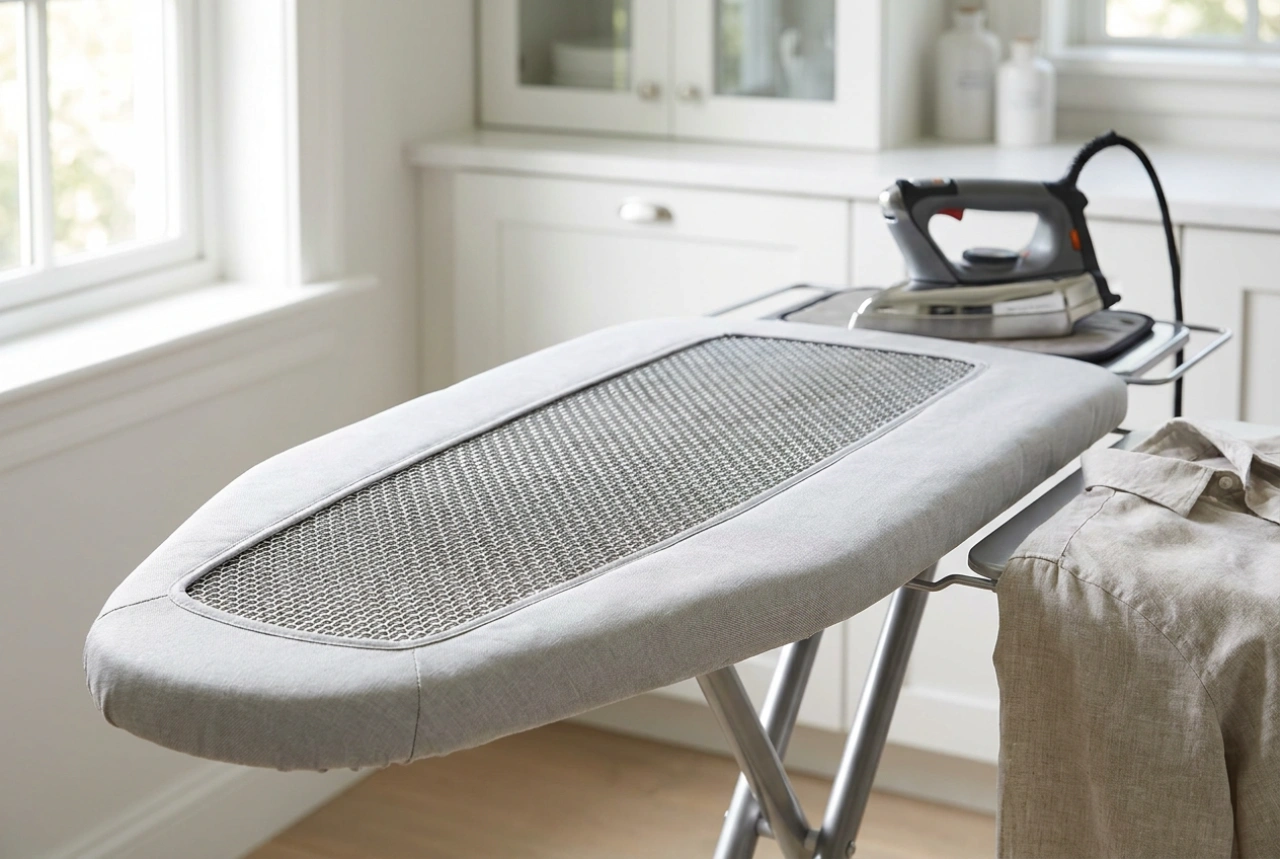
A standard ironing board is often insufficient for a high-output steam generator. Because these appliances release up to three times more moisture than conventional irons, the excess steam can quickly condense on the underside of a poorly ventilated board. This results in pooling water, rusted metal mesh, and damp garments that crease the moment they are folded.
To optimise the system, your ironing board must feature high steam permeability. A multi-layered structure is ideal: a perforated metal base allows excess steam to escape downwards, while a thick underlayment of dense felt or foam buffers the moisture. For the ultimate setup, active ironing boards equipped with an extraction (suction) function are highly effective. The suction pulls steam directly through the garment and the board, instantly drying the fabric and holding it firmly in place to prevent slipping. Alternatively, a blowing function creates an air cushion under delicate fabrics, preventing shiny patches or crushed seams on wool and silk.
The Ideal Ironing Rhythm: Steam, Glide, Dry
An efficient ironing rhythm relies on a simple physics-based sequence: relax, flatten, and set. Instead of continuously holding down the steam trigger, adopt a structured stroke pattern to save energy and prevent fabric dampness.
- The Forward Stroke (Relax and Flatten): Move the iron forward while engaging the steam trigger. This introduces the high-pressure vapour into the fibres just before the hot soleplate passes over them, instantly breaking the hydrogen bonds and flattening the weave.
- The Backward Stroke (Dry and Set): Release the steam trigger and glide the iron backward over the same section. The residual heat of the soleplate evaporates the remaining moisture, cooling and locking the fibres into their newly aligned, smooth state.
By using this two-step motion, you ensure that no fabric is left damp, significantly reducing the chance of post-ironing wrinkles.
An Efficient Order of Operations
To avoid re-creasing already ironed sections, always iron garments from the smallest, most complex parts to the largest, flat surfaces. For a classic dress shirt, follow this precise sequence: collars, cuffs, sleeves, yoke (shoulders), and finally the main body panels. Since the body panels require the most surface area, handling them last ensures they do not bunch up or crease while you manipulate smaller details like cuffs and collars.