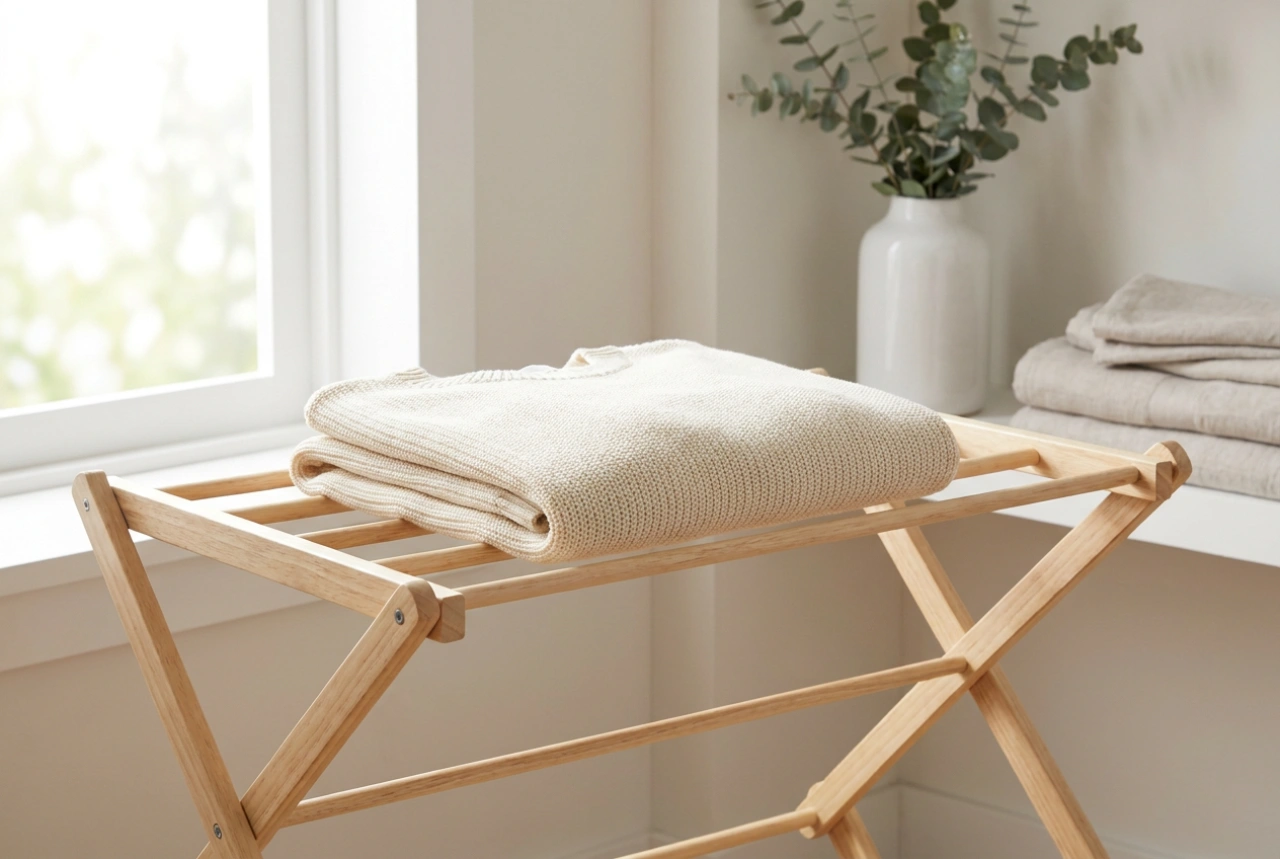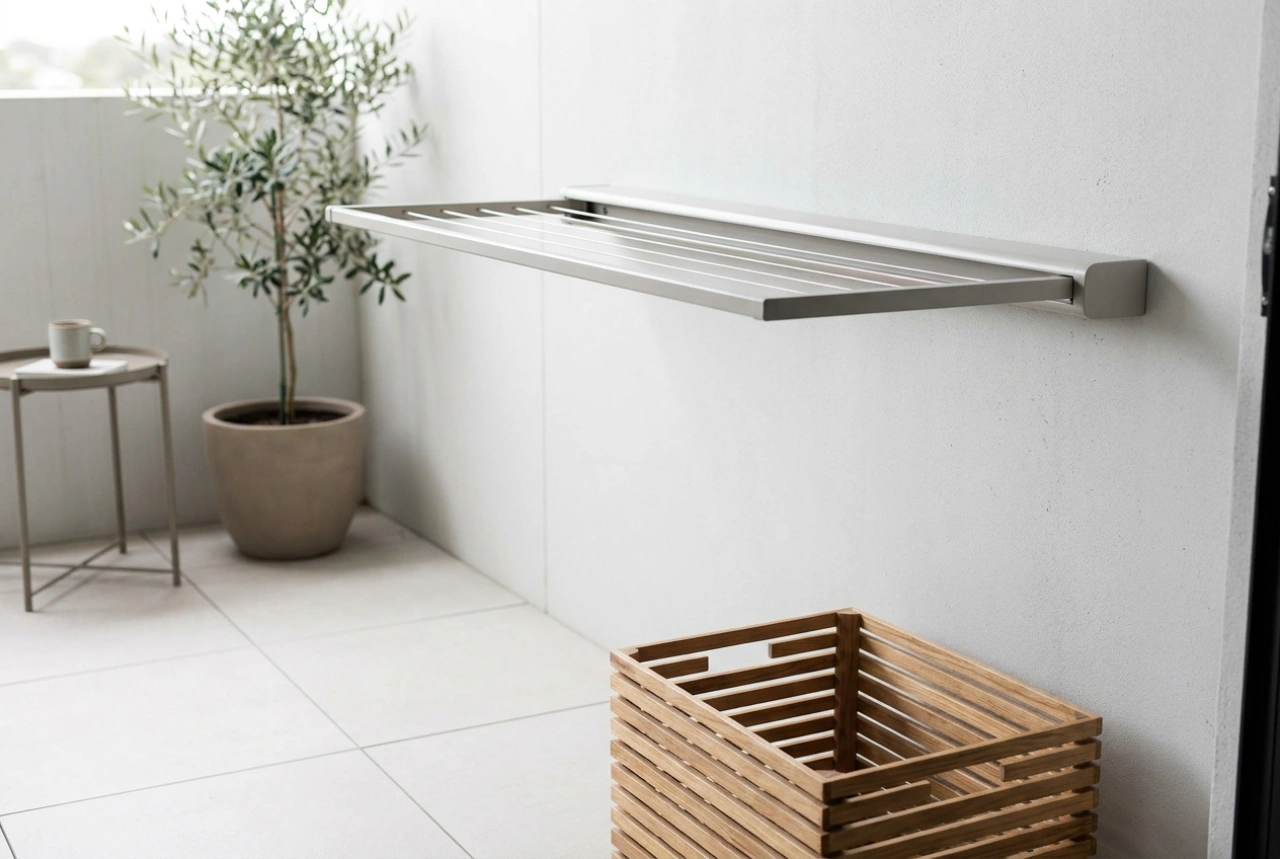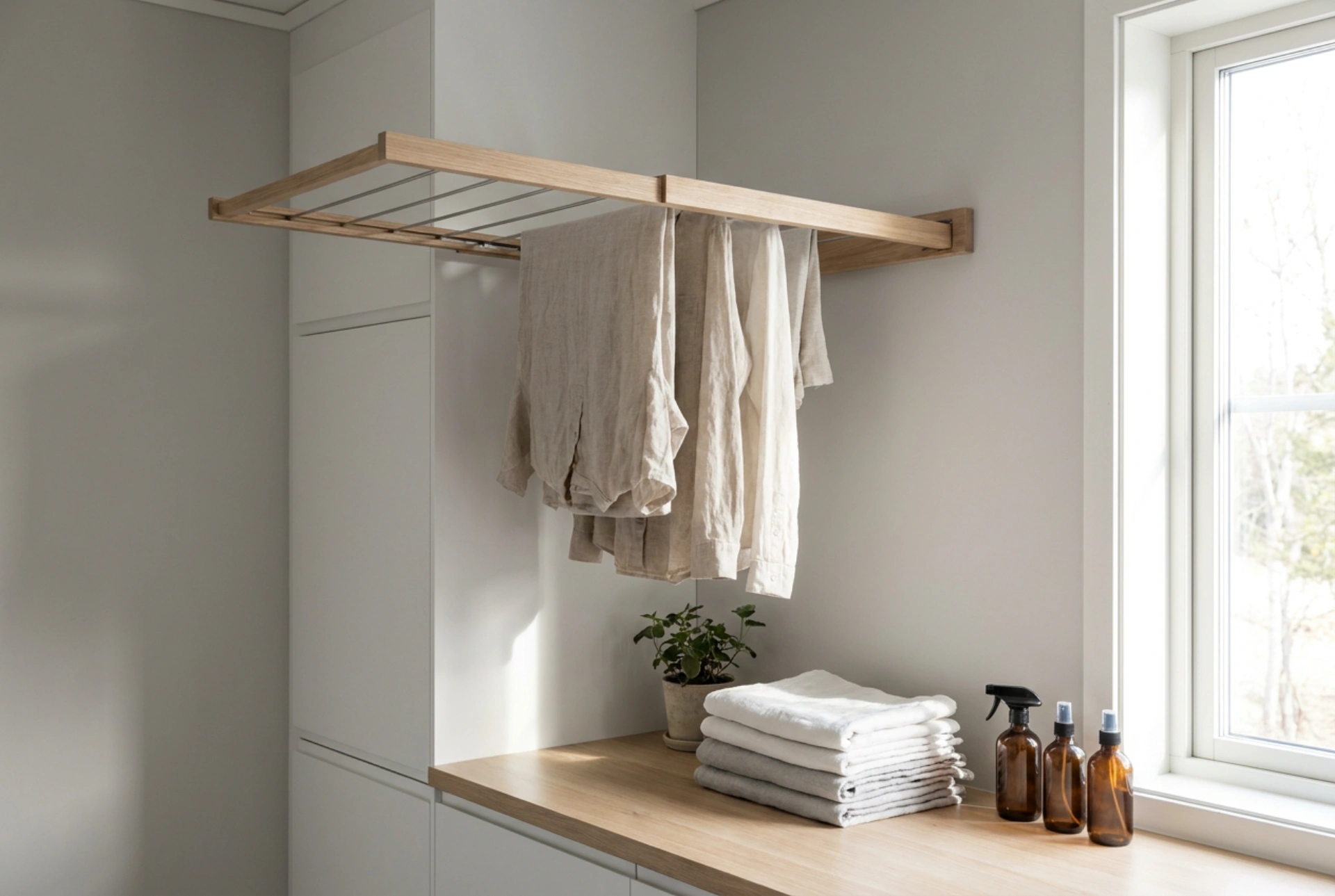


Managing indoor laundry drying requires a careful balance between spatial efficiency and the physical laws of evaporation. Extendable drying racks offer a dynamic solution to this challenge, allowing you to scale the drying surface to match your laundry volume while maintaining optimal airflow.
The Physics of Airflow and Evaporation in Drying Clothes
To understand why adjustable drying racks are so effective, one must look at the science of evaporation. When wet clothes dry, water molecules transition from liquid to vapour, forming a thin, highly saturated layer of humid air directly around the fabric. If this boundary layer remains stagnant, evaporation slows down significantly or stops altogether.
An extendable drying rack solves this by allowing you to adjust the spacing between hanging garments based on the load size. When you have a small load, extending the rack fully maximises the distance between items, reducing the relative humidity in the immediate microclimate of each garment. This increased space facilitates natural convection currents, where dry air replaces the moisture-laden air, accelerating the drying process without consuming electrical energy.
Material Science: Choosing and Maintaining the Right Support Structure
The mechanical performance of an extendable drying rack depends heavily on its material composition. Because these racks are subjected to high humidity and physical stress when extended, understanding material properties is crucial:
- Anodised Aluminium: Lightweight and highly resistant to corrosion. The anodising process creates a protective oxide layer that prevents rust, making it ideal for wet environments. However, aluminium has lower tensile strength than steel, meaning it can sag under heavy, sodden items like woollen blankets when fully extended.
- Stainless Steel: Offers superior structural integrity and weight-bearing capacity. High-grade stainless steel contains chromium and nickel, which resist rust. It is heavier but provides the necessary stability for large, extended configurations.
- Powder-Coated Steel: A cost-effective alternative where a polymer resin is baked onto carbon steel. While robust, any chip in the powder coating exposes the underlying steel to moisture, leading to rapid localised oxidation (rust) which can stain garments.
Optimising Weight Distribution and Structural Balance
Extending a drying rack alters its centre of gravity, making correct loading essential to prevent mechanical failure or tipping. When a rack is fully extended, the leverage exerted on the central hinges and wall mountings increases significantly.
To counteract this leverage, follow a strict loading sequence. Position the heaviest, densest garments—such as jeans, thick cotton towels, and jackets—closest to the structural supports or the main vertical frame. These areas possess the highest shear strength. Reserve the outer, extended rods for lightweight synthetic fabrics, activewear, and thin linens. This distribution minimizes the bending moment on the telescopic joints, preserving the alignment of the sliding mechanisms and preventing structural warping over time.
Microclimate Control: Where to Position Your Extendable Rack
The efficiency of your extendable rack is highly dependent on its placement within the home. Positioning the rack in a corner with poor air circulation will trap moisture, leading to prolonged drying times and potential musty odours. Instead, utilise the following placement strategies:
- Convection Currents: Place the rack near a source of natural air movement, such as near a window or in a hallway where pressure differentials create a gentle breeze.
- Thermal Gradient: Position the rack in areas where warm air naturally rises, but avoid placing wet clothes directly over heat sources, as rapid, uneven drying can damage delicate fibres and warp the rack's joints.
- Elevation: Wall-mounted extendable racks benefit from being installed higher up, where ambient room temperatures are slightly warmer, aiding the evaporation process.