

Removing creases with a vertical garment steamer relies on thermodynamics and fiber physics rather than raw mechanical pressure. Understanding how moisture and heat interact with different textile structures allows you to achieve a crisp, wrinkle-free finish without damaging delicate materials.
The Science of Steam and Fiber Relaxation
At the molecular level, fabrics crease because their polymer chains form temporary hydrogen bonds in bent positions. Traditional dry ironing uses heavy pressure and direct heat to force these bonds flat. In contrast, steaming introduces high-temperature water vapor (steam) which penetrates deep into the intercellular spaces of the fibers. The moisture breaks the temporary hydrogen bonds, while the heat elevates the polymer molecules above their glass transition temperature. Once these bonds are disrupted, the fiber naturally relaxes and returns to its original, tension-free state under the gentle pull of gravity.
Mastering the Tension and Movement Technique
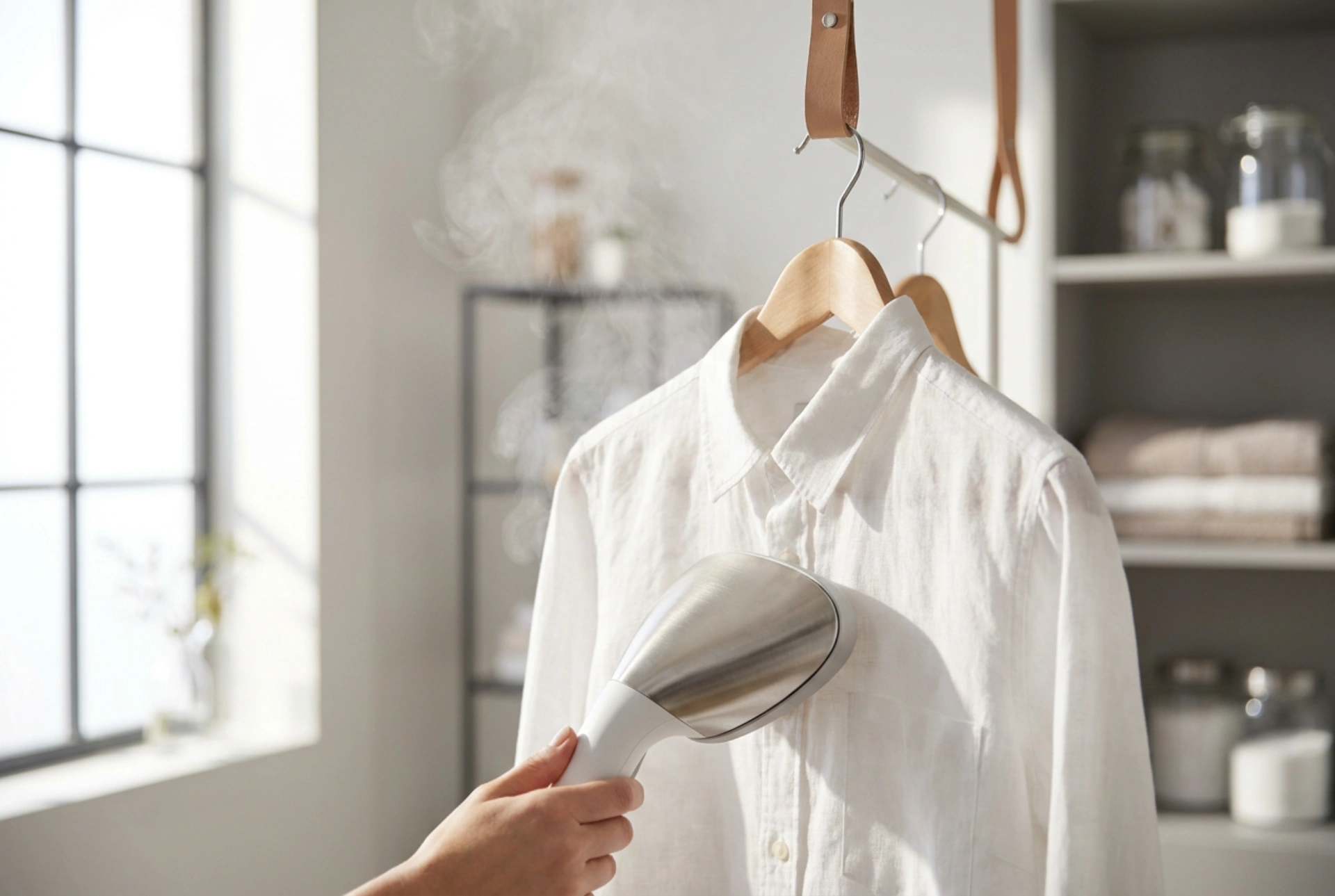
To maximize the efficiency of a vertical steamer, you must create optimal tension. Simply waving the steamer head near a loose garment will yield poor results because the fibers need a directional guide to reset flat. Hold the hem of the garment firmly with one hand, pulling the fabric taut. Place the metal or plastic plate of the steamer head directly against the fabric, moving in slow, downward strokes. For heavier fabrics like denim or wool coats, press the steamer head firmly against the material. For lightweight, structured garments, steam from the inside out by inserting the steamer head under the fabric; this pushes the fibers outward, eliminating wrinkles without flattening the texture of the garment.
Fabric-Specific Protocols: Cotton, Silk, and Synthetics
Different materials require specific adjustments in temperature, distance, and moisture control. Natural cellulose fibers like cotton and linen have high crystalline structures that require intense steam and direct contact to relax. You can press the steamer head firmly against these fabrics, utilizing maximum steam output. For delicate protein fibers like silk and wool, hold the steamer head approximately one to two centimeters away from the surface to prevent water spotting and thermal damage. Synthetic fibers, such as polyester and nylon, have low melting points. When steaming synthetics, use a low steam setting and keep the steamer moving continuously to prevent localized melting or permanent glazing of the fibers.
Preventing Water Spots and Mineral Build-Up
A common issue during vertical steaming is the formation of wet spots or sputtering. This occurs when steam condenses inside the cold nozzle head. To prevent this, always let the appliance heat up completely before touching it to the fabric, and purge the first burst of steam away from the garment. Furthermore, tap water contains dissolved calcium and magnesium ions. When boiled, these minerals precipitate as calcium carbonate (scale), which clogs the steam vents and can stain garments. Always use demineralized or distilled water to ensure a clean, consistent steam flow and to prolong the lifespan of the heating element.
Post-Steam Care and Drying
Because steaming infuses fibers with moisture, garments will feel slightly damp immediately after the process. Hanging the steamed clothing in an open, well-ventilated area for ten to fifteen minutes is critical. If you place a damp garment directly into a crowded closet, the lingering moisture will cause the fibers to reform hydrogen bonds in folded positions, creating new wrinkles and potentially encouraging mildew growth. Allow the fibers to cool down and dry completely to set the smooth structure permanently.