

Drying laundry outdoors is more than an energy-saving chore; it is a chemical process that, when executed correctly, naturally sanitises and freshens fabrics. By understanding how sunlight, air velocity, and atmospheric moisture interact with textile fibres, you can achieve an unparalleled, clean scent without relying on synthetic fragrances. <\/p>
The Photochemical Secret Behind the 'Sun-Dried' Scent<\/h2>
The characteristic fresh smell of line-dried laundry is the result of complex chemical reactions occurring on the surface of damp fabrics. When ultraviolet (UV) radiation from the sun hits wet cotton, linen, or hemp, it triggers a process called photodegradation. The water in the fabric acts as a catalyst, absorbing solar energy and producing highly reactive oxygen species, including singlet oxygen and ozone. These molecules oxidise microscopic organic residues—such as skin lipids, sweat proteins, and trace surfactant residues—that survived the wash cycle. Instead of masking odours with artificial perfumes, solar UV radiation actively breaks down volatile organic compounds (VOCs) at a molecular level, neutralising the sources of mustiness.<\/p>
Timing the Hanging Cycle to Prevent Fibre Stiffness<\/h2>
While sunlight is an excellent disinfectant, overexposure can damage textile structures and cause fabrics to become stiff and rough. This stiffness is caused by the rapid, uncontrolled evaporation of water, which allows dissolved calcium and magnesium ions (if you have hard water) to deposit on the cotton fibres, locking them into rigid positions. To prevent this, avoid hanging laundry during peak midday sun when the heat is most intense. The optimal window is mid-morning, when solar radiation is moderate, and relative humidity is slightly higher. This slower evaporation rate allows the fibres to dry evenly, retaining a microscopic moisture equilibrium of around 5% to 8%, which keeps the material soft to the touch.<\/p>
The Physics of Airflow: Suspension Mechanics and Spacing<\/h2>
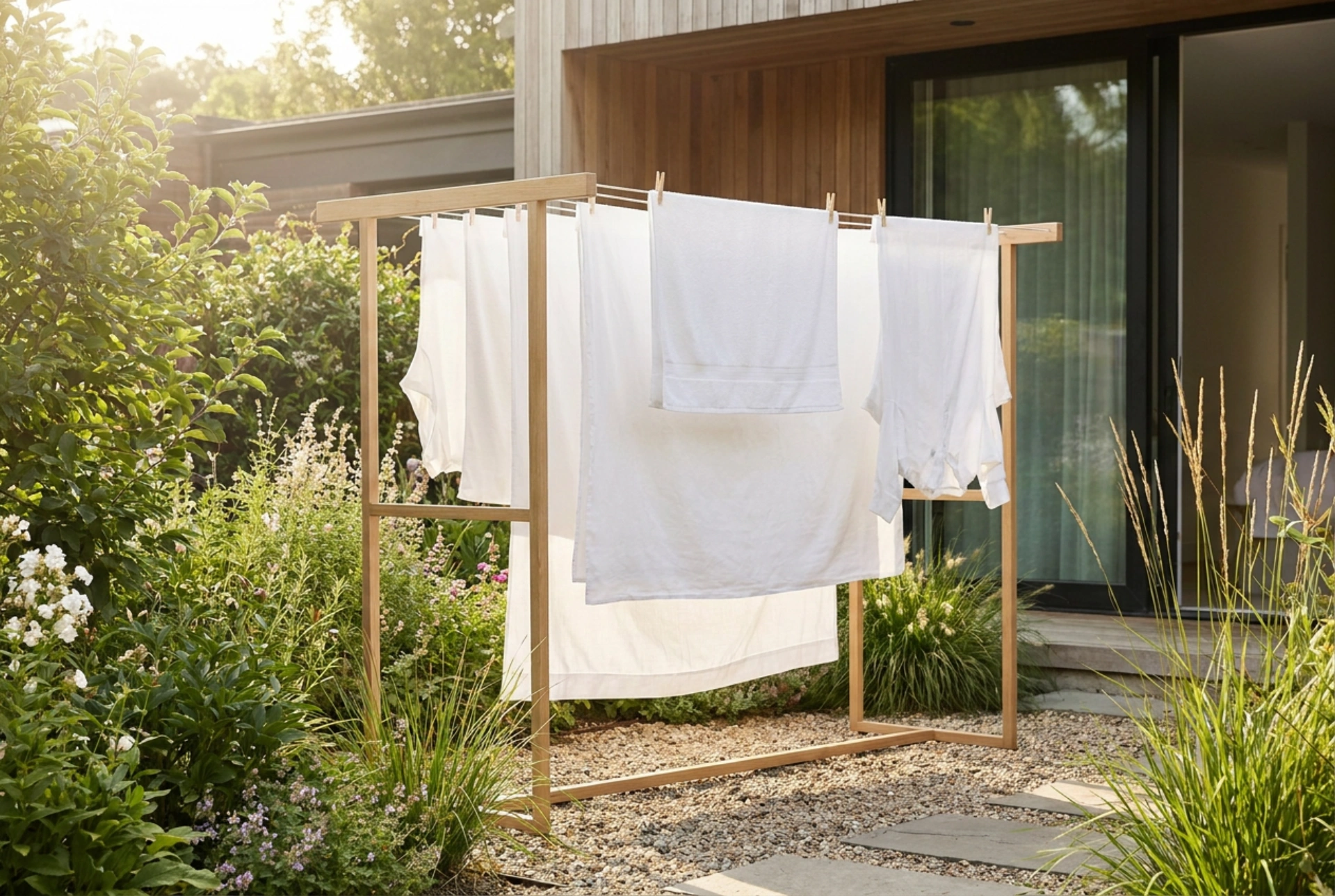
Wind acts as a natural mechanical softener. As air currents pass through the fabric, they gently flex the individual yarns, breaking any premature hydrogen bonds forming between cellulose chains before they can harden. To maximise this mechanical action, hanging techniques must facilitate laminar airflow. Always hang heavier garments, like denim and thick cotton sweaters, at the outer edges of the drying line where air velocity is highest. Maintain a minimum spacing of 10 to 15 centimetres between items to prevent humid air microclimates from forming between damp clothes, which slows down drying and encourages bacterial growth. Pin garments by their sturdiest seams—such as the waistband of trousers or the bottom hem of shirts—to distribute tension evenly and avoid stretching delicate weave structures.<\/p>
Shielding Fabrics from Environmental Contaminants<\/h2>
An open garden offers fresh air, but it also exposes damp fabrics to environmental particles like pollen, dust, soot, and insect emissions. Wet fibres act like a filter, trapping airborne pollutants that can ruin the fresh scent and trigger allergies. Position your drying line away from compost heaps, dusty driveways, and high-pollen trees like birch or pine. If you live in an area with high seasonal pollen counts, consider drying your laundry under a covered pergola or ventilated porch. This setup shields the wet fabrics from direct falling particles while still allowing horizontal wind currents to circulate and dry the garments effectively.<\/p>
The Right Moment to Harvest: Preventing Over-Drying<\/h2>
Leaving dry laundry on the line for too long is a common mistake that strips fabrics of their residual moisture and allows them to absorb ambient environmental odours. Once the moisture has completely evaporated, the exposed fibres become highly absorbent again. Dry, warm cotton will readily attract atmospheric odours, such as smoke, grease, or damp earth. Monitor the drying progress regularly. As soon as the seams and thicker hems are dry to the touch, take the laundry down. Fold the garments immediately to trap the clean, sun-formed aldehydes and ketones within the fabric weave, preserving that natural, crisp scent until the clothes are placed in the wardrobe.<\/p>