

Removing grease stains from clothing before they enter the washing machine requires targeting the chemical bond between hydrophobic lipids and fabric fibres. Standard washing cycles often fail to emulsify solidified oils, setting the stain permanently when exposed to the high heat of a tumble dryer or iron.
The Science of Grease: Why Water Alone Fails
Fats, oils, and grease are hydrophobic, non-polar substances. Water, on the other hand, is a polar molecule. Due to this chemical mismatch, water molecules repel lipids, leaving grease droplets clung tightly to fabric yarns. To break this bond, you must introduce an amphiphilic agent—a surfactant. Surfactants possess a dual nature: a hydrophobic tail that binds to the grease, and a hydrophilic head that attaches to water. When applied directly to a stain, the surfactant molecules surround the oil particles, lifting them from the fibres and suspending them in a micelle structure that can be easily rinsed away.
Step 1: Immediate Absorption for Fresh Stains
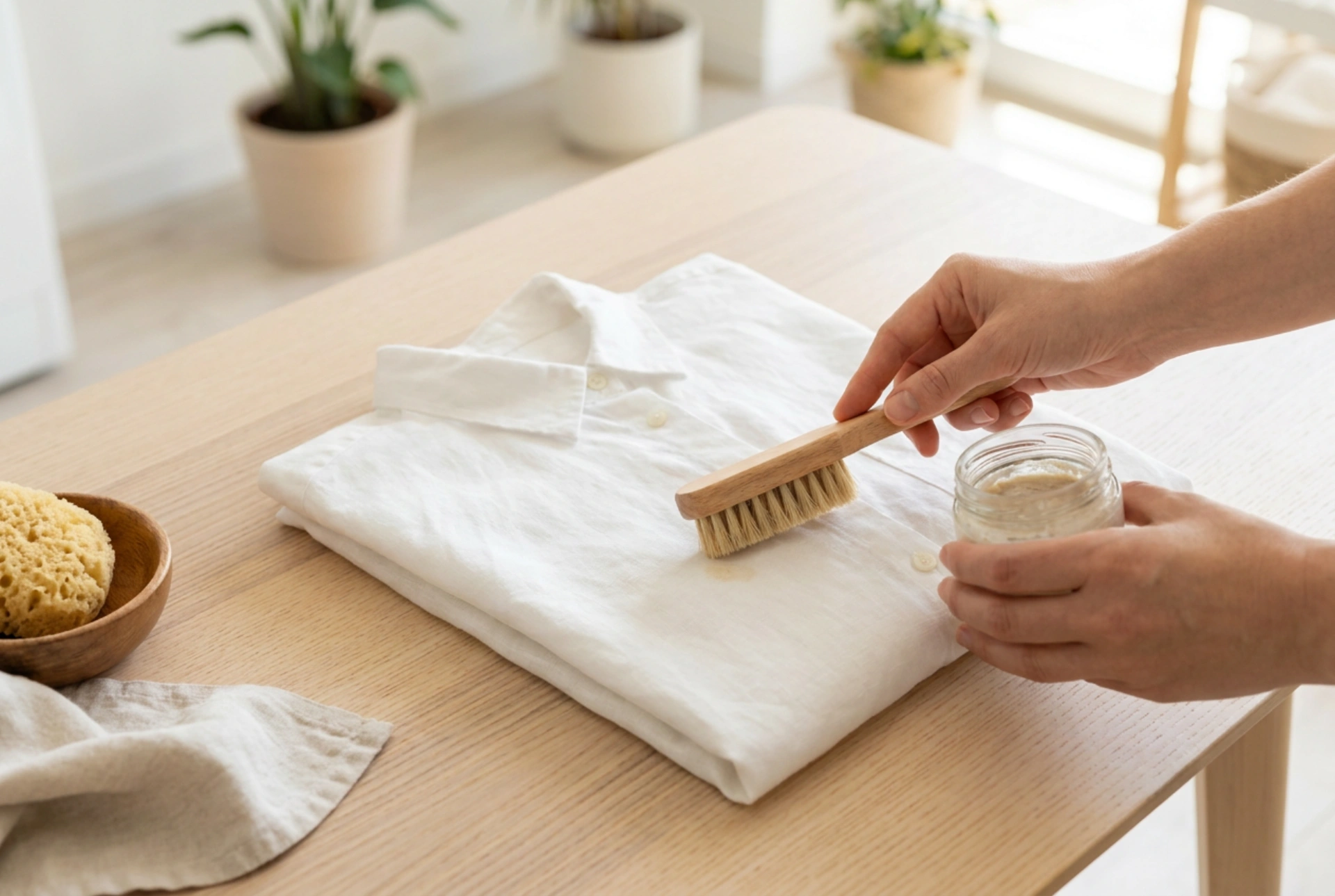
If the grease stain is fresh and wet, your first objective is to remove the excess oil before it penetrates deep into the weave. Gently blot the area with a clean, dry white paper towel or cotton cloth. Do not rub, as lateral pressure forces the lipids deeper into the interstitial spaces of the yarn. For thick or heavy oils, apply a generous layer of a dry absorbent powder, such as cornstarch, talcum powder, or sodium bicarbonate. Leave the powder undisturbed for 15 to 30 minutes. During this time, the powder acts via capillary action, drawing the liquid lipids out of the fabric. Once the powder looks saturated or clumpy, brush it away gently using a soft-bristled brush.
Step 2: Activating Surfactants Through Pre-Treatment
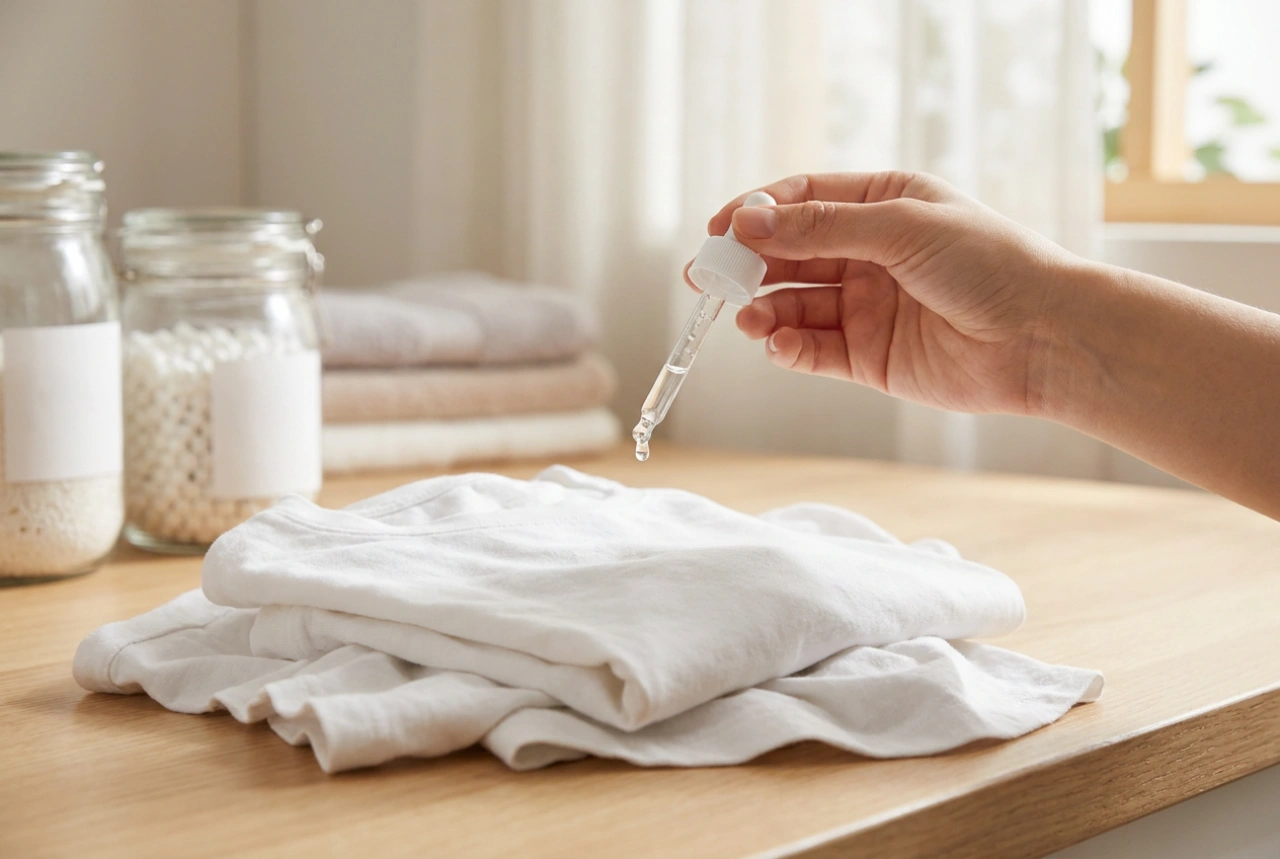
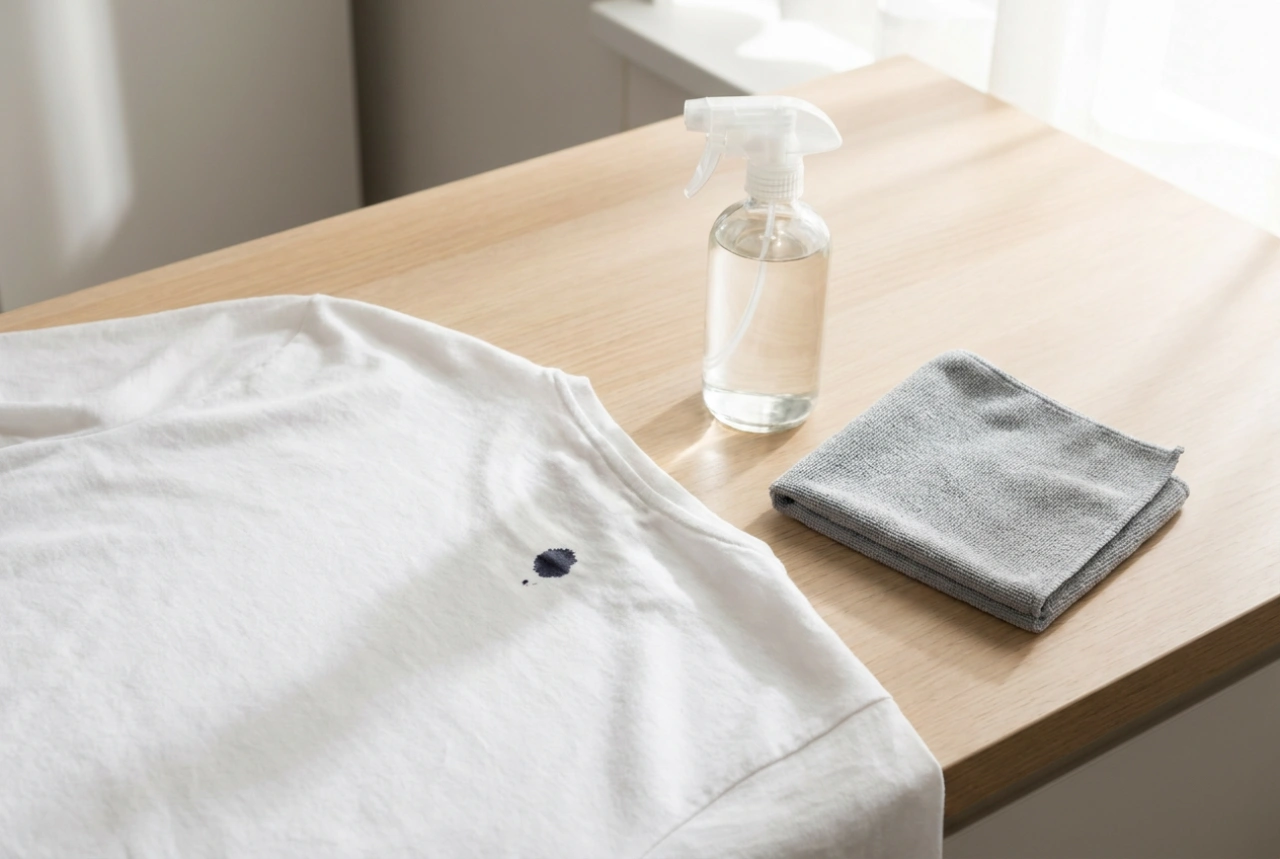
Once the excess surface oil is removed, you must address the residue bound to the fibres. Apply a small concentrated amount of a high-surfactant liquid, such as a neutral-pH dishwashing liquid or a liquid laundry detergent formulated with lipase enzymes, directly to the dry stain. Lipase enzymes are highly effective because they specifically catalyse the hydrolysis of lipids, breaking fats down into fatty acids and glycerol, which are highly soluble in water. Work the liquid into the fabric using a soft-bristled brush or clean fingertips, employing gentle circular motions from the outer perimeter of the stain moving inward. This technique prevents the oil from migrating outwards and creating a larger halo-like stain.
Step 3: Thermal Activation and Fibre Properties
The physical state of fat depends greatly on temperature. Solidified fats, like butter or lard, have a high melting point and must be liquefied to be removed. After working in your surfactant, let it sit for 10 to 15 minutes to allow chemical penetration. Then, rinse the treated area with warm or hot water, depending on the textile care label. Cotton and linen can withstand higher temperatures (up to 60°C), which significantly aids in liquefying stubborn grease. Be cautious with synthetic fibres like polyester and nylon; these materials are inherently lipophilic (oil-attracting) and can melt or warp under excessive heat. For synthetics, use lukewarm water but allow a longer soak time for the surfactant to work. Synthetic materials present a unique challenge because grease integrates deeply into the synthetic polymer chains, requiring patience and sometimes a second pre-treatment run.
Step 4: The Final Wash and Inspection
After pre-treating and rinsing, launder the garment on the warmest cycle recommended for the fabric type. Do not place the garment into a tumble dryer immediately after washing. High heat will polymerise any remaining traces of oil, bonding them permanently to the textile fibres. Instead, allow the garment to air dry and inspect the area under bright, natural light. If a faint shadow remains, repeat the surfactant pre-treatment and wash cycle before applying any heat.