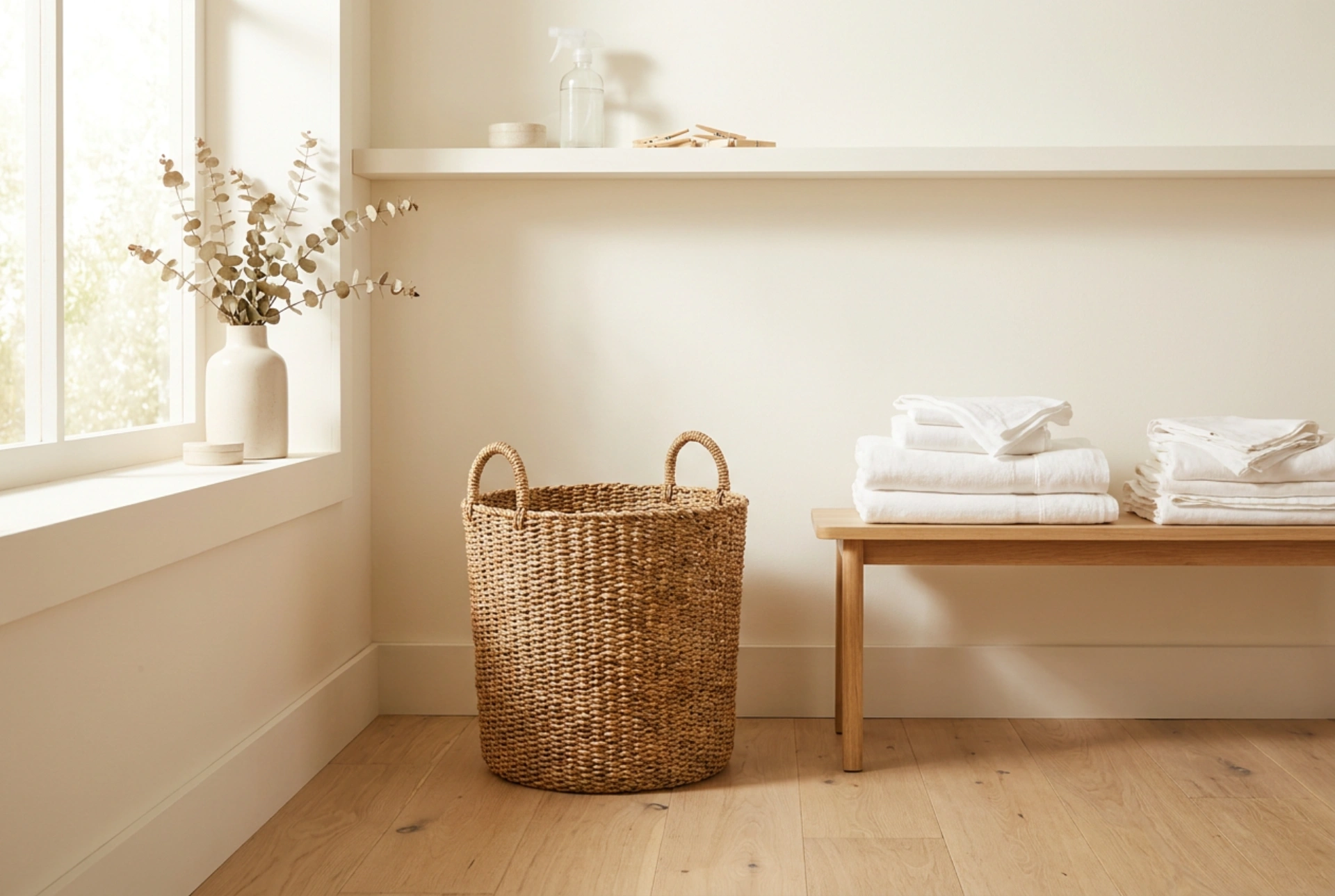


Proper laundry storage is crucial for maintaining fabric integrity and preventing the growth of musty odours. Natural wicker laundry baskets offer more than just aesthetic appeal; their physical structure plays a key role in regulating moisture and airflow in soiled garments.
The Physics of Airflow and Moisture Control in Laundry
Why does stored laundry develop a damp, unpleasant smell? The primary culprits are anaerobic bacteria and fungal spores, which thrive in dark, stagnant, and humid environments. When damp towels, sweaty activewear, or daily garments are deposited into a solid, non-porous container, the moisture they contain becomes trapped. This creates a high-humidity microclimate that accelerates the decomposition of organic matter, such as skin cells and sebum left on the fibres.
Natural wicker, woven from materials like willow, rattan, or bamboo, features thousands of microscopic pores and macroscopic gaps within its woven pattern. This physical configuration allows for continuous, passive air exchange. As ambient air circulates through the basket, it facilitates the natural evaporation of residual moisture from the fabrics. By keeping the relative humidity inside the basket low, you disrupt the life cycle of mold and mildew, keeping garments fresher until wash day.
The Material Science of Natural Plant Fibres
Beyond the structural weave, the material itself contributes to humidity regulation. Natural plant fibres are inherently hygroscopic. This means they possess the ability to absorb a regulated amount of ambient moisture from the air and surrounding textiles, and subsequently release it back into the atmosphere when room humidity decreases. This natural buffering effect helps stabilise the microclimate inside the basket, preventing localized condensation points.
In contrast, synthetic materials such as plastic or heavily varnished wood cannot absorb or transmit moisture. Water vapour evaporating from damp clothes hits the cold, impermeable walls of a plastic bin, condenses back into liquid droplets, and pools at the bottom. This pooling creates an ideal breeding ground for bacteria. By utilizing unvarnished or lightly oiled natural wicker, you leverage the material's organic capillary action to keep the storage environment dry and inhospitable to microbes.
Best Practices for Breathable Laundry Storage
To maximize the ventilation benefits of a wicker laundry basket, a systematic approach to storing dirty clothes should be adopted:
- Avoid compression: Tightly packing clothes into a basket forces the air out and creates dense zones where moisture cannot escape. Leave at least twenty percent of the basket's volume free to allow air to flow between garments.
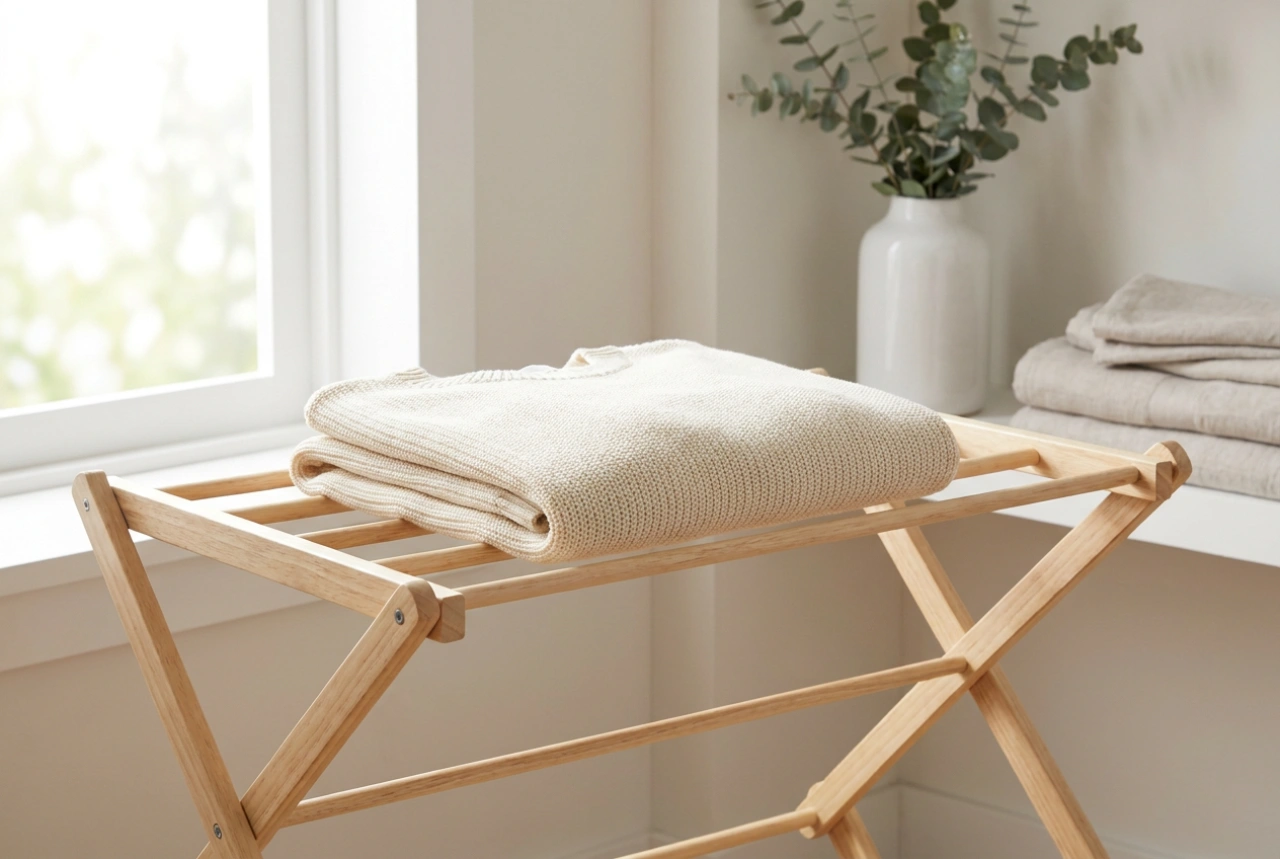
- Dry damp items first: Extremely wet items, such as bath towels or rain-soaked clothing, should never go directly into any laundry basket. Hang them over a drying rail until they are dry to the touch before placing them in the wicker basket.
- Choose the right liner: If you use a fabric liner to protect delicate items from snagging on the wicker, ensure it is made from a breathable, natural fibre like unbleached cotton or linen. Synthetic polyester liners block air transmission, nullifying the benefits of the wicker weave.
- Regularly wash the liner: The fabric liner should be washed at sixty degrees Celsius every two weeks to eliminate accumulated skin cells, dust mites, and fungal spores.
Maintenance and Preservation of Wicker Baskets
Because wicker is an organic material, it requires simple, targeted care to prevent it from absorbing persistent odours or developing mildew over time:
Clearing Dust and Lint
Over time, household dust and clothing lint can accumulate in the tight crevices of the wicker weave, restricting airflow. Every few months, use the brush attachment on your vacuum cleaner to thoroughly clear the gaps inside and out.
Hydration and Flexing
Extremely dry indoor air, particularly during winter heating seasons, can make natural fibres brittle and prone to cracking. Wipe down the basket once a season with a slightly damp microfiber cloth to restore essential moisture to the plant fibres, maintaining their elasticity.
Sanitizing and Odour Removal
If the basket is exposed to highly contaminated garments and develops an odour, do not saturate it with water, which can warp the wood. Instead, mist it lightly with a diluted solution of hydrogen peroxide or white vinegar (acetic acid). Allow the basket to dry completely in a well-ventilated space or in direct sunlight. Sunlight provides natural ultraviolet (UV) radiation, which acts as a powerful sanitizer, breaking down organic odour compounds without damaging the structural integrity of the wicker.