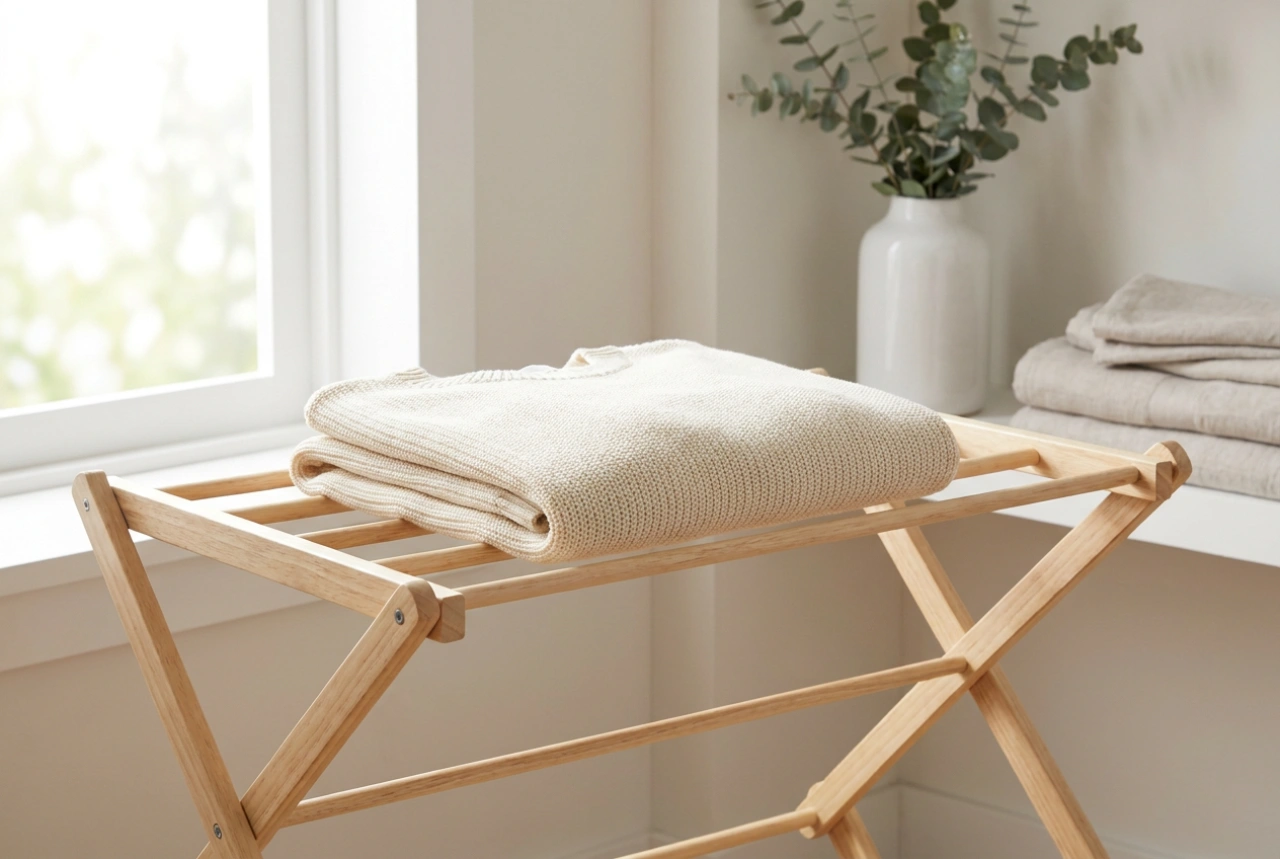


Optimising the position of a freestanding clothes airer relative to a radiator relies on understanding thermodynamics, convection currents, and relative humidity. Placing wet laundry too close to a heat source can restrict airflow, increase local humidity, and damage delicate fabrics, while correct positioning ensures efficient evaporation.
The Physics of Convection and Evaporation
Radiators heat indoor air, causing it to expand, become less dense, and rise. This movement creates a convection loop as cooler air is drawn in from below. When you place a clothes airer near a radiator, the goal is to harness this rising warm air. Water molecules in damp fabrics require thermal energy to break their liquid bonds and transition into a gaseous state (latent heat of vaporisation). Warm air has a higher moisture-carrying capacity than cold air, making the space near a radiator ideal for accelerating this phase change. However, if the airer is positioned directly against the radiator, it obstructs the upward convective flow, trapping highly saturated air around the wet fibers and stalling the drying process.
Determining the Optimal Distance and Alignment
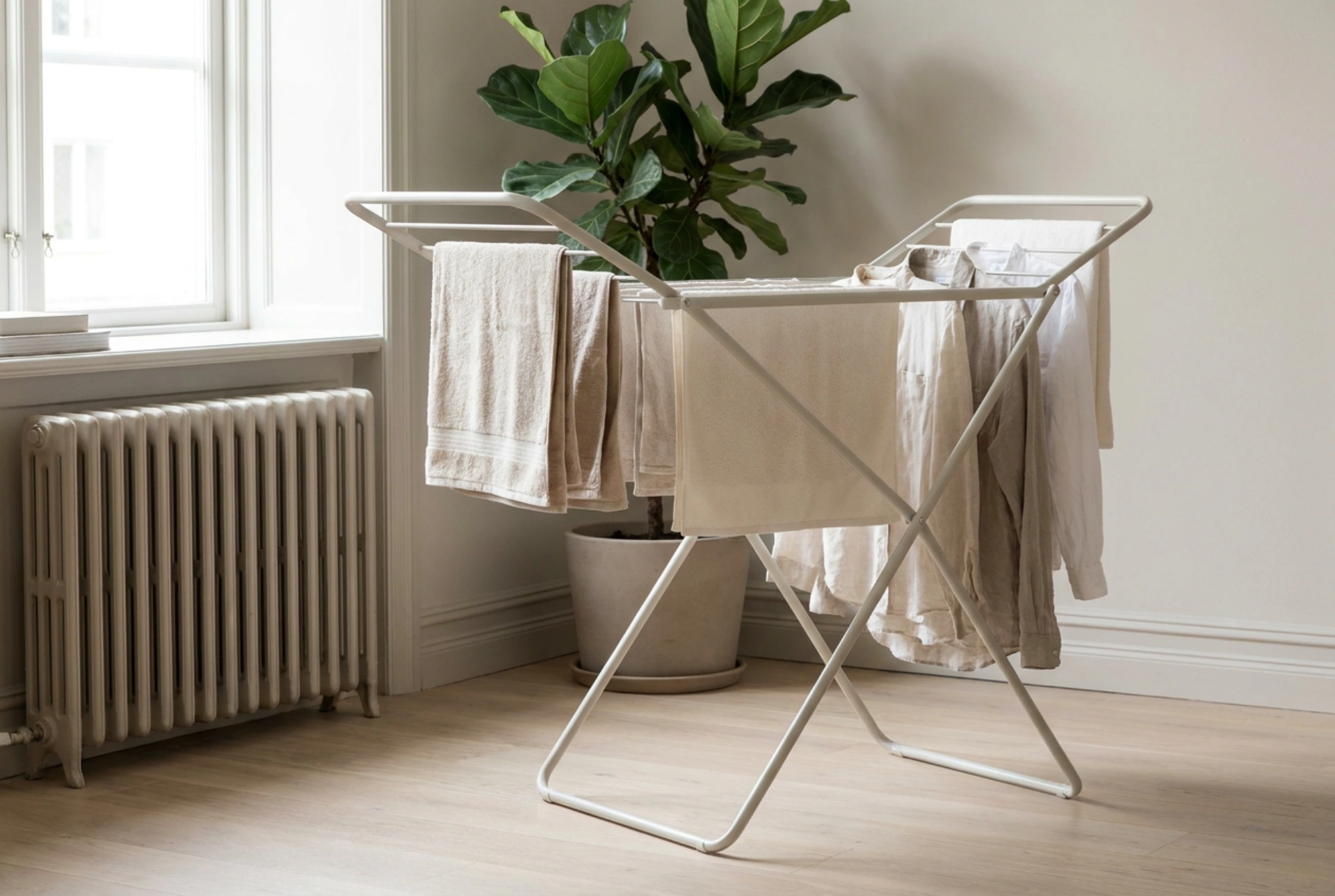
For maximum thermodynamic efficiency, place the freestanding airer at a distance of 30 to 50 centimetres from the radiator. This gap allows the rising warm air to mix with cooler room air, creating a consistent, dry thermal draft that passes through the layers of hanging clothes. Furthermore, the orientation of the airer relative to the radiator plays a crucial role:
- Perpendicular Alignment: Aligning the airer perpendicular to the radiator allows warm air to flow freely along the gaps between the hanging garments.
- Avoiding Parallel Blocks: Parallel positioning creates a solid wall of damp fabric that blocks the convective current, leading to uneven drying and a localized build-up of cold, damp air on the far side of the airer.
Fabric Integrity and Thermal Degradation
Different textile fibers react uniquely to direct and indirect heat exposure. Natural fibers like wool and silk are highly sensitive to rapid temperature fluctuations; direct radiant heat can cause these proteins to contract and shrink, or make the fibers brittle. Synthetic materials, such as polyester, nylon, and elastane, are thermoplastic polymer chains that can soften or warp when exposed to sustained high temperatures. Maintaining the recommended 30-to-50-centimetre clearance ensures that the heat reaching the textiles is convective (transferred via moving air) rather than radiative (infrared radiation directly from the hot metal surface), preserving the molecular structure of the fibers.
Managing Indoor Relative Humidity and Airflow
As water evaporates from the laundry, it rapidly increases the relative humidity of the surrounding air. When relative humidity reaches 100%, evaporation stops entirely because the air is saturated. To maintain a high evaporation rate, this moisture-laden air must be displaced. Combining a correctly positioned airer with controlled room ventilation—such as a cracked window or a mechanical extractor fan—is essential. This introduces drier, cooler outdoor air, which is then heated by the radiator, lowering its relative humidity and restoring its capacity to absorb water vapour from your laundry. This prevents condensation from forming on cold walls and windows, mitigating the risk of mould growth.