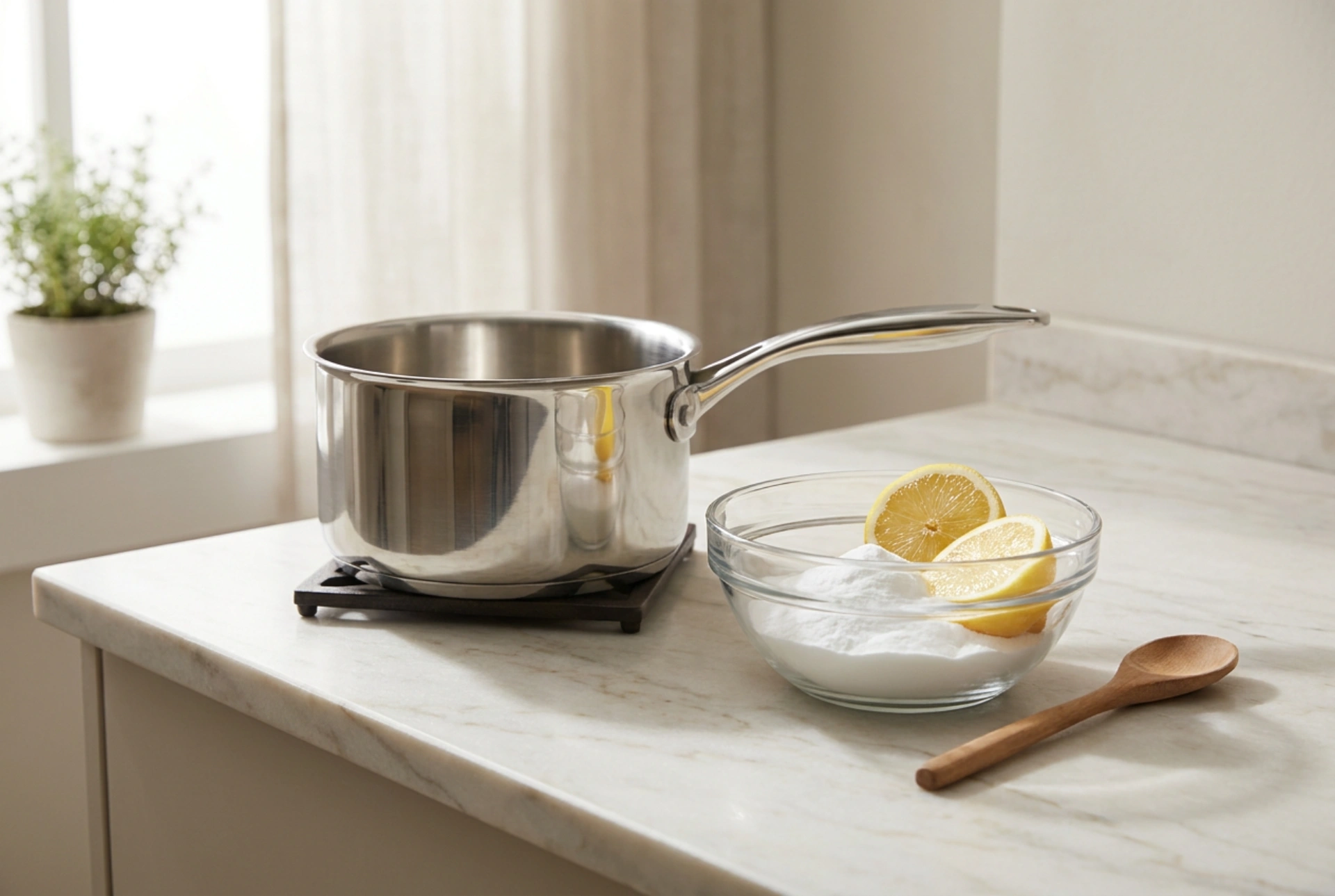


Burnt food adhering to the bottom of a pot is a common kitchen mishap, but understanding the chemistry of carbonised organic matter allows you to restore your cookware without damaging the underlying material. By choosing the correct method based on thermodynamics and material science, you can easily release stubborn scorched layers and extend the lifespan of your kitchen tools.
Evaluating the Damage: Is Your Pot Salvageable?
Before spending time and energy on restoration, it is essential to assess whether the cookware is structurally compromised. Different materials react uniquely to extreme heat and carbonisation:
- Non-stick coatings: If the non-stick PTFE or ceramic layer is blistering, peeling, or deeply discoloured, the pot must be discarded. Overheated non-stick coatings lose their polymer integrity and can release harmful microscopic particles into future meals.
- Stainless steel: This material is highly resilient. However, look closely for deep pitting, which appears as small, dark craters in the steel. Pitting permanently compromises the protective chromium oxide layer, making the pot prone to rusting and chronic sticking. Surface discolouration, known as heat tint, is purely cosmetic and easily treated.
- Cast iron and enamel: Raw cast iron is virtually indestructible; even severe burns can be polished off and the pan re-seasoned. Enamelled cast iron, however, is fragile. If the glossy enamel has cracked or chipped down to the dark metal beneath, the pot is no longer safe to use, as tiny glass-like shards can migrate into food.
The Chemistry of Clean: Acidity and Effervescence
For stainless steel and copper pots, the most efficient way to break down carbonised proteins and carbohydrates is through a controlled chemical reaction using mild household acids and bases. Scorched food consists of tightly bound carbon chains that resist simple detergent dissolution.
The optimal restoration technique involves acetic acid (white vinegar) and sodium bicarbonate (baking soda). Pour a mixture of equal parts water and white vinegar into the pot, ensuring the burnt area is fully submerged. Bring the solution to a boil on the stove. The heat accelerates the acid's ability to hydrolyze the scorched proteins. After boiling for five minutes, remove the pot from the heat source and add two tablespoons of baking soda. This triggers an immediate, vigorous effervescent reaction, releasing carbon dioxide gas. The physical action of these micro-bubbles penetrates beneath the softened carbon crust, lifting it mechanically from the metal surface.
Gentle Abrasion for Cast Iron and Enamel
Harsh acidic treatments should be avoided on raw cast iron as they strip the protective polymerised oil seasoning. Enamelled surfaces also require gentle care to prevent micro-scratches that permanently dull the finish and encourage future sticking.
To clean raw cast iron, leverage physical abrasion using coarse salt and a small amount of neutral cooking oil. Scrubbing with this paste acts as a mild abrasive that polishes away the carbonised food without stripping the chemical seasoning layer. For enamelled pots, rely on a paste made of baking soda and warm water. Apply the paste and use a soft-bristled brush or a non-scratch cellulose sponge in circular motions, applying even, moderate pressure. Never use steel wool or metal scouring pads on enamel, as they wear away the protective glaze.
The Crucial Role of Thermal Management
One of the most common mistakes in handling a burnt pot is applying cold water to hot metal. Rapid temperature changes cause thermal shock. Because different sections of the pot cool at varying rates, the metal experiences severe internal stress, leading to warping, base deformation, or the cracking of enamel coatings. Always allow the cookware to cool naturally to room temperature before introducing cleaning liquids or beginning the restoration process.