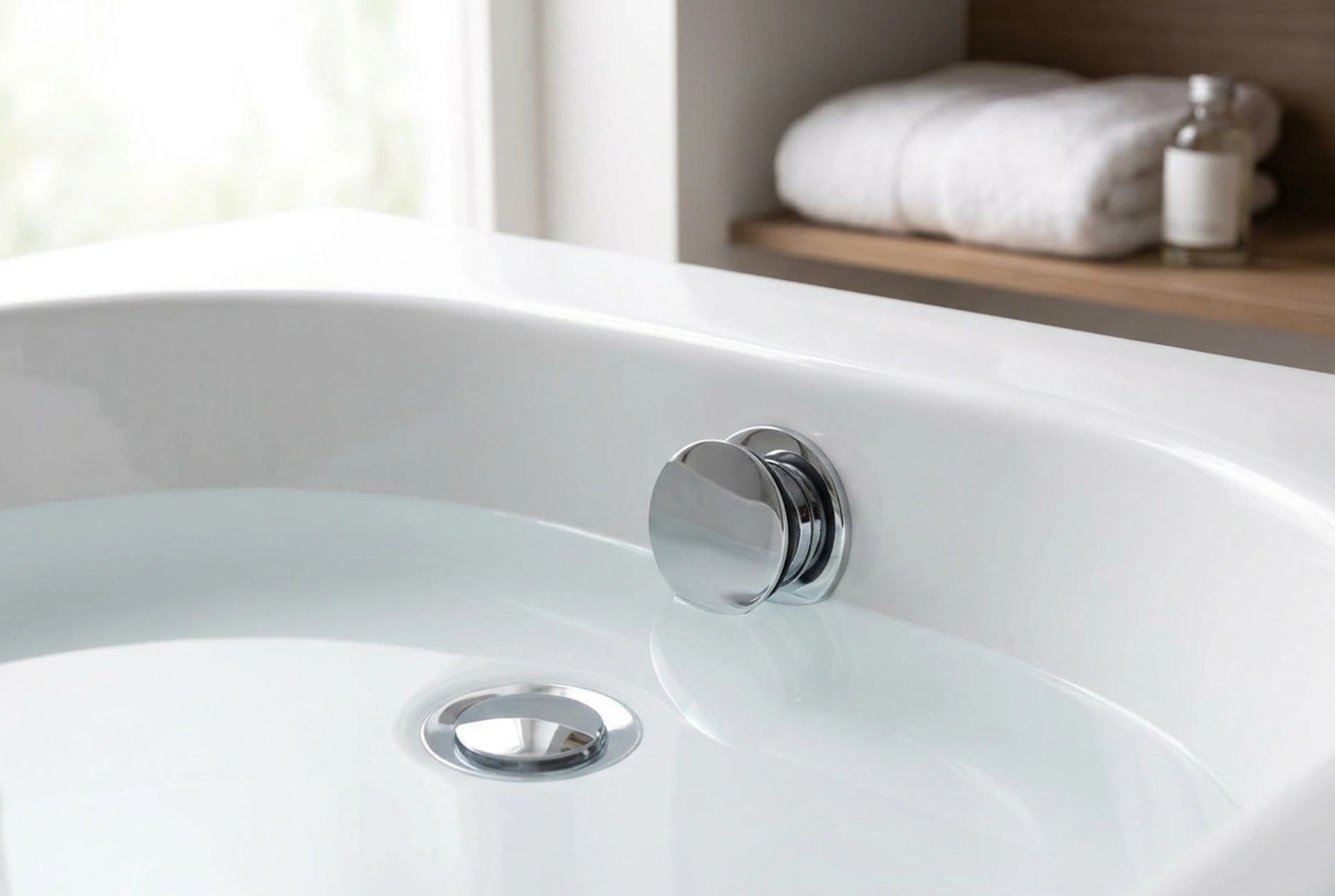


The humble universal bathtub stopper does far more than hold water; it acts as the primary barrier against drain blockages, sewer gases, and structural moisture damage. Understanding the physical mechanics of its seal and the chemical interactions of bathroom residues is key to optimising daily bathroom maintenance and hygiene.
Hydrostatic Pressure and Material Science of the Seal
To achieve a watertight barrier without complex mechanical fixtures, universal bathtub stoppers rely on fundamental principles of fluid dynamics and material elasticity. Most modern universal stoppers utilise elastomeric compounds, such as high-grade silicone or synthetic nitrile rubber, often paired with a heavy brass or stainless steel core. When water fills the tub, hydrostatic pressure increases. This downward force presses the flexible flange of the stopper flat against the drain flange. The elastic material deforms slightly under this pressure, filling microscopic imperfections on the porcelain or chrome surface to create a hermetic seal. Unlike rigid, custom-fit mechanical stoppers, a flexible universal stopper adapts to varying drain diameters by distributing the water weight evenly across its contact zone, ensuring that gravity itself maintains the seal.
The Chemistry of Drain Preservation
Daily bathing releases hair, skin lipids, and soap residue into the drainage system. When standard soap reacts with the calcium and magnesium ions present in hard water, it precipitates as insoluble calcium stearate, commonly known as soap scum. This sticky substance clings to pipe walls, trapping hair and creating dense, organic blockages. A universal stopper equipped with an integrated micro-strainer or dome shape alters the fluid dynamics of draining water. Instead of a rapid, chaotic vortex that pulls heavy debris deep into the trap, the stopper regulates the flow and traps hair and solid particulate matter at the surface. By preventing these organic binders from entering the waste pipe, you eliminate the need for harsh, corrosive chemical drain openers that can damage PVC plumbing and corrode metallic joints through highly exothermic reactions.
Maintaining Metallic Coatings and Elastomers
The visual appeal and functionality of a bathtub stopper depend on proper chemical care. Most universal stoppers feature a polished chrome-plated brass cap. While chrome is highly resistant to corrosion, it is vulnerable to mineral deposits and aggressive cleaning agents. Limescale, primarily calcium carbonate, settles on the metallic and silicone surfaces as water evaporates. To remove these deposits safely, avoid chlorine-based bleaches and abrasive scrubbing powders, which cause micro-scratches and degrade the elastomer flexibility. Instead, utilise a mild organic acid, such as a dilute citric acid solution. These weak acids chemically dissolve the calcium carbonate, converting it into soluble calcium citrate, which washes away harmlessly. Regular application preserves the smooth surface of the silicone flange, maintaining its ability to form a perfect seal.
Thermal Cycles and Hygiene Protocols
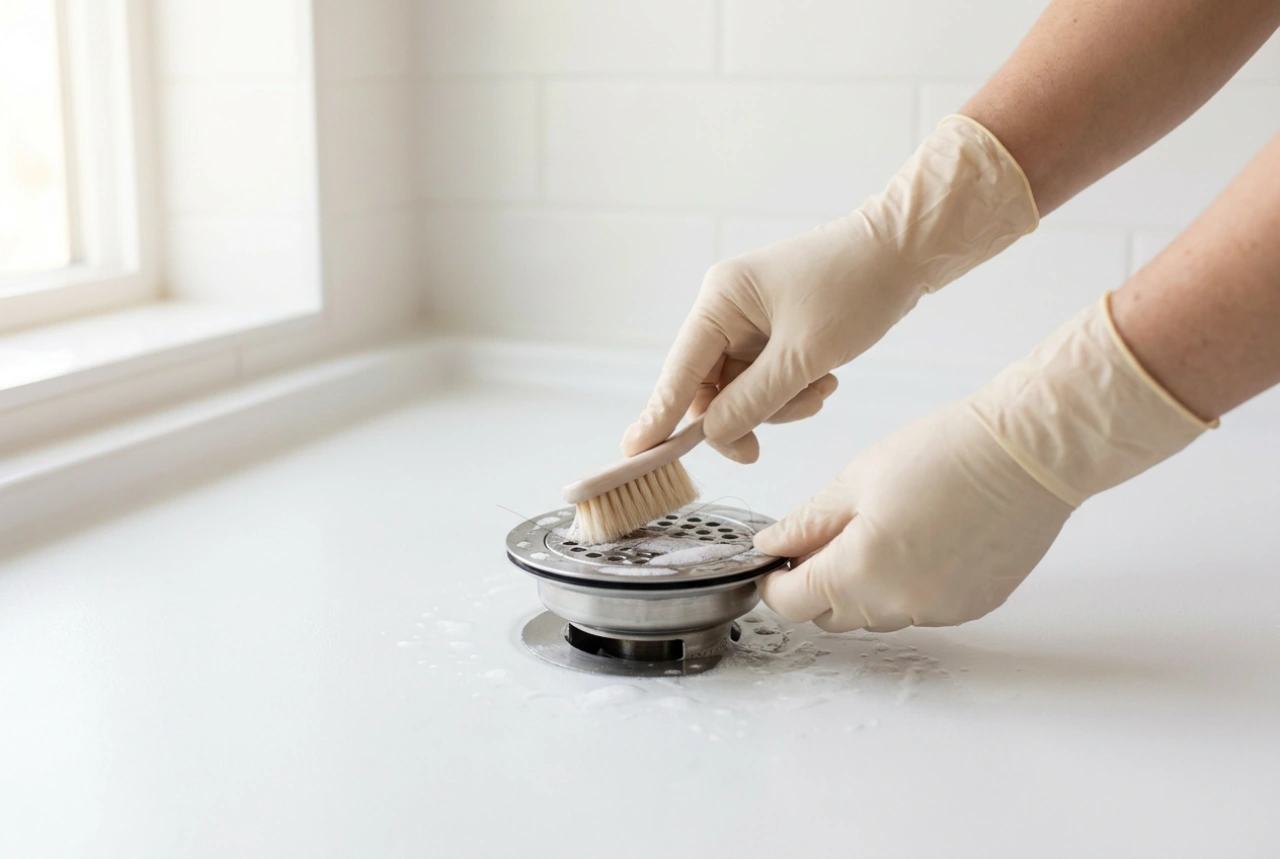
Bathtubs experience extreme thermal cycles, fluctuating rapidly between hot bath water and cold rinse water. These temperature shifts cause materials to expand and contract at different rates. High-quality silicone stoppers are chosen because they possess a low coefficient of thermal expansion, ensuring they remain pliable and dimensionally stable under thermal stress. To maintain hygiene, the stopper must be integrated into a weekly sanitation routine. Microorganisms thrive in the damp, dark environment beneath the stopper, forming a biofilm, which is a structured community of bacteria embedded in a self-produced polymeric matrix. This biofilm not only produces unpleasant odours but can also accelerate the degradation of lower-grade rubber seals. Weekly removal of the stopper, followed by manual cleaning with a soft brush and a surfactant-based cleaner, physically disrupts the biofilm and ensures the drain zone remains sanitary and odour-free.