

Using a freestanding coat rack efficiently requires an understanding of basic physics and material science to prevent structural tipping and fabric damage. By mastering weight distribution and recognizing how different textiles respond to gravity, you can maintain both the stability of your rack and the shape of your garments.
The Physics of Balance: Understanding Center of Gravity
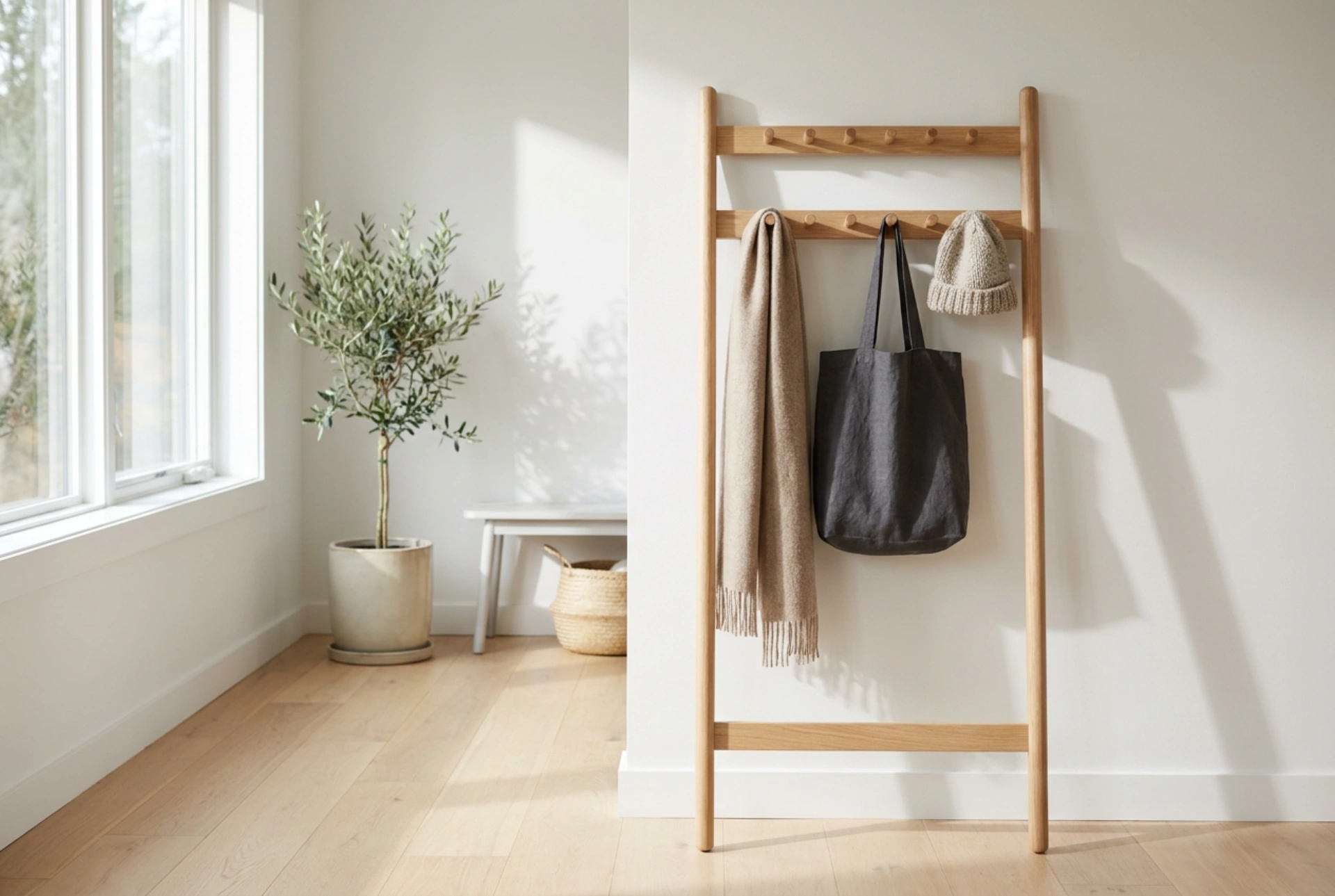
A freestanding coat rack operates as a vertical lever anchored by a base. The primary threat to its stability is torque—the rotational force exerted when weight is applied at a distance from the central axis. When you hang a heavy winter coat on an outer peg, you create a lever arm. The longer the peg or the wider the top crown, the greater the rotational force pulling the rack sideways.
To counteract this, the center of gravity of the combined rack and clothing system must always remain directly above the footprint of the base. If the collective center of gravity shifts beyond the outer edge of the base, gravity will cause the rack to tip. To manage this mechanical constraint, always place the heaviest items on the lowest hooks or closest to the main vertical column. This reduces the length of the lever arm and keeps the overall center of mass low, significantly increasing stability.
Material Stress: How Gravity Affects Your Wardrobe
The method you use to hang garments affects not only the rack's balance but also the molecular structure of your clothes. Fabrics are made of woven or knitted fibers held together by physical friction and chemical bonds. When a garment is suspended from a single narrow peg, the entire gravitational pull on that item is concentrated on a tiny surface area. This causes high localized stress, leading to permanent deformation of the fibers—often referred to as shoulder bumps or fabric stretching.
- Heavy Woollens: Wool fibers are highly elastic but prone to long-term deformation under constant tension. Heavy wool coats should always be hung on broad, contoured wooden hangers rather than directly on pegs. The wide hanger mimics the human shoulder shape, distributing the load across a larger surface area and preventing the fibers from stretching out of shape.
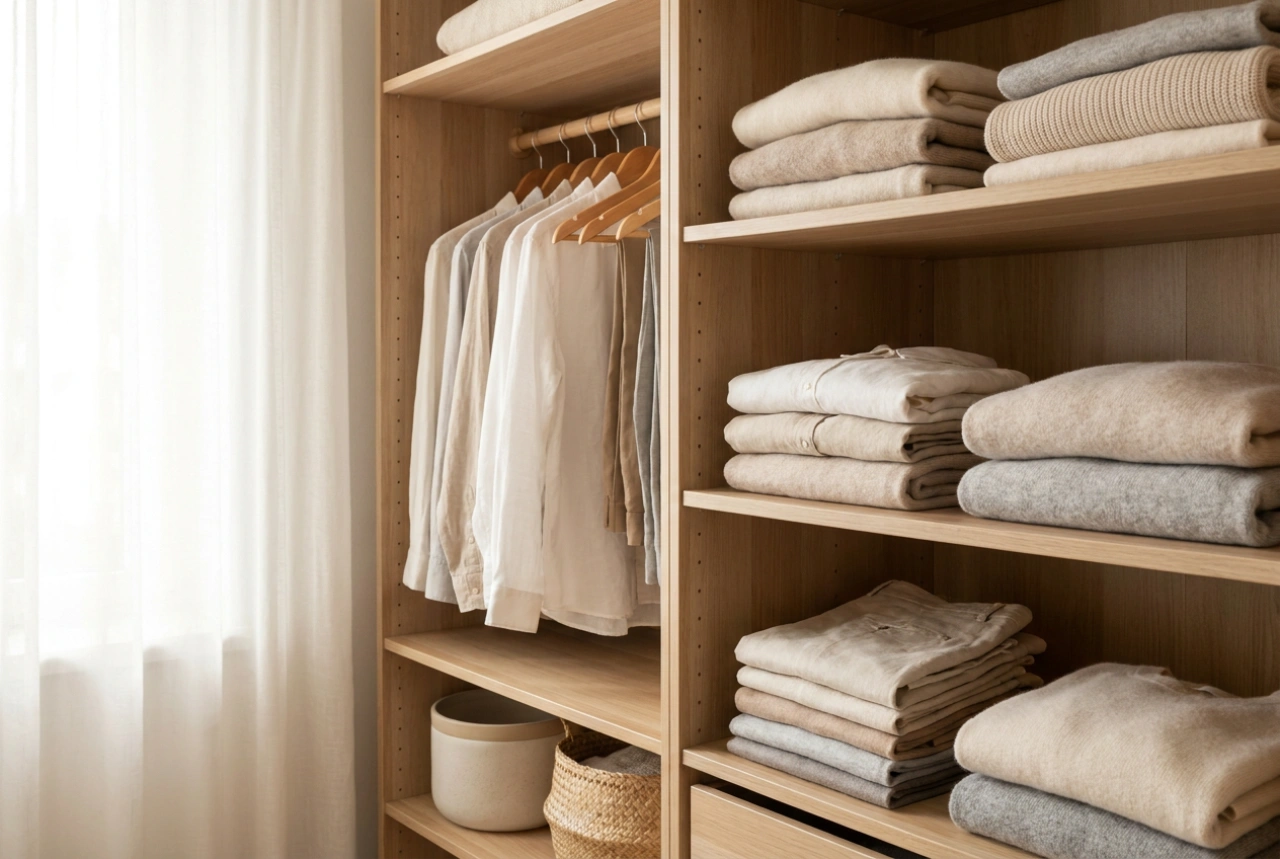
- Knitted Garments: Knitted structures possess a high degree of mechanical stretch because the yarn is looped. Hanging knits on a vertical rack will inevitably pull the loops vertical, permanently elongating the garment. These items should be folded rather than hung.
- Linen and Lightweight Cottons: While less heavy, these materials wrinkle easily under uneven pressure. Hanging them on smooth, rounded pegs or padded hangers prevents sharp creases and structural damage to the weave.
Symmetrical Loading and the Sequence of Operation
Preventing a coat rack from warping or leaning permanently requires a systematic approach to loading and unloading. When a rack is consistently loaded on only one side, the continuous asymmetric tension can cause wood to warp or metal joints to fatigue over time.
To maintain structural equilibrium, adopt a strict rotational habit. When hanging multiple items, balance each addition with an equivalent weight on the opposite side. If you must hang a single heavy item, ensure it is positioned on a hook that aligns directly over one of the base support legs rather than between them, as this channels the downward force straight into the floor.
Optimising Friction and Hardware Integrity
The connection points of your coat rack are subject to shear stress. Wood-to-wood or metal-to-metal joints can loosen under the vibration and movement of daily use. Periodically check and tighten all connecting screws to ensure the vertical post does not develop play, which amplifies tipping forces. Additionally, pay attention to the material friction of your pegs; polished surfaces can cause straps to slide, shifting weight suddenly and risking a fall. Utilize non-slip silicone rings or natural wooden pegs with grain texture to keep items securely anchored.