

Maintaining a clutter-free open wardrobe requires understanding the physics of gravity, fabric friction, and visual weight distribution rather than relying on constant tidying. Implementing a structured system based on material science and systematic placement keeps your garments pristine and orderly with minimal daily effort.
Understanding Fabric Friction and Folding Mechanics
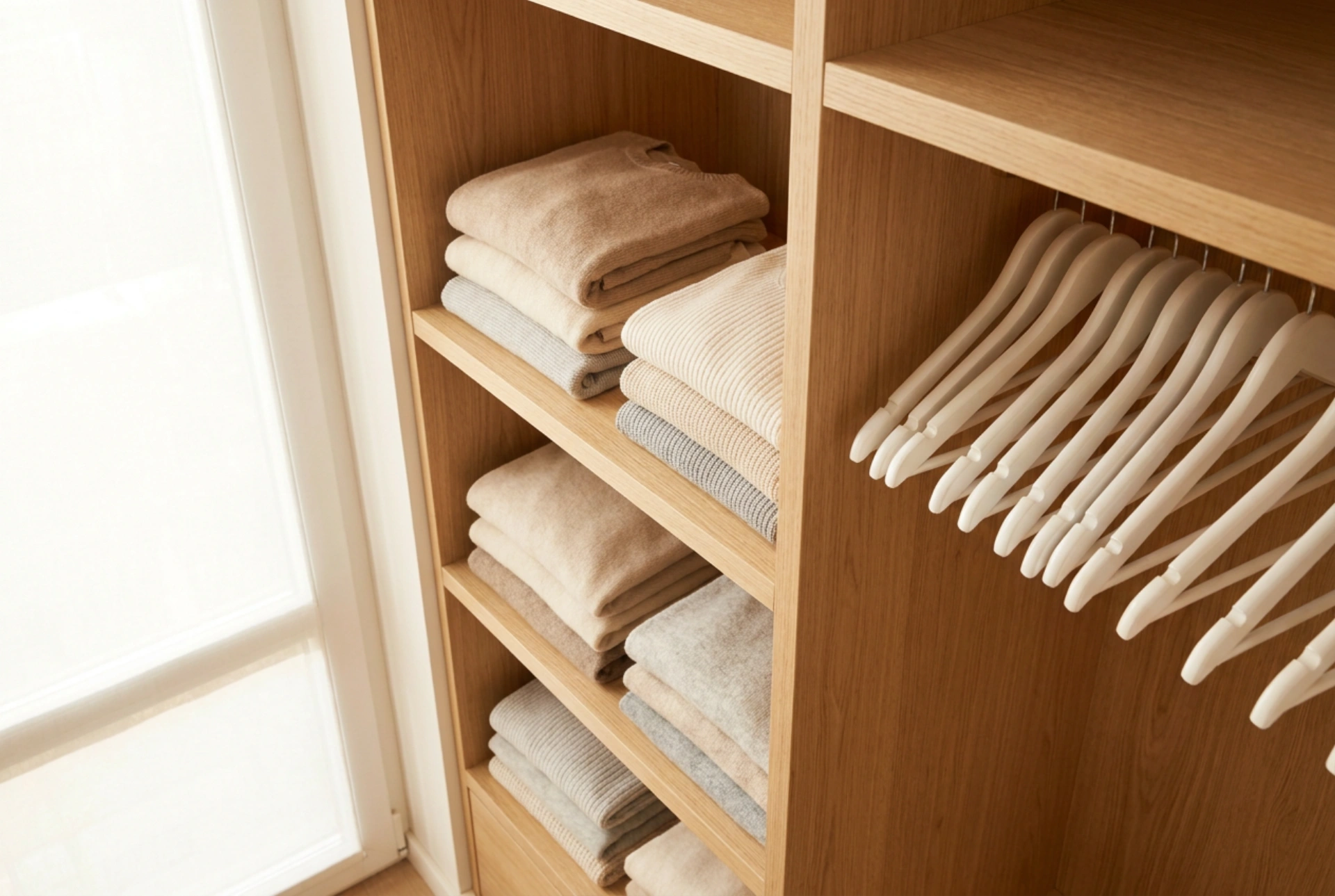
Unlike closed closets, open wardrobes expose every imperfection instantly. To keep folded garments stable, you must work with the inherent friction of different textiles. Fabrics like heavy cotton, wool, and dense knits have a high coefficient of friction, meaning they grip each other well. However, because of their weight, gravity will stretch their fibers if they are hung on hangers. These items should always be folded.
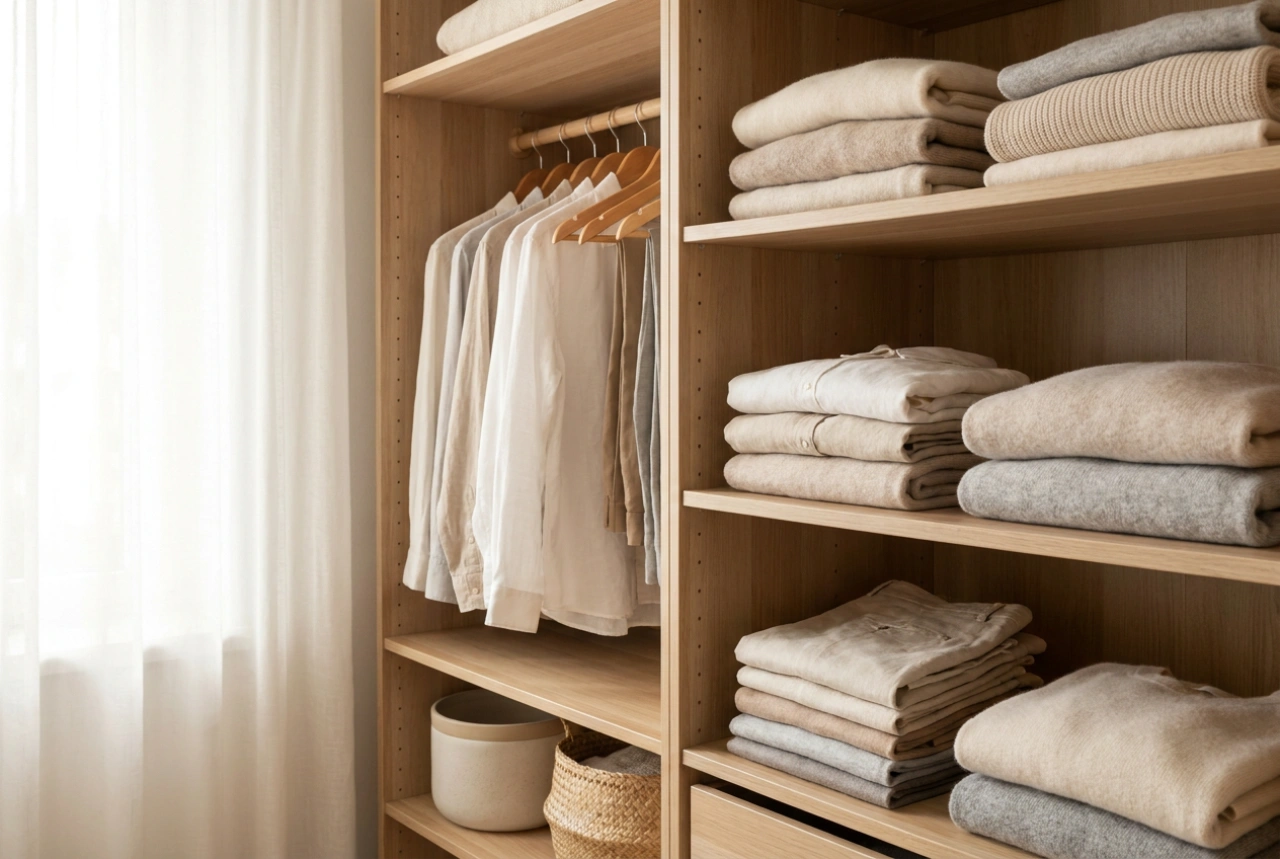
To prevent stacks of folded clothes from collapsing when you pull one item out, utilize the vertical folding method. By folding garments into self-supporting rectangular packages and placing them upright in drawer inserts or shelf organizers, you eliminate the downward pressure of a vertical stack. If you prefer traditional stacking, limit the height to four or five garments. Place heavier, high-friction items like denim at the bottom of the stack to act as a stable anchor, and lighter items like fine cotton t-shirts on top.
The Science of Hanger Selection and Weight Distribution
Hanging garments in an open wardrobe requires a strict understanding of load distribution and surface tension. Slippage is the primary cause of disorder on hanging rails. When smooth fabrics like silk, satin, or polyester slide off hangers, they create uneven weight distribution, causing the rail to tilt or neighboring garments to bunch up.
To combat this, utilize hangers with high-friction coatings, such as velvet or rubberized contours. The micro-textures of velvet grip the fabric fibers, resisting the gravitational pull that causes slipping. For heavier garments like wool blazers or structured coats, wide-shouldered wooden hangers are essential. They distribute the weight across a broader surface area, preventing the localized fabric deformation that occurs when gravity pulls the heavy fabric down over a narrow wire or plastic edge.
Organize hanging garments from left to right, moving from longest and heaviest to shortest and lightest. This progression creates a natural upward angle that guides the eye and maximizes the usable space underneath the shorter garments for storage boxes or shoe racks, balancing the structural weight of the entire wardrobe unit.
Controlling Dust, Humidity, and UV Degradation
An open wardrobe is constantly exposed to the surrounding room environment, making it vulnerable to dust, humidity, and sunlight. Dust is a combination of skin cells, outdoor particulates, and microscopic fabric fibers. In dry environments, static electricity builds up on synthetic fabrics like polyester and nylon, acting as a magnet for these dust particles.
To minimize dust attraction, maintain a relative indoor humidity level of 40% to 50%. This moisture level reduces static charge on fabric surfaces. Additionally, natural fiber garments should be spaced at least one finger-width apart on the rail to allow air circulation, preventing the pocketing of stagnant, humid air which can harbor mold spores or musty odors.
Direct sunlight is another silent threat to open wardrobes. Ultraviolet radiation triggers photo-oxidation in organic dyes and natural fibers. This process breaks down chemical bonds within the dyes, leading to fading, and degrades polymers in fibers like cotton, silk, and wool, making them brittle. Position your open wardrobe away from direct window paths, or use UV-filtering window films to protect your clothing investment.
The Daily Order of Operations
Keeping an open wardrobe organized requires a brief, daily sequence of actions. When removing clothes at the end of the day, do not immediately return them to the wardrobe or throw them onto a chair. Garments absorb body heat and perspiration during wear. Placing a warm, slightly damp garment directly back into the wardrobe traps moisture and odors within the surrounding clothes.
- Air out worn garments: Hang worn items on a valet stand or an external hook for at least two hours to allow moisture to evaporate and fibers to cool down.
- Button and zip: Before hanging shirts or trousers back up, fasten the top button and close all zippers. This maintains the structural shape of the garment and prevents it from twisting on the hanger.
- Consistent hanger spacing: When removing a garment, leave the empty hanger in its place on the rail. When returning the item, you will not have to search for a hanger or disrupt the spacing of the surrounding clothes.