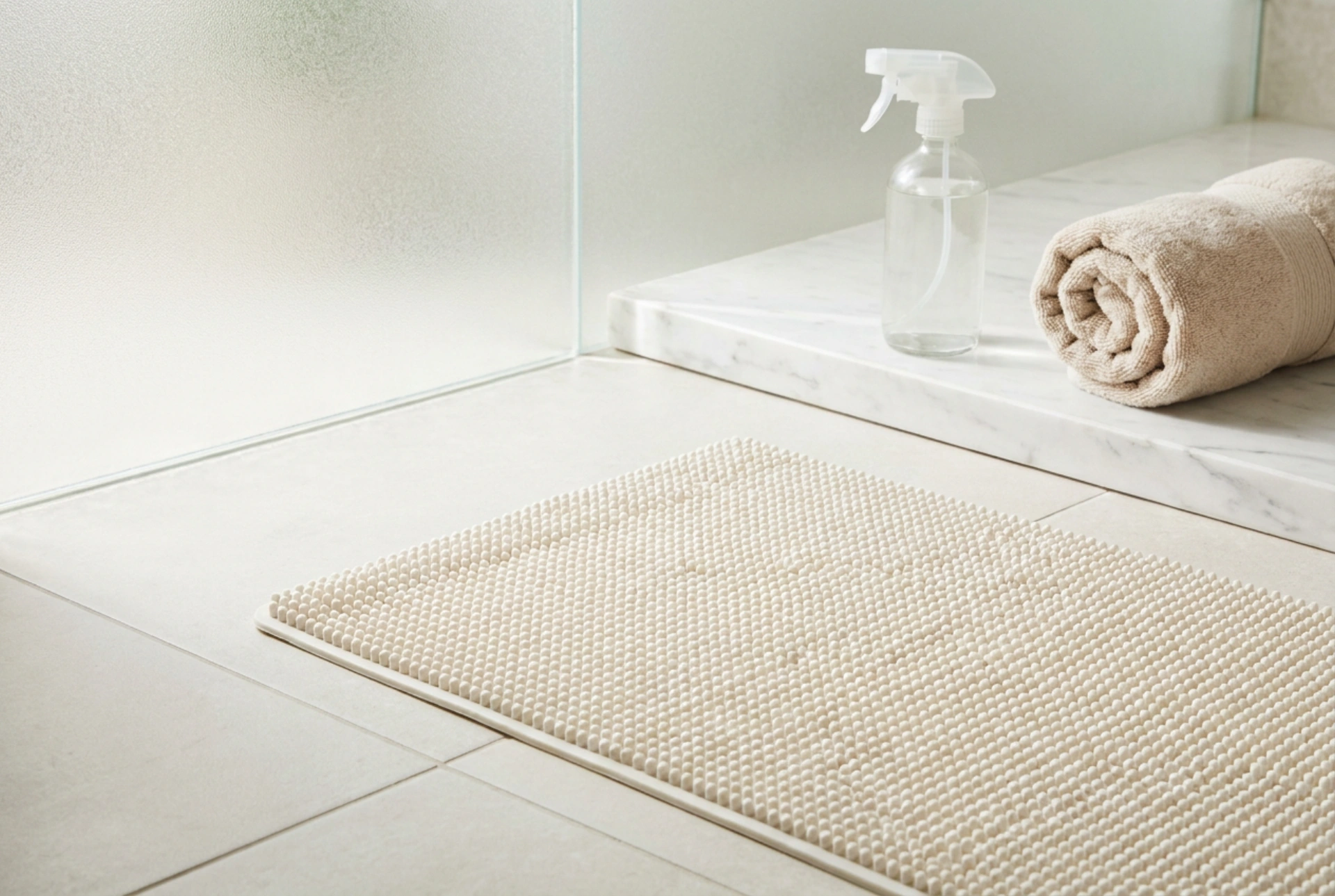


Soap scum, body oils, and standing water quickly accumulate on textured non-slip shower mats, creating an organic biofilm that fosters bacterial growth and mould. Establishing a quick post-shower maintenance routine based on surfactant science and acidity prevents this buildup, extending the lifespan of the mat while keeping the shower hygienic.
Why Non-Slip Mats Accumulate Grime So Quickly
Non-slip shower mats are typically manufactured from synthetic elastomers, silicone, or polyvinyl chloride (PVC). While these materials provide excellent friction and suction, their textured surfaces and underside suction cups trap moisture, dead skin cells, and soap residues. When tap water minerals—primarily calcium and magnesium ions—mix with the fatty acids in soap, they undergo a chemical precipitation reaction, forming insoluble soap scum. This sticky residue adheres to the polymer chains of the mat, creating a hydrophobic layer that normal water rinsing cannot wash away. Over time, this layer serves as an anchor for fungal spores, leading to black mould and slippery biofilms.
The Mechanical Action: Rinsing, Peeling, and Draining
An effective daily routine relies on breaking the bond between the mat and the shower tray. Simply running the shower over the mat is insufficient because water cannot circulate beneath the suction cups. After every use, peel the mat up starting from one corner to release the vacuum pressure gradually. Use warm water (approximately 40°C) to rinse both the top and bottom surfaces; this temperature is high enough to liquefy solidifying body lipids and soap residues without warping the synthetic polymers. Once rinsed, hang the mat over the edge of the tub, a rail, or a tiled wall using the suction cups facing outward. Elevating the mat utilises gravity to drain residual water, disrupting the humid microclimate required for bacterial colonisation.
Daily Spray Formulation: Utilising Weak Acids
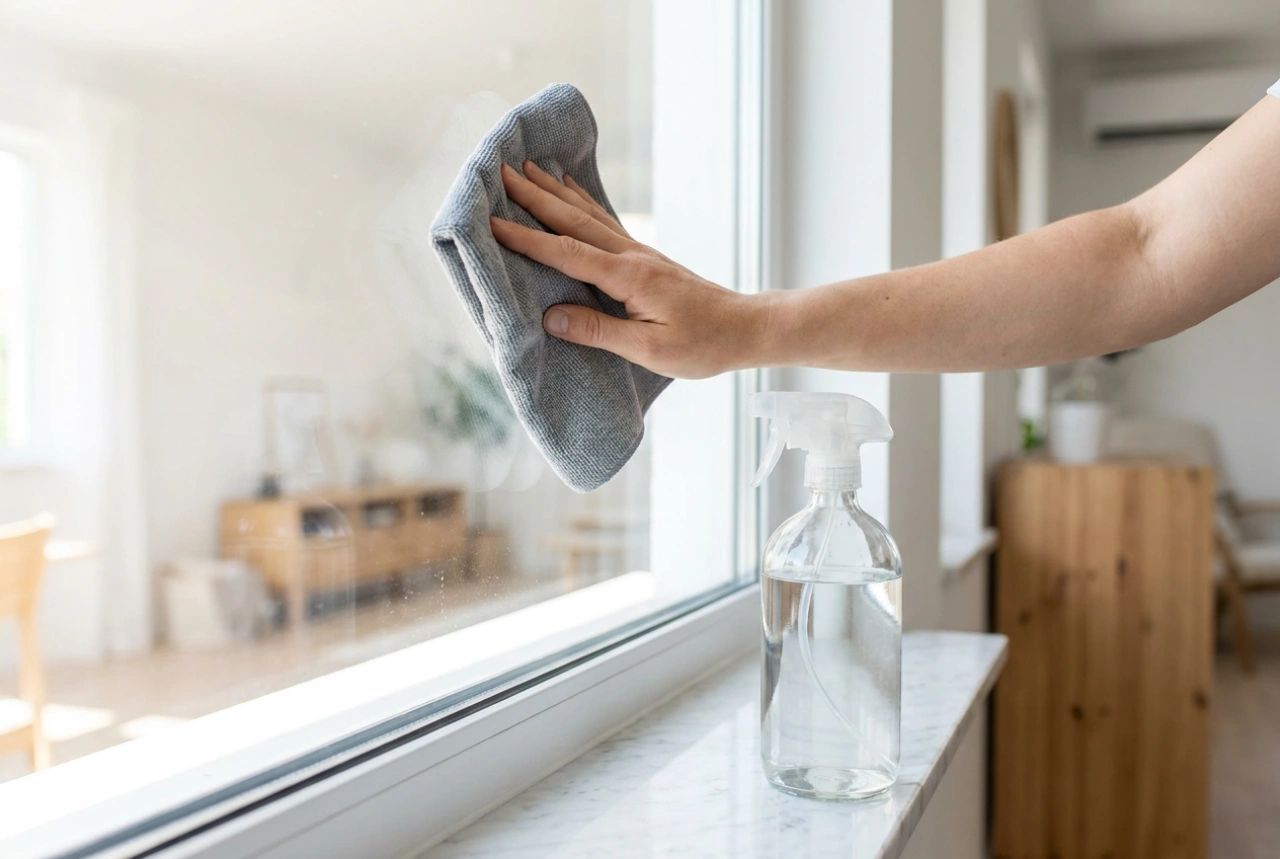
To prevent calcium scale and organic biofilms from hardening, apply a mild acidic solution immediately after rinsing. You can easily formulate a highly effective daily spray using household chemistry:
- Diluted Acetic Acid (White Vinegar): Mix equal parts of distilled white vinegar and water in a spray bottle. The acetic acid dissolves the calcium carbonate binding the soap scum, allowing it to be easily rinsed away during the next shower.
- Citric Acid Solution: For a scent-free alternative, dissolve two tablespoons of citric acid powder in half a litre of warm water. Citric acid acts as a natural chelating agent, binding to metal ions in hard water and preventing scale deposition.
Spray the mixture generously over both sides of the lifted mat, paying close attention to the suction cups. There is no need to scrub daily; the chemical action of the weak acid will continuously inhibit microbial growth as the mat dries.
Deep Cleaning with Active Oxygen
Even with daily maintenance, a deeper sanitisation should be performed weekly or bi-weekly. Avoid chlorine bleach, as strong oxidising agents can degrade PVC and silicone, making them brittle and prone to cracking. Instead, utilise sodium percarbonate (oxygen bleach):
- Fill a basin or the shower tray with warm water and dissolve two tablespoons of sodium percarbonate.
- Submerge the mat completely for 15 to 30 minutes.
- The chemical reaction releases hydrogen peroxide and sodium carbonate. The effervescent action produces micro-bubbles of active oxygen that physically lift organic matter and stains from the textured grip surfaces and suction cups.
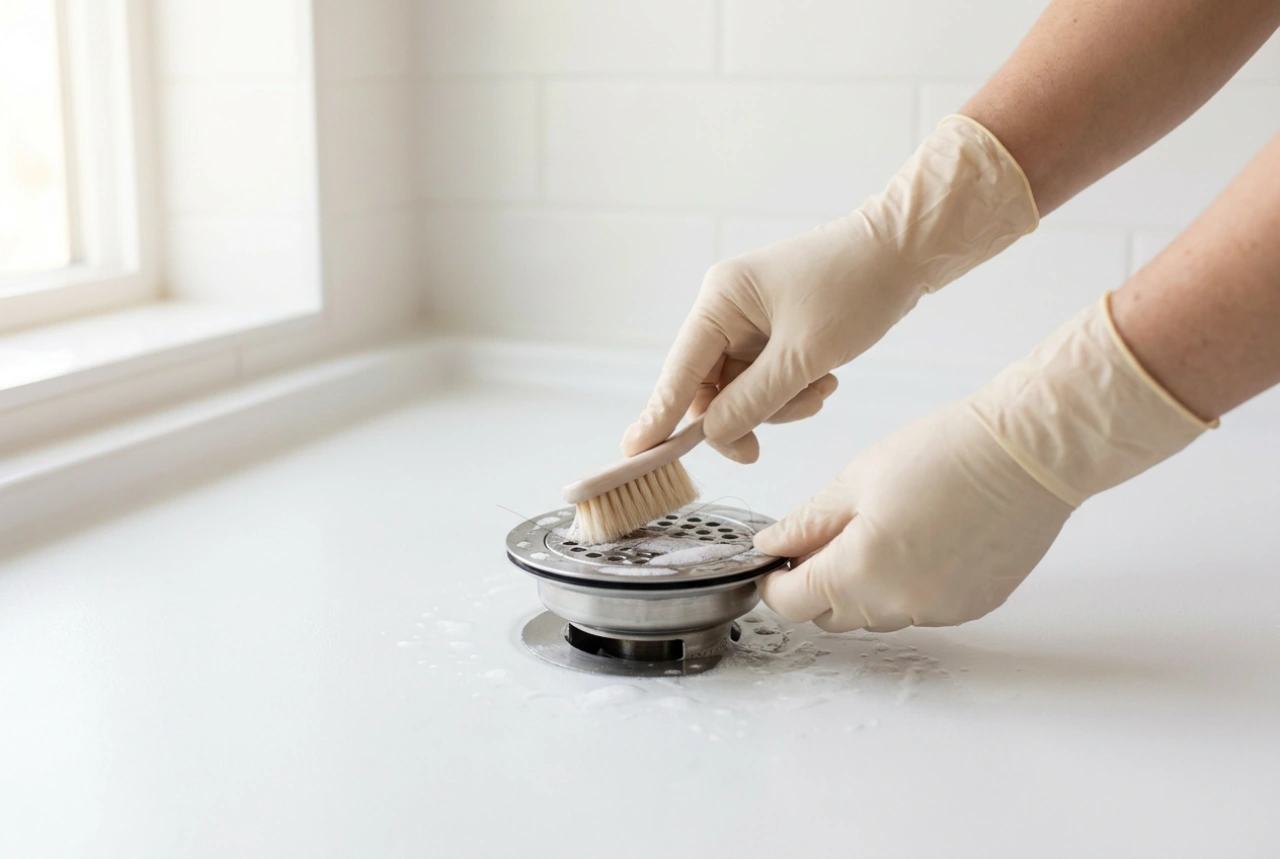
- Scrub gently with a medium-stiffness nylon brush to dislodge loosened particles, then rinse thoroughly with cold water.