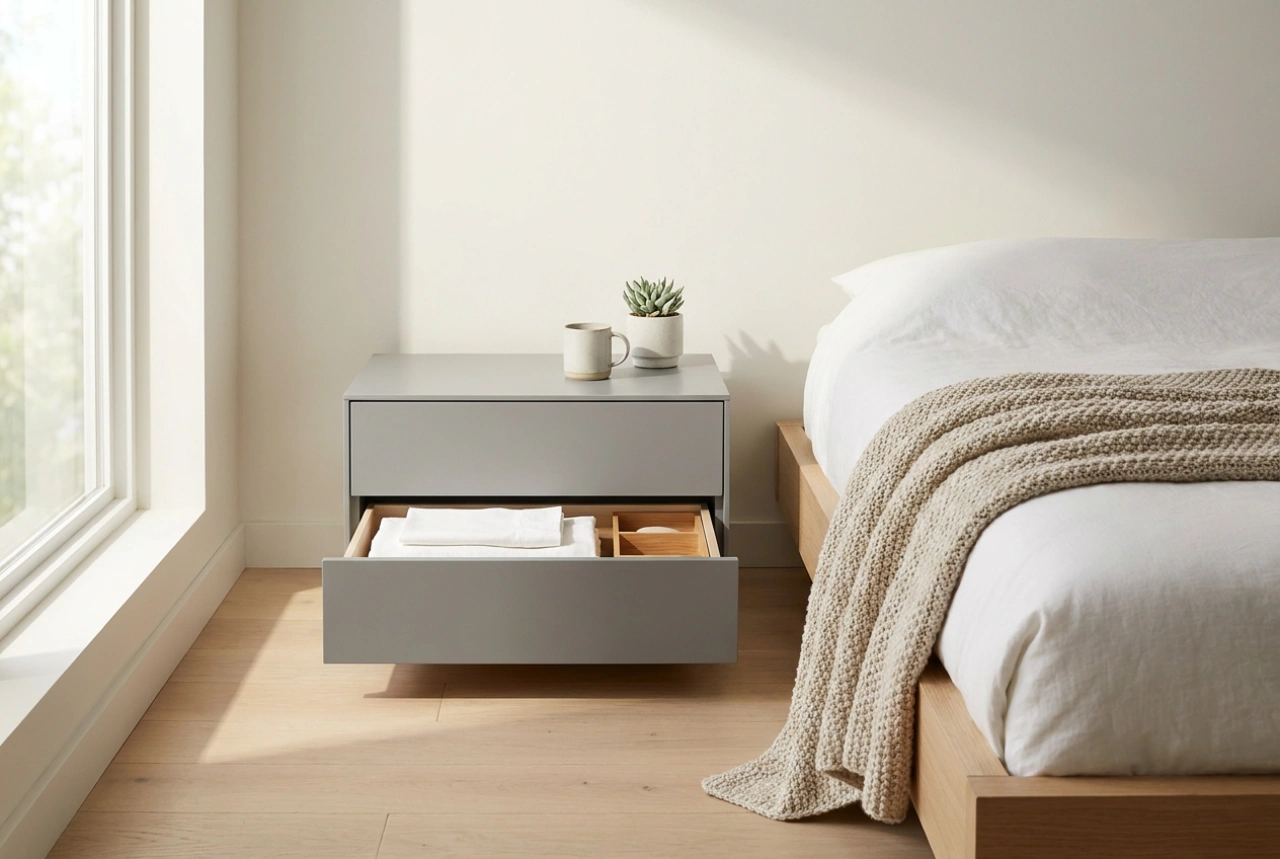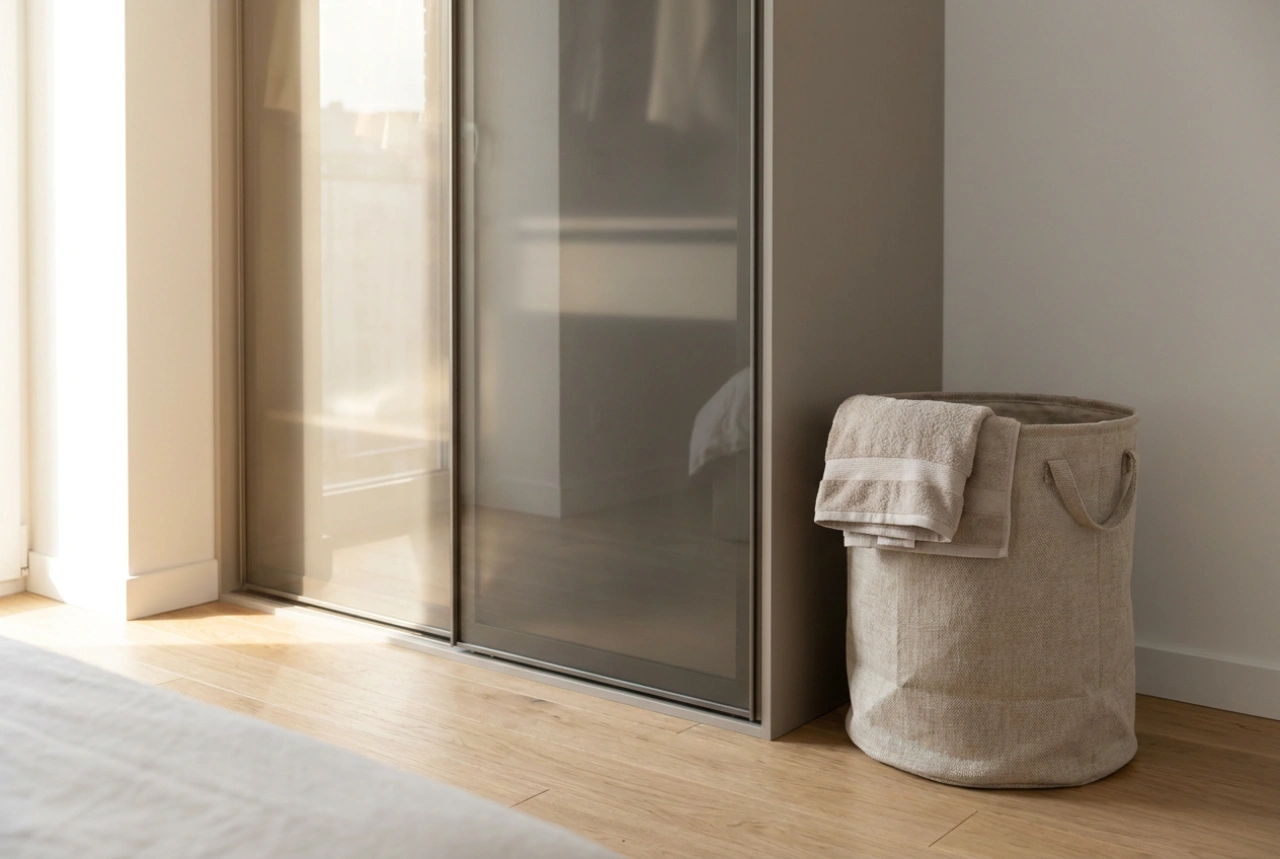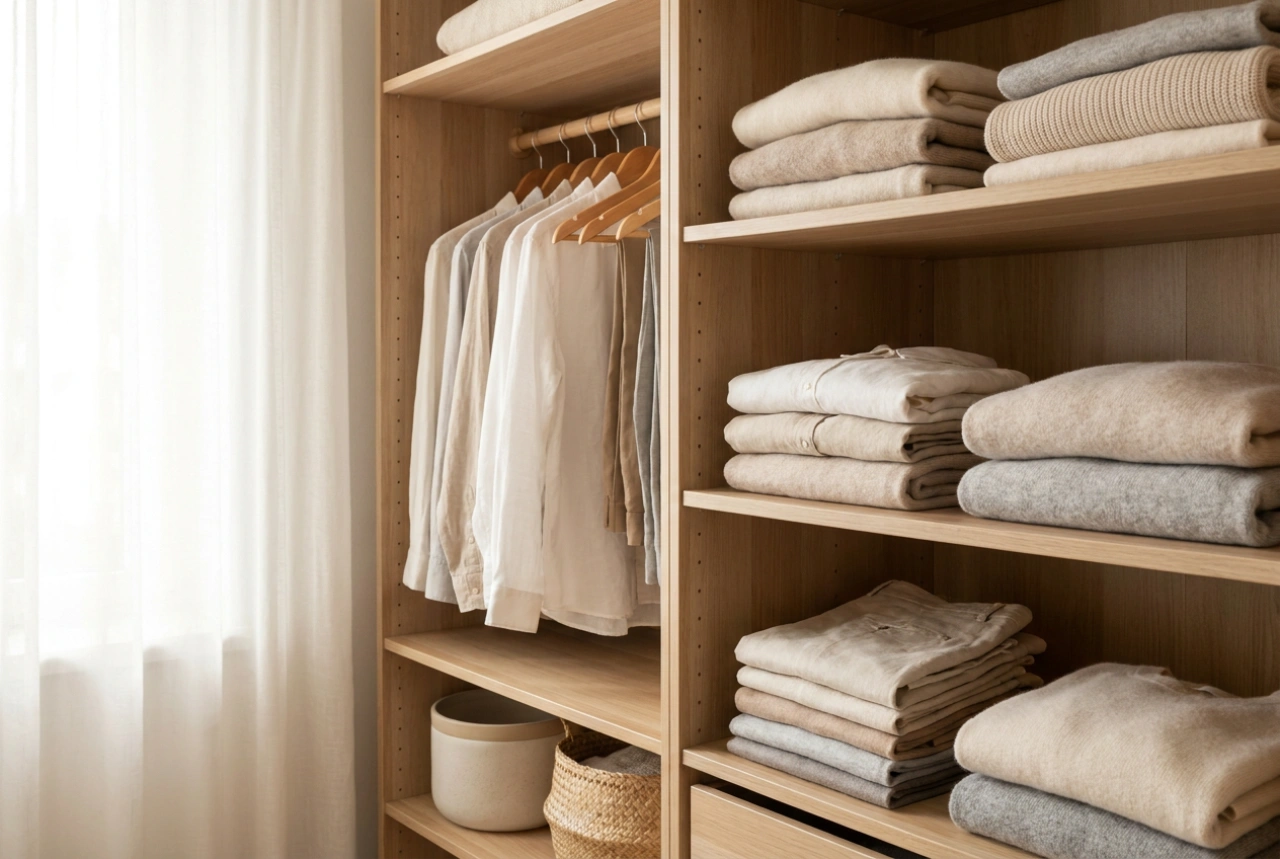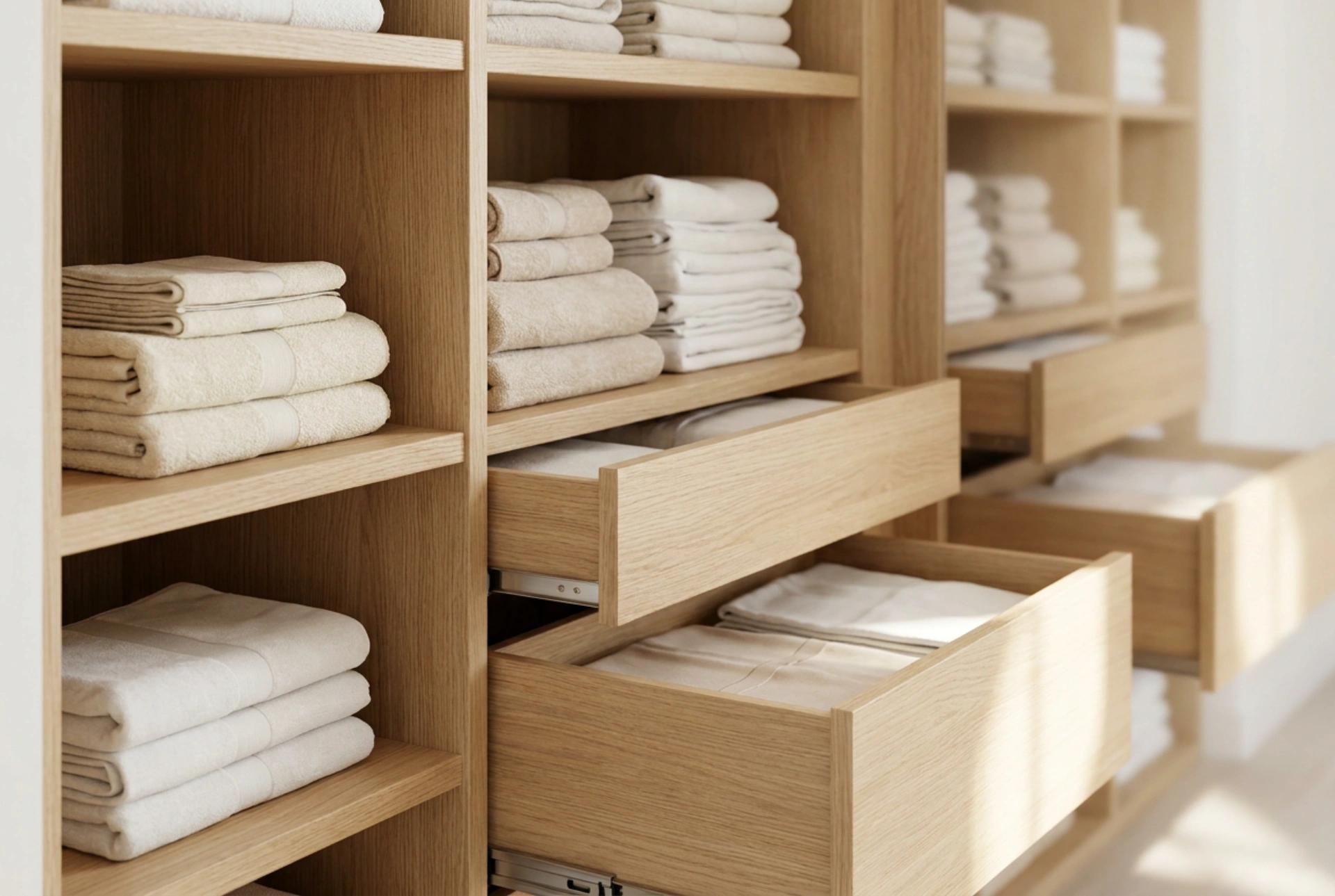


Utilizing corner spaces in a room often presents a geometric challenge, as deep, hard-to-reach angles easily turn into dead zones where items are forgotten. Integrating a custom-built corner wardrobe equipped with internal drawers solves this layout bottleneck by converting static, deep storage into highly accessible, dynamic space.
The Physics of Blind Corners and Dynamic Access
In standard straight cabinetry, depth is limited by arm reach, typically averaging 60 centimetres. Corner configurations, however, create a diagonal depth that can exceed one metre. This physical distance makes manual retrieval of items stored at the back highly inefficient. A corner wardrobe with integrated drawers solves this by physically moving the storage volume outward into the room's open space.
By shifting from static shelves to full-extension drawers, you alter the angle of interaction. Instead of bending and reaching blindly into a dark 90-degree intersection, the user pulls the entire contents of the corner out into the light. This kinetic approach maximizes the volume of the corner without requiring deep bending or contorting the body, utilizing mechanical leverage to bring the stored items directly to the user.
Drawer Runner Mechanics and Load Distribution
When engineering drawers inside a corner wardrobe, hardware selection is critical. Because corner drawers are often wider or uniquely shaped to fit the angle (such as L-shaped or trapezoidal units), they are subject to asymmetrical forces. Standard side-mounted rollers often fail under these conditions due to lateral twisting.
- Under-mount ball-bearing runners: These provide superior stability by supporting the drawer from beneath, distributing the weight evenly across the horizontal plane. This minimizes horizontal wobble when pulling the drawer open.
- Dynamic load capacity: For deep corner drawers, select runners rated for at least 40 to 60 kilograms. This prevents sag over time, which can cause the drawer front to scrape against the wardrobe frame.
- Self-closing and dampening mechanisms: Pneumatic dampeners absorb kinetic energy, slowing the drawer down before impact. This prevents stored contents from shifting violently and keeps the mechanical parts from fatiguing.
Mitigating Moisture and Managing Airflow in Corners
Corners of rooms, especially those against external walls, are prone to thermal bridging. These areas are typically colder than the rest of the room, creating a microclimate where warm, humid indoor air can condense. When sealed behind heavy wardrobe doors, this lack of ventilation can lead to musty odors or mold growth on textiles.
To prevent this, the wardrobe's structural design must allow for passive ventilation. Leaving a 2-centimetre gap between the back panel of the wardrobe and the wall promotes convective airflow. Inside the wardrobe, choosing wire-basket drawers or leaving ventilation slots in solid drawer bottoms allows air to circulate around clothing. Additionally, placing moisture-absorbing silica packs or using natural linen drawer liners can help regulate relative humidity levels within the closed system.
Structural Materials and Load-Bearing Calculations
The materials used to construct corner wardrobes must withstand both gravitational forces and the dynamic tension of moving drawers. High-density fiberboard (HDF) or medium-density fiberboard (MDF) with a minimum thickness of 18 millimetres should be used for the external carcass to ensure rigidity. Solid hardwood is excellent for structural rails, but for drawer boxes, lightweight plywood or aluminum sides reduce the dead weight on the runners, maximizing the usable weight capacity for your belongings.