

Mechanical music jewelry boxes are delicate objects that combine micro-engineering with fine cabinetry and soft textiles. Protecting these heirloom pieces requires understanding how environmental factors, mechanical tension, and material chemistry interact to affect both the musical mechanism and your stored jewelry.
The Physics of the Wind-Up Mechanism
At the heart of every music box is a spring-driven motor, a cylinder studded with tiny pins, and a steel comb with tuned teeth. When you wind the key, you compress a flat steel spring inside a barrel. Releasing this spring releases potential energy, spinning the cylinder. To preserve this mechanism, you must manage mechanical tension. Over-winding—forcing the key past its natural resistance—can warp or snap the mainspring, rendering the box silent.
Furthermore, steel combs and brass gears are highly susceptible to oxidation. High indoor humidity accelerates rust on the steel teeth, which alters their vibrational frequency and dulls the sound. Keep the box away from areas with high moisture fluctuation, such as bathrooms or drafty window sills. If the music begins to drag, it is often a sign of dust accumulation or dried factory grease on the governor. Use dry compressed air to clear particles, and never apply household vegetable oils, which oxidize, become gummy, and seize the gears.
Material Science of Interior Linings and Metal Tarnish
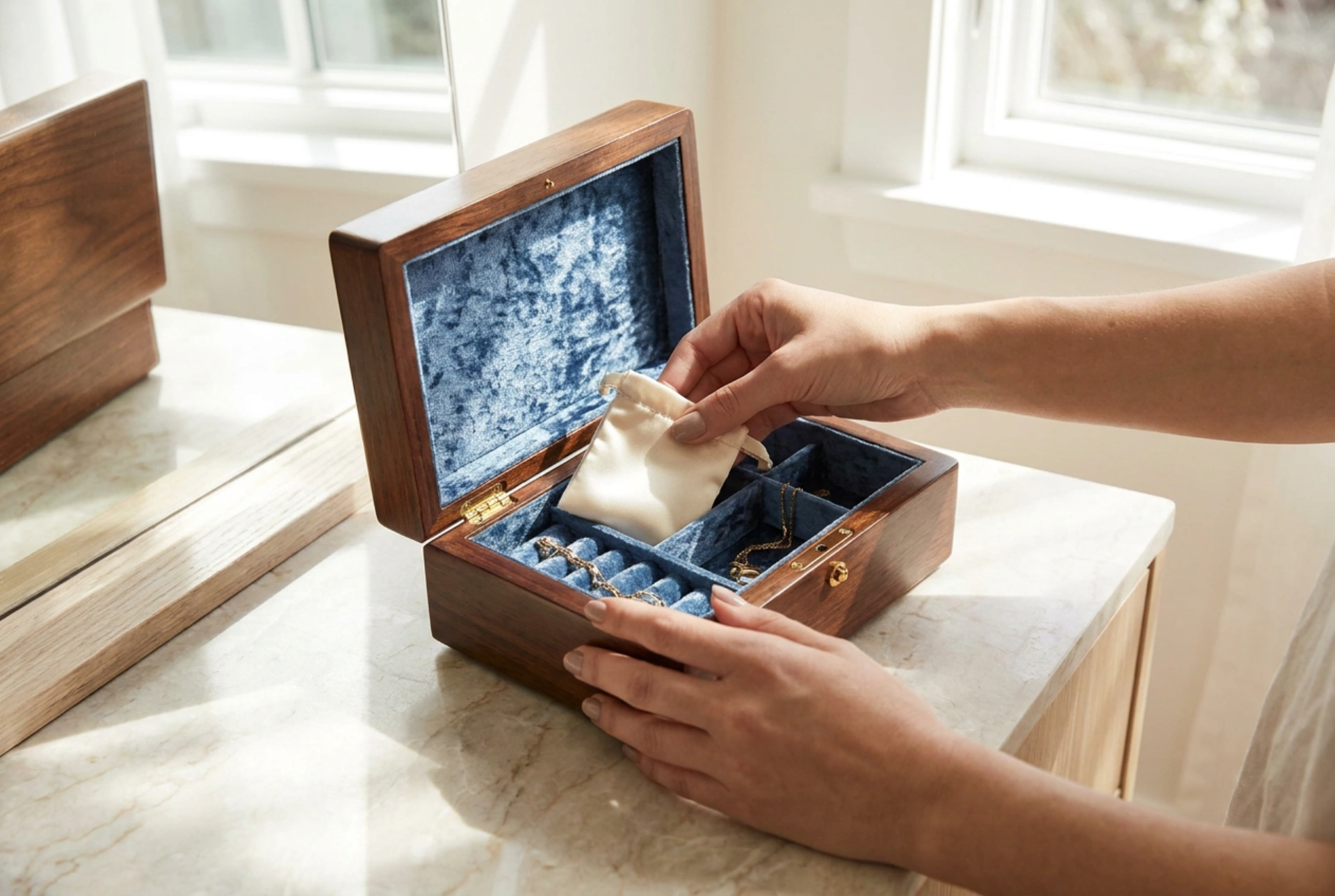
The soft linings of jewelry boxes—usually velvet, flannel, or silk—do more than cushion your valuables; they act as a physical barrier against abrasion. However, the chemical makeup of these fabrics matters. Inexpensive synthetic velvets can contain adhesive residues or acidic dyes that release volatile organic compounds (VOCs). Over time, these gases react with silver, copper, and low-carat gold, accelerating tarnish and corrosion.
To mitigate this chemical reaction, store highly reactive metals like sterling silver in small, airtight anti-tarnish bags before placing them in the box. When organizing, separate different metals. Harder metals, such as platinum and gold, can easily scratch softer gemstones like opals or pearls, and even sterling silver. Group items by material and use designated slots or small silk pouches to eliminate metal-on-metal friction during the movement of the box.
Weight Distribution and Structural Load
The structural integrity of a music box depends on balanced weight distribution. The mechanical cavity is often separated from the storage compartment by a thin wooden or cardboard partition. Overloading the upper trays with heavy jewelry can warp these dividers, placing physical pressure on the spinning cylinder or the governor beneath.
- Place heavier items, like solid metal bangles or heavy watches, at the bottom of the compartments or in the center, away from the delicate mechanical housing.
- Distribute weight evenly across both sides of the box to prevent hinge misalignment over time.
- Avoid piling items high enough to touch the lid, as the downward pressure when closing can scratch polished wood or strain the hinges.
Preserving the Wood and Exterior Finish
Most high-quality music boxes feature polished wood, lacquer, or veneers. Wood is a hygroscopic material, meaning it constantly absorbs and releases moisture from the air. Rapid changes in temperature and humidity cause the wood to expand and contract, leading to hairline cracks in the lacquer or warping of the lid, which may prevent it from sealing properly.
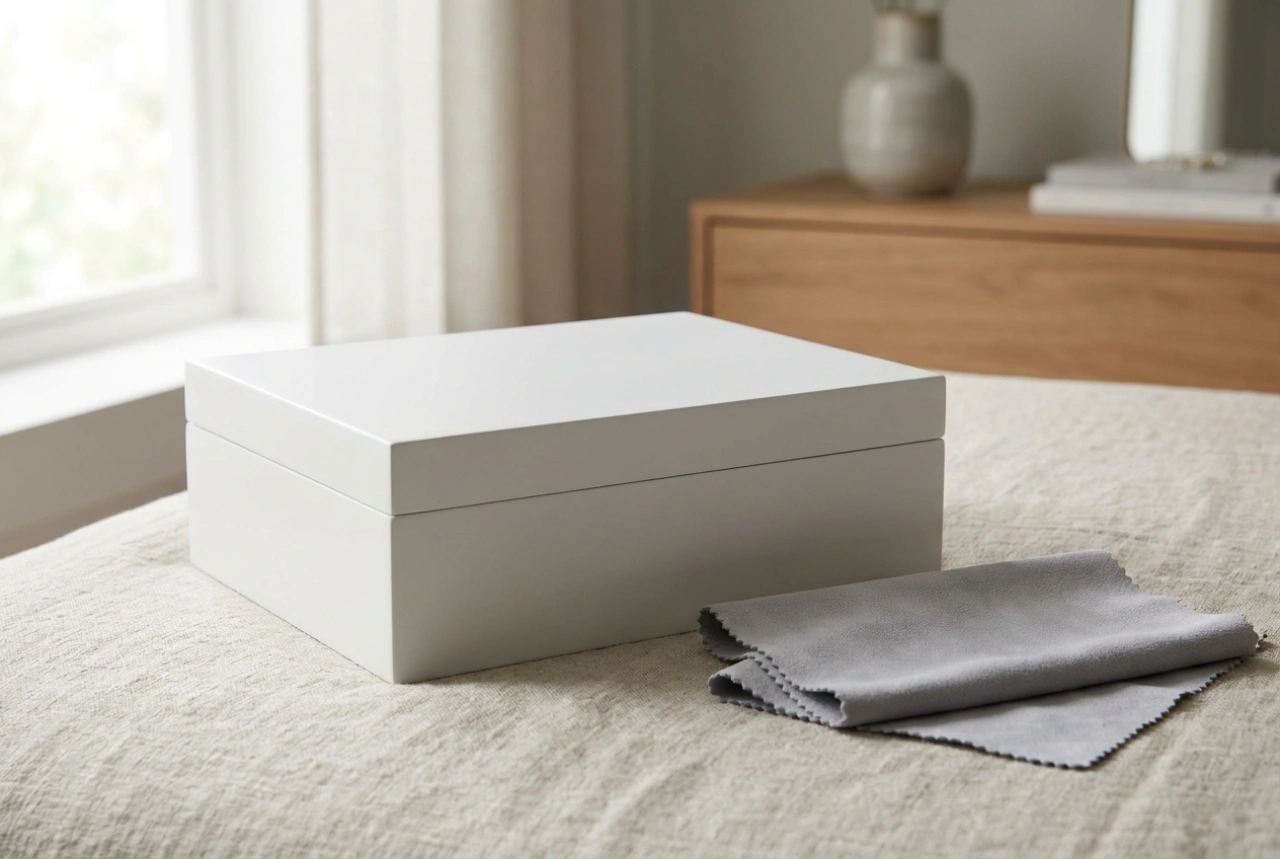
Clean the exterior using a dry, ultra-fine microfiber cloth. Avoid commercial liquid polishes containing silicones or heavy solvents, as these can penetrate micro-cracks and degrade the wood fibers or dissolve the delicate adhesives holding the decorative veneers. For stubborn smudges, a barely damp cloth followed immediately by a dry wipe is sufficient to restore the surface without introducing harmful moisture near the internal mechanical parts.