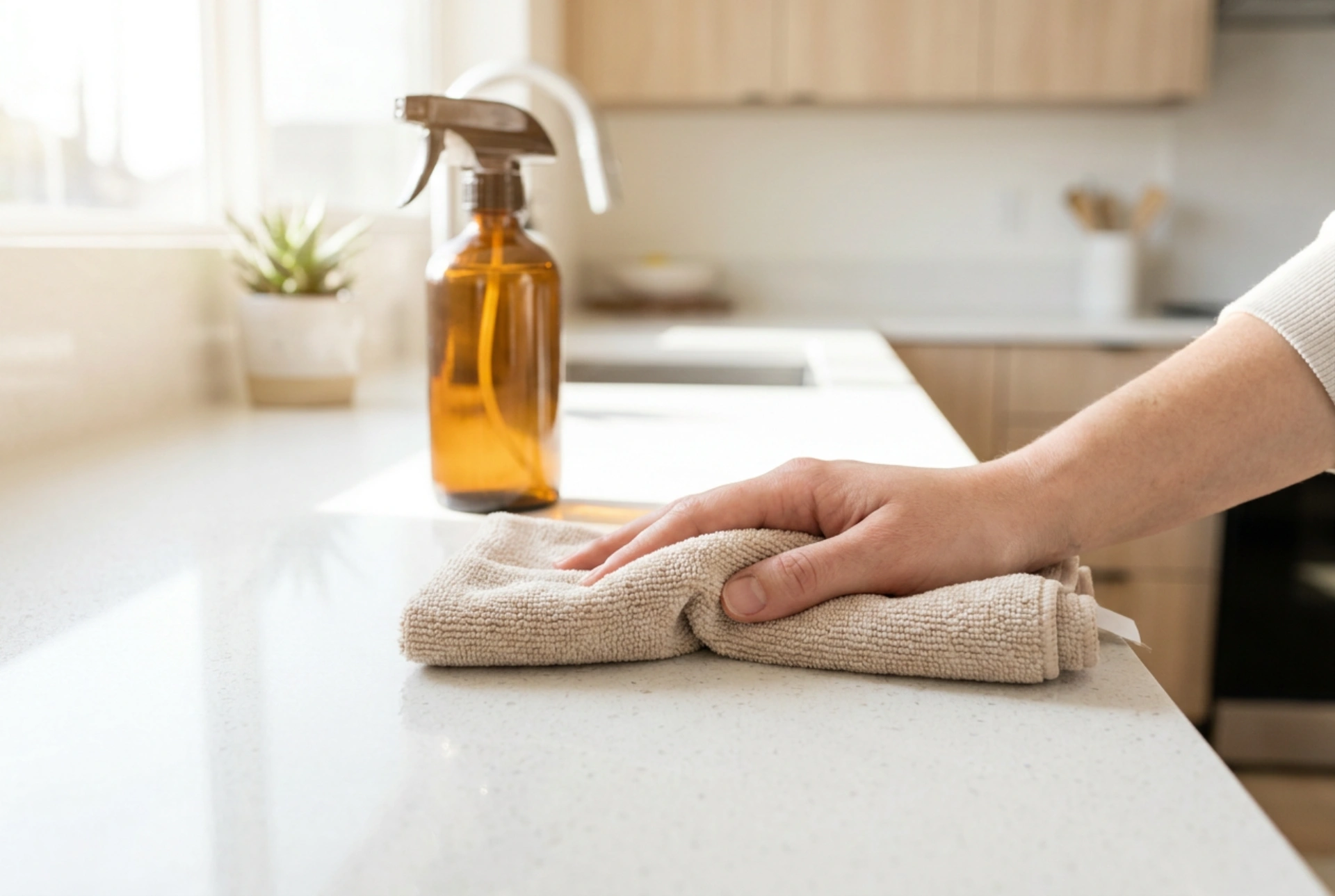


Disinfecting household surfaces is only effective when you understand the chemistry of pathogens and the precise contact time required to neutralise them. Simply spraying a disinfectant and immediately wiping it away leaves behind viable micro-organisms while potentially causing long-term damage to your home’s surfaces.
The Fundamental Separation: Cleaning Versus Disinfecting
Before any disinfectant can perform its chemical duty, the target surface must be physically cleaned. Soil, grease, and organic matter act as protective barriers that shield bacteria and viruses from chemical agents. Furthermore, organic debris can chemically react with active ingredients—particularly chlorine-based compounds or hydrogen peroxide—reducing their active concentration and rendering the disinfection process ineffective.
To prepare a surface, use a neutral surfactant-based cleaner and warm water to emulsify oils and lift dust. Wipe this layer away entirely. This physical removal process exposes the actual material surface, ensuring that when the disinfectant is applied, it directly contacts the cellular walls of any remaining microscopic pathogens.
Understanding Contact Time: The Chemistry of Germ Elimination
The most common error in household sanitisation is failing to respect the "dwell time" or contact time. Disinfection is a chemical reaction that relies on a specific duration of wet contact to compromise cellular structures or denature viral proteins.
Common Active Agents and Their Mechanisms
- Alcohol (Ethanol or Isopropyl Alcohol): Works by denaturing proteins and dissolving lipid membranes. An optimal concentration of 60% to 70% is required because water is necessary to slow down evaporation and facilitate penetration into the cell wall. Dwell time: typically 30 to 60 seconds of continuous wet contact.
- Quaternary Ammonium Compounds: These surfactants bind to the negatively charged membranes of pathogens, disrupting their permeability and causing cellular leakage. Dwell time: usually requires 5 to 10 minutes of remaining visibly wet.
- Oxygen-Based Bleach (Hydrogen Peroxide): An oxidising agent that produces free radicals to attack essential cell components. Dwell time: typically 1 to 5 minutes depending on concentration.
If the liquid evaporates before the required dwell time is met, the disinfection process is incomplete. In low-humidity environments, you must reapply the solution to keep the surface continuously wet for the entire duration specified by the chemical composition.
Surface Compatibility and Chemical Vulnerabilities
Selecting the correct disinfectant requires matching the chemical formula to the specific material of your countertops, fixtures, or handles to prevent permanent degradation.
Quartz and Natural Stones
Engineered quartz and natural stones like marble contain resins or calcium carbonate structures that are highly sensitive to acids and strong oxidising agents. Using highly acidic solutions or concentrated chlorine bleach can etch the surface, stripping the protective seal and leaving the stone porous and highly susceptible to staining. For these surfaces, neutral quaternary ammonium solutions are generally the safest option.
Plastics and Acrylics
High-concentration isopropyl alcohol can cause stress cracking in acrylics and certain rigid plastics. The solvent penetrates the polymer chains, weakening the structural integrity of the material and causing microscopic fractures that eventually dull and ruin the finish. Use hydrogen peroxide-based formulas instead on these materials.
Precision Mechanics: The Correct Wiping Motion
The physical movement used when wiping away chemical residues plays a critical role in preventing cross-contamination. Avoid circular motions, which simply redistribute loosened pathogens across the area you have just treated.
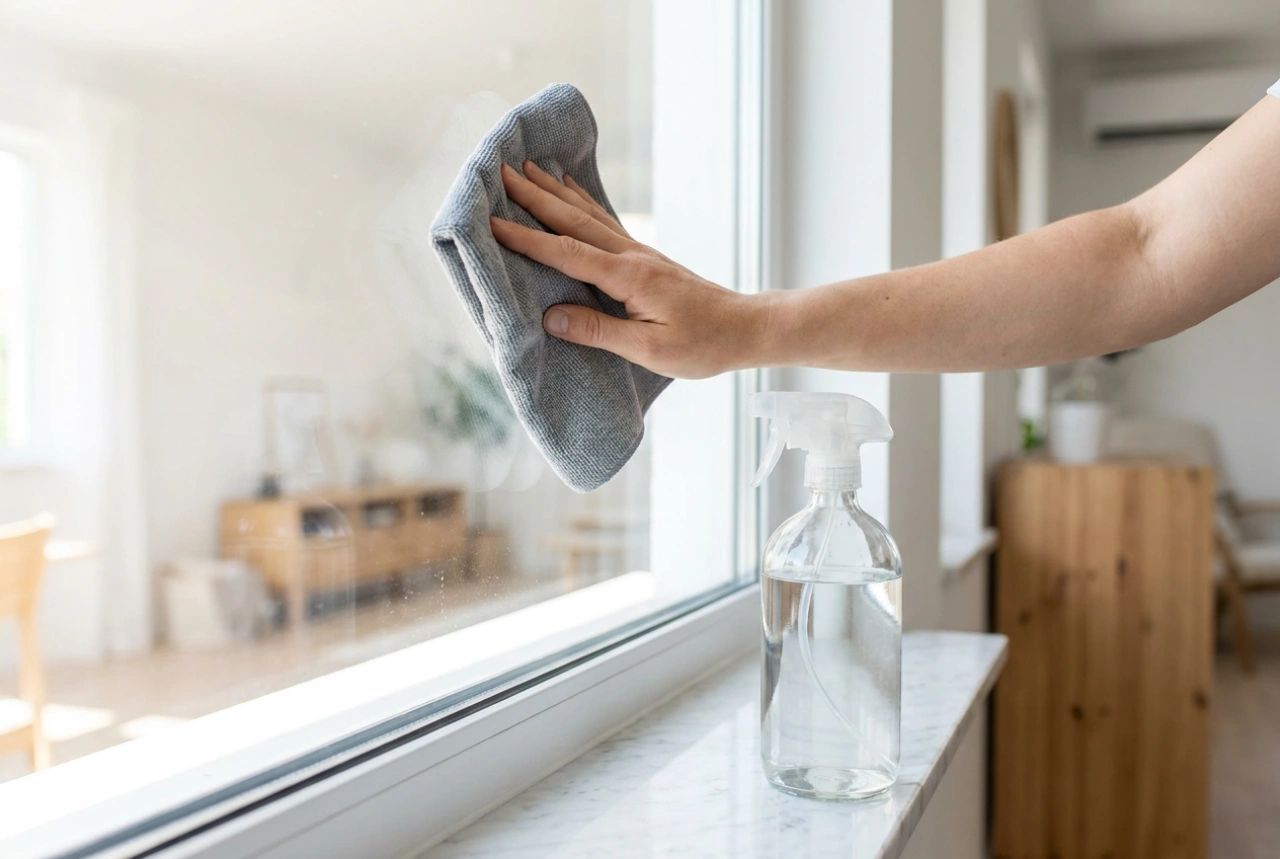
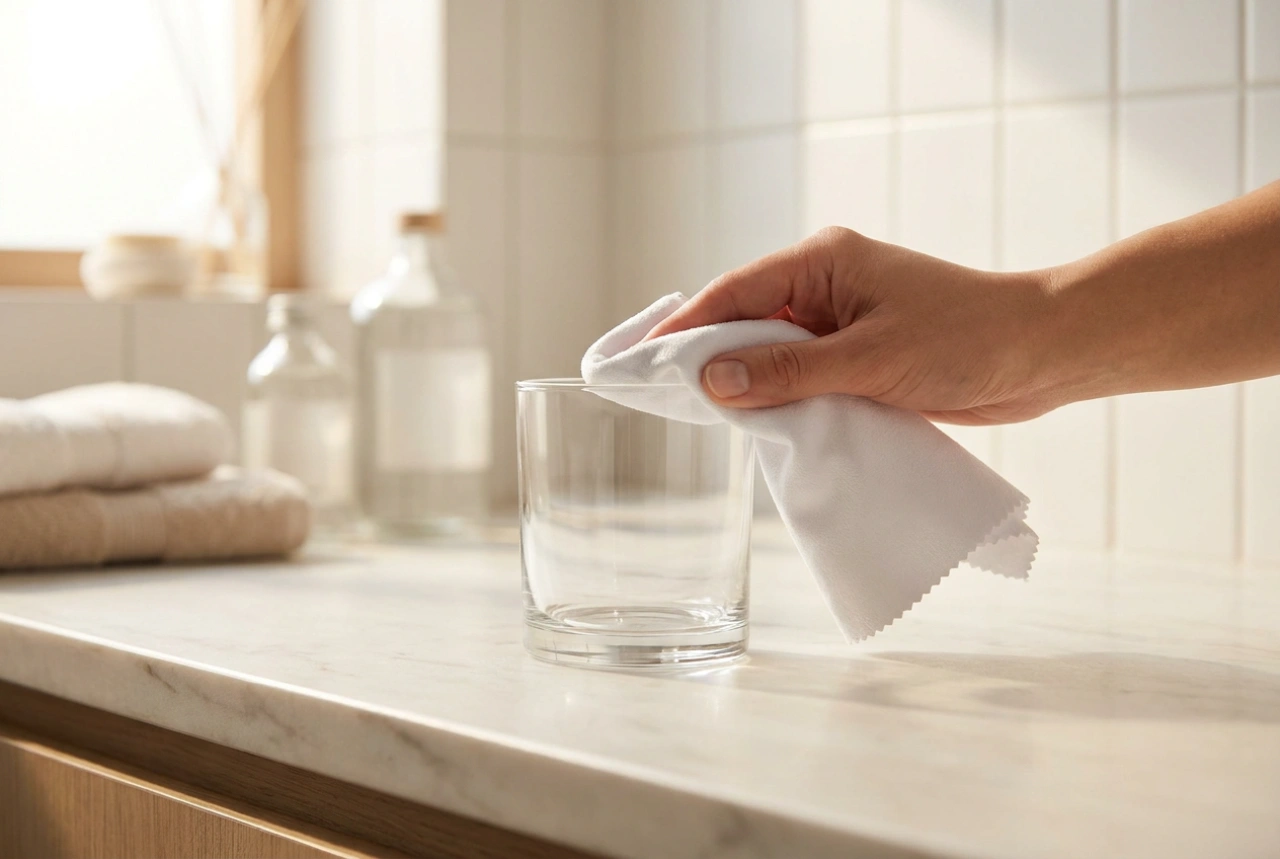
Instead, adopt the S-shaped wiping technique. Start at the cleanest corner of the surface and wipe in a continuous, sweeping S-pattern, moving from one side to the other, and working from the back to the front. This ensures that the cloth only passes over any given area once, collecting residues and dead microbial matter without reintroducing them to cleaned zones. Use high-density microfibre cloths, as their microscopic wedge-shaped polyester and polyamide fibres create capillary action, lifting and trapping particles deep within the weave.