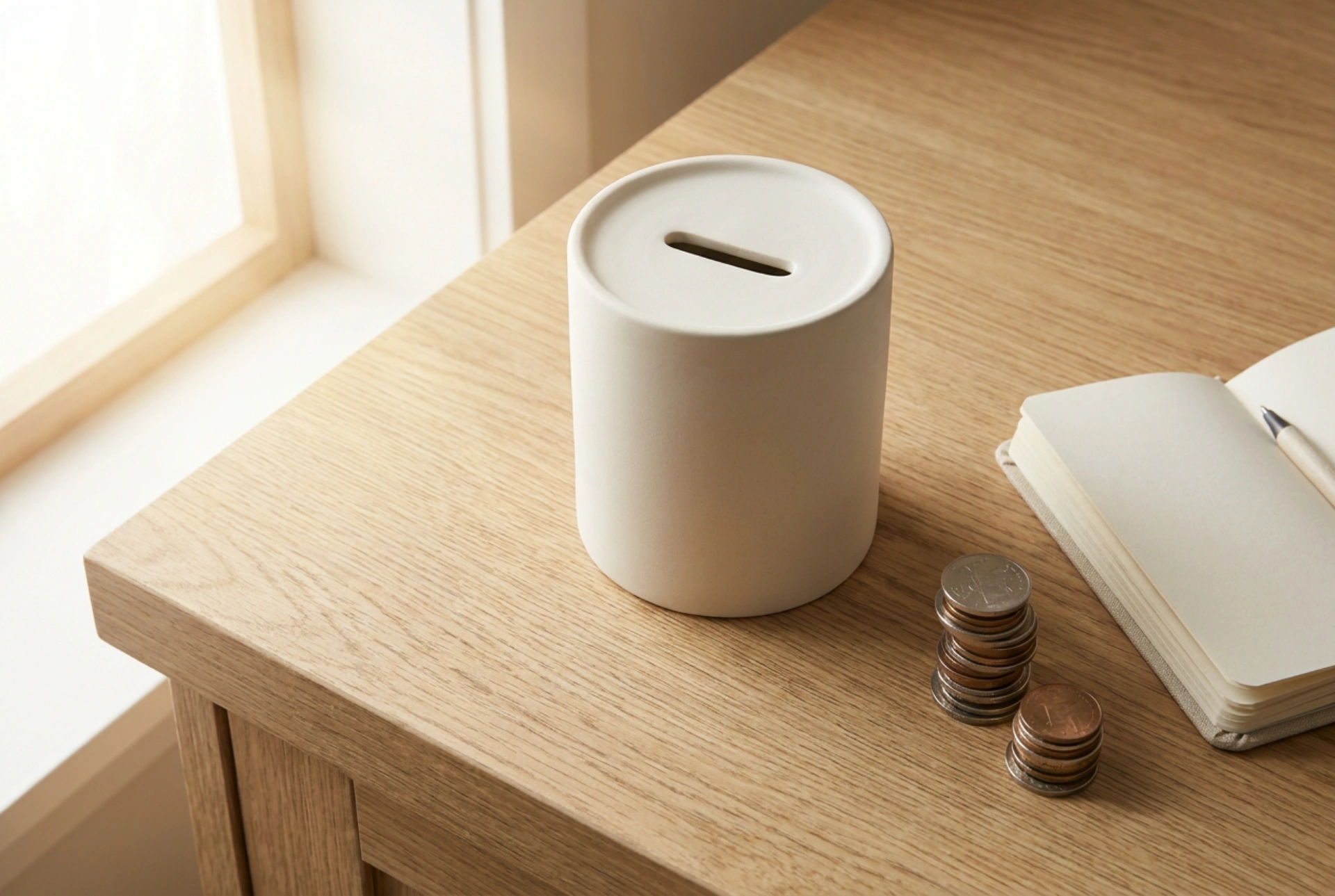


A non-openable money box creates a physical and psychological barrier that prevents impulsive spending and helps build disciplined saving habits. By eliminating the temptation of easy access, this simple tool leverages behavioral friction to turn spare change and small cash notes into a substantial financial reserve.
The Science of Behavioral Friction in Saving
At the core of the non-openable money box is the principle of behavioral friction. In economic psychology, friction refers to any variable that makes a behavior harder to perform. When a savings container has a removable plug, the friction between wanting a small amount of cash and retrieving it is virtually zero. This leads to frequent, small depletions that derail long-term goals.
By utilizing a completely sealed container—whether made of ceramic, terracotta, or welded metal—you introduce an absolute barrier. To access the funds, you must physically destroy the container or use heavy tools. This requirement forces a conscious, high-effort decision, effectively neutralizing short-term impulses. The sudden realization that you must break a beautiful ceramic object or saw through metal acts as an emotional deterrent, protecting your accumulated capital.
Material Science: Selecting the Ideal Container
The material of your saving vessel plays a critical role in how you interact with your savings. Different materials offer varying levels of durability, aesthetic appeal, and psychological impact:
- Terracotta and Clay: These traditional materials are highly porous and fragile. They offer a classic aesthetic but, more importantly, they must be shattered to be opened. The physical act of breaking clay is irreversible and loud, which serves as a powerful psychological threshold.
- Glazed Ceramic: Similar to clay but with a protective vitreous coating. Ceramic boxes are sturdier and resist moisture, protecting paper currency from humidity and mold during long-term storage.
- Welded Metal or Tin: These require mechanical tools like tin snips or pliers to open. They offer the highest level of security against accidental breakage and are ideal for long-term, high-volume coin accumulation.
Optimizing Volume and Density Inside the Vessel
To make the most of a sealed container, you must understand the physics of space optimization. Depositing money haphazardly can lead to premature filling, where the container appears full but contains mostly empty space.
Maximizing Coin Packing Density
In physics, the packing density of random close packings of spheres or discs (like coins) reaches only about 60% to 64% of the total volume. To optimize this, gently agitate the container periodically. Lightly shaking or rotating the box allows smaller coins to settle into the voids between larger coins, increasing the overall density and allowing you to store more value in the same physical footprint.
Handling Paper Currency
Paper notes present a different challenge. If dropped loosely into a slot, they expand and block incoming coins. To prevent this, roll paper notes tightly into dense cylinders. Avoid using standard rubber bands to secure them, as natural rubber degrades over time in sealed, unventilated environments, leaving a sticky residue that can damage the currency. Instead, fold them tightly or use small paper sleeves.
Strategic Habits for Consistent Accumulation
Owning a sealed box is only effective if backed by a systematic deposit routine. Rather than saving sporadically, establish clear rules to govern your contributions:
- The End-of-Day Clearance: Empty all physical coins from your pockets or wallet into the box every evening. This establishes a daily habit loop.
- The Denomination Filter: Select one specific coin or low-value banknote denomination. Every time you receive this specific currency in change, it is immediately designated for the box and cannot be spent.
- The Behavioral Tax: Impose a small, physical cash "tax" on your own habits. For every cup of premium coffee purchased or convenience food ordered, deposit an equivalent cash amount into your sealed box.