

A high-performance steam iron or steam generator is only as effective as the surface beneath it; without proper steam permeability, moisture traps within the fabric, leading to damp garments and prolonged ironing times.
The Physics of Steam Permeability in Ironing
When ironing with steam, you are utilising high-temperature water vapour to relax the intermolecular bonds within textile fibres, specifically hydrogen bonds in natural polymers like cotton, linen, and wool. Once these bonds are relaxed, the mechanical pressure of the iron soleplate realigns the fibres, and as the moisture evaporates, the new, flat structure is locked into place.
If the steam cannot escape through the ironing board, it hits a solid barrier, cools rapidly below its boiling point, and undergoes a phase change back into liquid water. This condensation accumulates in the board's padding and is reabsorbed by the garment. The result is a damp fabric that will crease almost immediately upon cooling, as well as a risk of mould growth within the ironing board structure.
The Core Structure: Why Mesh is Crucial
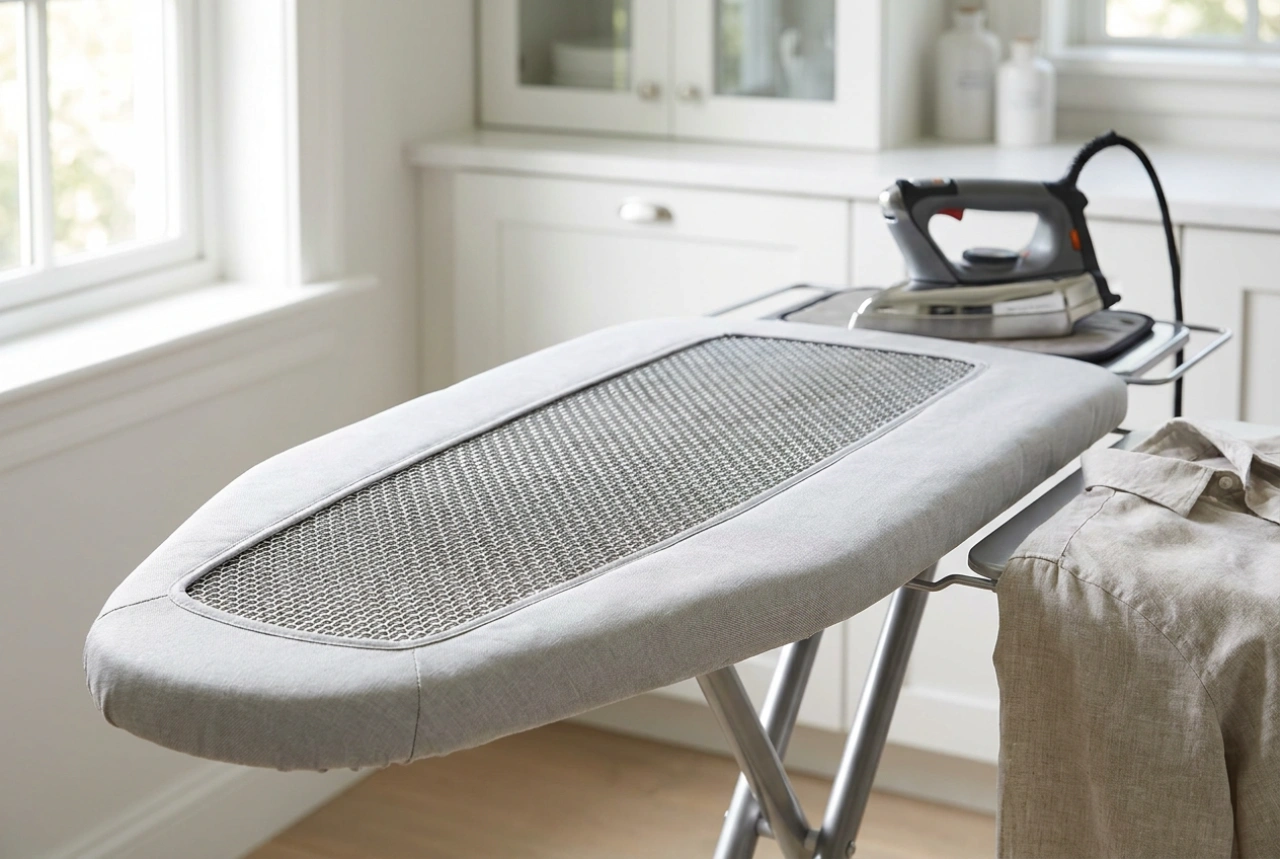
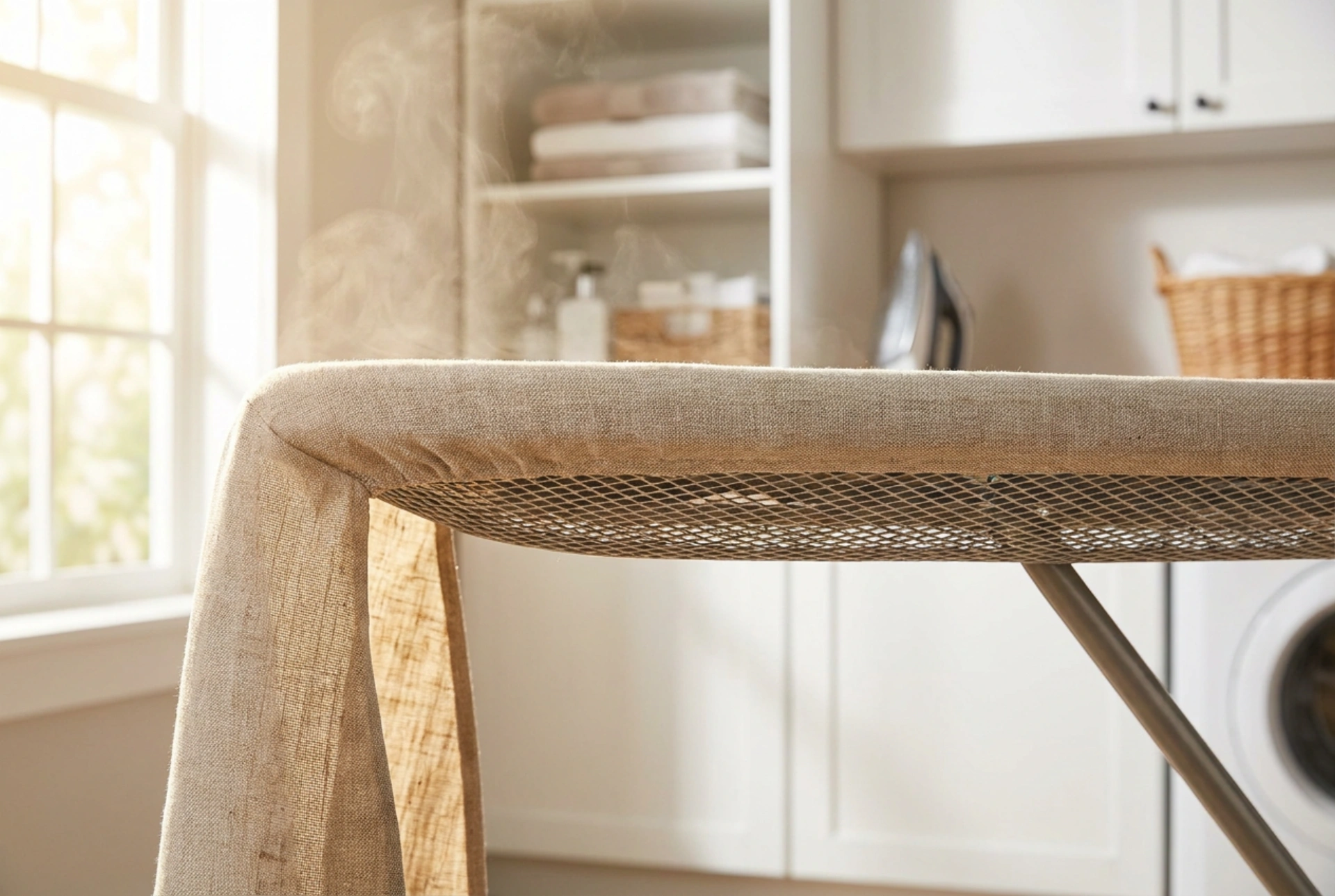
To prevent condensation buildup, the structural deck of the ironing board must be highly porous. Traditional solid wooden or plastic boards are unsuitable for modern steam generators, which produce high volumes of vapour at high pressure.
- Expanded Metal Mesh: This is the gold standard for steam ironing. The metal sheet is slit and stretched to form a diamond-patterned grid. This design provides maximum open area (often over 60% porosity) for steam to pass through freely while retaining structural rigidity under downward pressure.
- Perforated Plastic or Composite: Some lightweight boards use moulded plastic with drilled holes. While lighter, these often have less total open surface area than metal mesh, leading to localised steam pockets and uneven drying of the fabric.
Choosing the Right Underlayment: Felt vs. Foam
Between the structural mesh and the top fabric cover lies the padding, which is critical for distributing pressure and managing moisture. The material composition of this layer dictates how steam behaves as it passes through.
Polyurethane foam is a common, inexpensive padding material. However, under high heat and moisture, polyurethane degrades quickly, losing its elasticity and crumbling. Furthermore, open-cell foam acts like a sponge, holding onto moisture rather than letting it pass through to the mesh below.
A superior choice is needle-punched felt, made from thick polyester or wool fibres. Felt does not compress permanently under heat and pressure, maintaining a smooth, firm ironing surface. Its fibrous structure allows water vapour to travel through it efficiently, acting as a diffusion layer that distributes the steam evenly across the garment surface rather than letting it escape in concentrated jets through the mesh pattern.
Cover Materials and Heat Reflection
The outermost layer of the board, the cover, must facilitate both steam passage and heat management. There are two primary approaches to cover design:
Permeable Natural Fibres: Covers made from 100% cotton or linen are highly breathable. They allow steam to pass through instantly into the padding and mesh. The natural texture also provides a slight grip, holding the fabric in place as you guide the iron.
Reflective Coatings: Some covers feature a metallised or ceramic coating designed to reflect heat back up through the garment. While this increases thermal efficiency and speeds up crease removal, it can restrict steam flow if the coating is solid. If you opt for a reflective cover, ensure it is specifically designed with micro-perforations to allow steam to escape downwards.
Optimising Your Ironing Workflow
To maximise the performance of your breathable ironing board, follow a systematic approach during your ironing sessions:
- Use the Dry Stroke Technique: Always follow a steam stroke with a dry stroke. Apply steam as you move the iron forward to relax the fibres, then release the steam trigger and glide the dry soleplate back over the same area. This removes the remaining moisture, setting the fabric in its flat state.
- Post-Ironing Ventilation: After completing your ironing, leave the board set up in an open space for 15 to 20 minutes. This allows the residual moisture trapped in the felt padding to evaporate completely, preventing musty odours and extending the lifespan of the board's metal frame.