

Using pure, demineralised water is the most scientifically effective way to eliminate stubborn streaks and water spots on glass surfaces. By understanding how dissolved minerals interact with glass during evaporation, you can achieve a professional, crystal-clear finish without relying on harsh chemical detergents.
The Chemistry of Water Spots: Why Tap Water Fails
To understand why demineralised water is superior, we must first look at what comes out of our household taps. Standard tap water contains a high concentration of dissolved inorganic salts, primarily calcium carbonate, magnesium sulphate, sodium, and silicates. This concentration is measured as Total Dissolved Solids (TDS).
When you spray tap water onto a glass pane, the liquid begins to evaporate. While water molecules readily transition from liquid to gas at room temperature, the dissolved mineral ions cannot. As the water volume decreases, these minerals reach saturation point and precipitate out of the solution, bonding chemically with the glass surface. This leaves behind white, crystalline rings and hazy streaks known as limescale or hard water spots.
How Demineralisation Changes Water's Behaviour
Demineralised water has undergone a physical filtration process—such as deionisation, reverse osmosis, or distillation—that removes virtually all dissolved mineral ions. The resulting liquid has a TDS reading close to zero parts per million (ppm). This chemical purity changes how the water interacts with dirt and glass in two critical ways:
- Increased Solvency: Pure water is chemically "hungry." Because it lacks dissolved minerals, it has a high capacity to dissolve and suspend polar contaminants, dust, and organic matter on the glass surface. It acts as an active solvent without needing synthetic surfactants.
- Evaporative Zero-Residue: When demineralised water evaporates from a surface, there are no dissolved solids left behind to precipitate. Even if a few droplets are missed during the drying process, they will dry completely clear.
The Physics of Glass and Pure Water
Glass is not as flat as it appears to the naked eye. At a microscopic level, glass has a porous, rough topography containing microscopic peaks and valleys where mineral deposits and environmental grime can easily lodge. Standard glass cleaners containing soapy surfactants often fill these microscopic crevices, leaving a thin film that attracts dust and causes refraction streaks when hit by direct sunlight.
Demineralised water, combined with physical mechanical action, pulls these microscopic particles out of the glass pores. Because pure water has high surface tension, it tends to bead up and roll off the glass, taking suspended dirt particles with it. This is why professional window cleaning systems rely on purified water run through water-fed poles.
An Optimal Method for Cleaning Windows with Purified Water
To leverage the benefits of demineralised water, you must use the correct application technique to prevent re-contamination from cloths and frames:
1. Prepare the Surface
First, wipe down the window frames and sills with a damp cloth. If you skip this step, water running off the glass will pick up accumulated dirt from the frame and run back onto the clean pane, causing dirty streaks.
2. Apply and Agitate
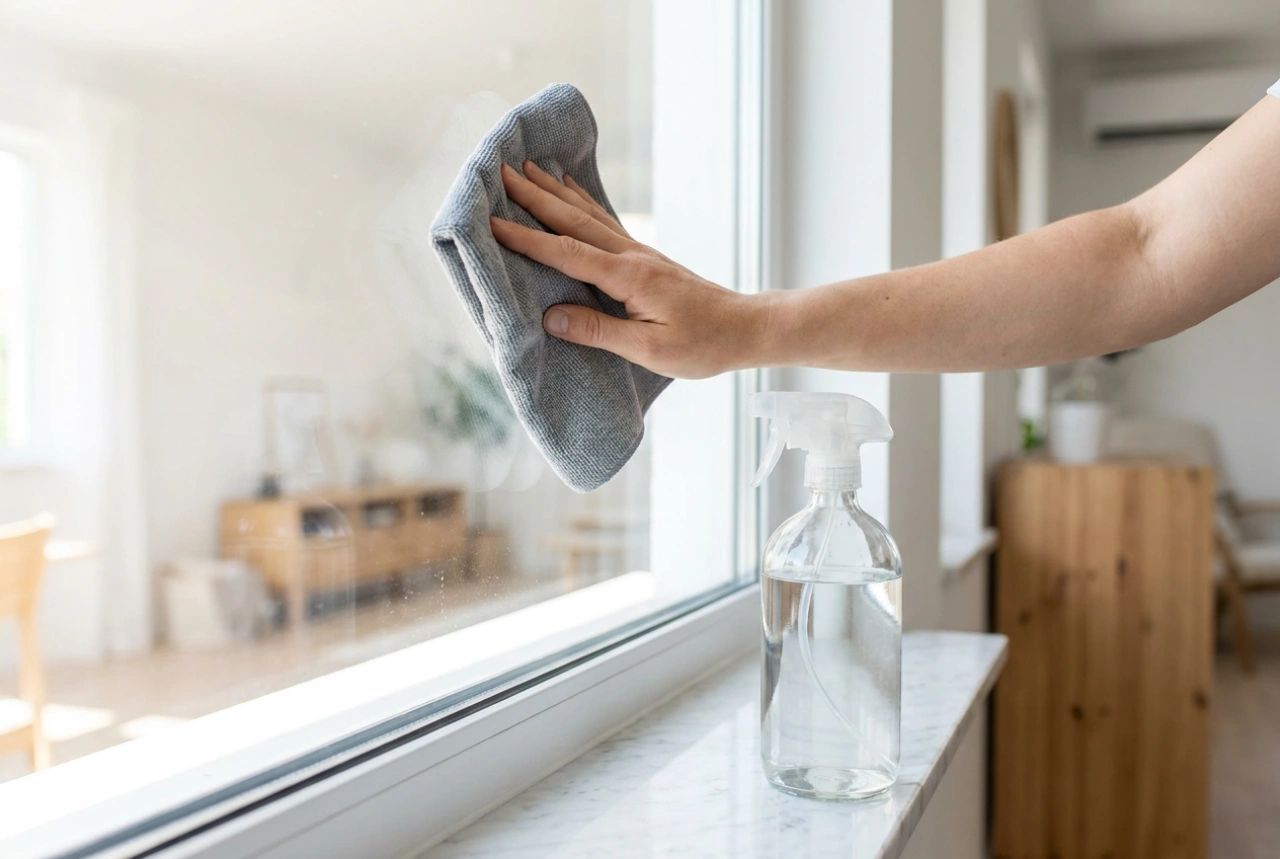
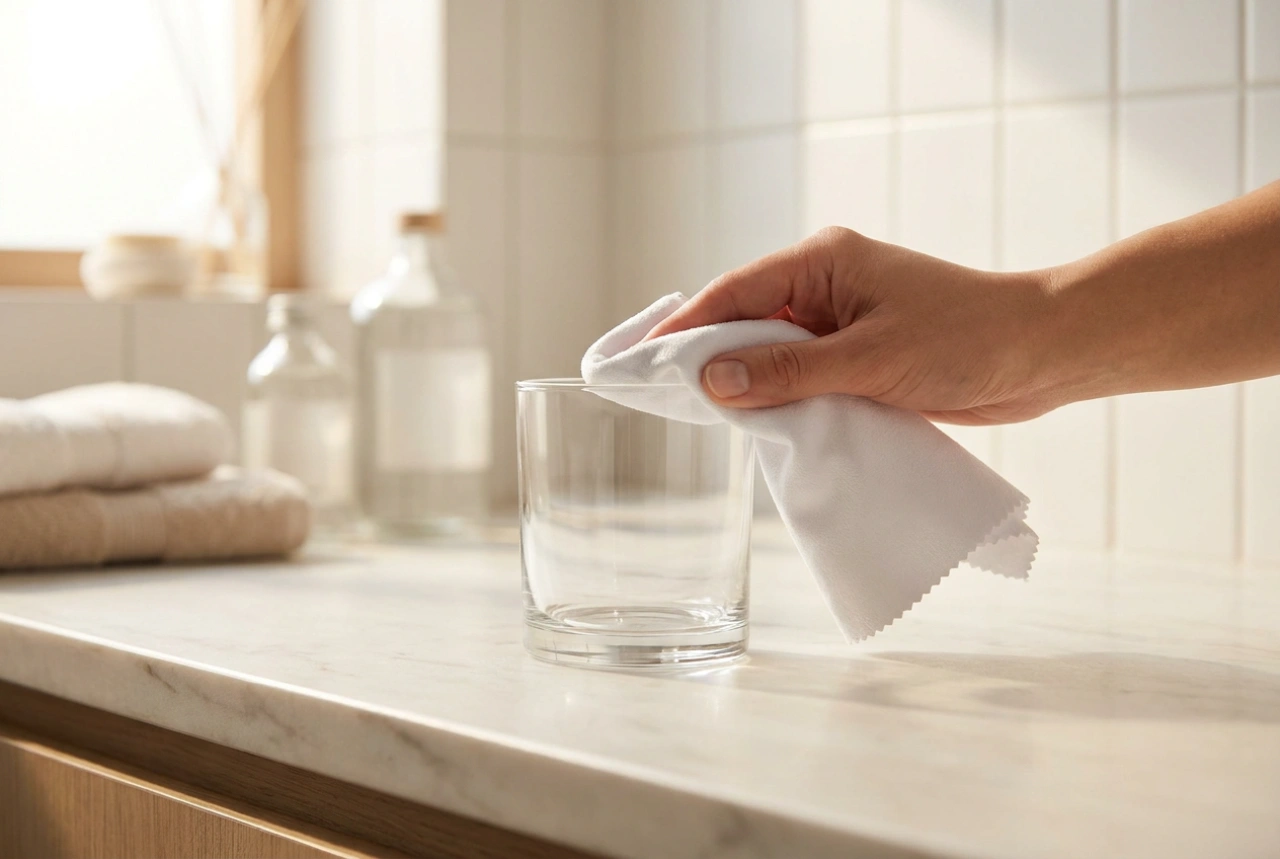
Spray the demineralised water generously onto the glass. Use a clean, lint-free microfiber cloth or a dedicated window washer sleeve to agitate the water across the surface. This physical agitation breaks the bond between the microscopic dirt and the glass, suspending the particles in the pure water.
3. Squeegee and Dry
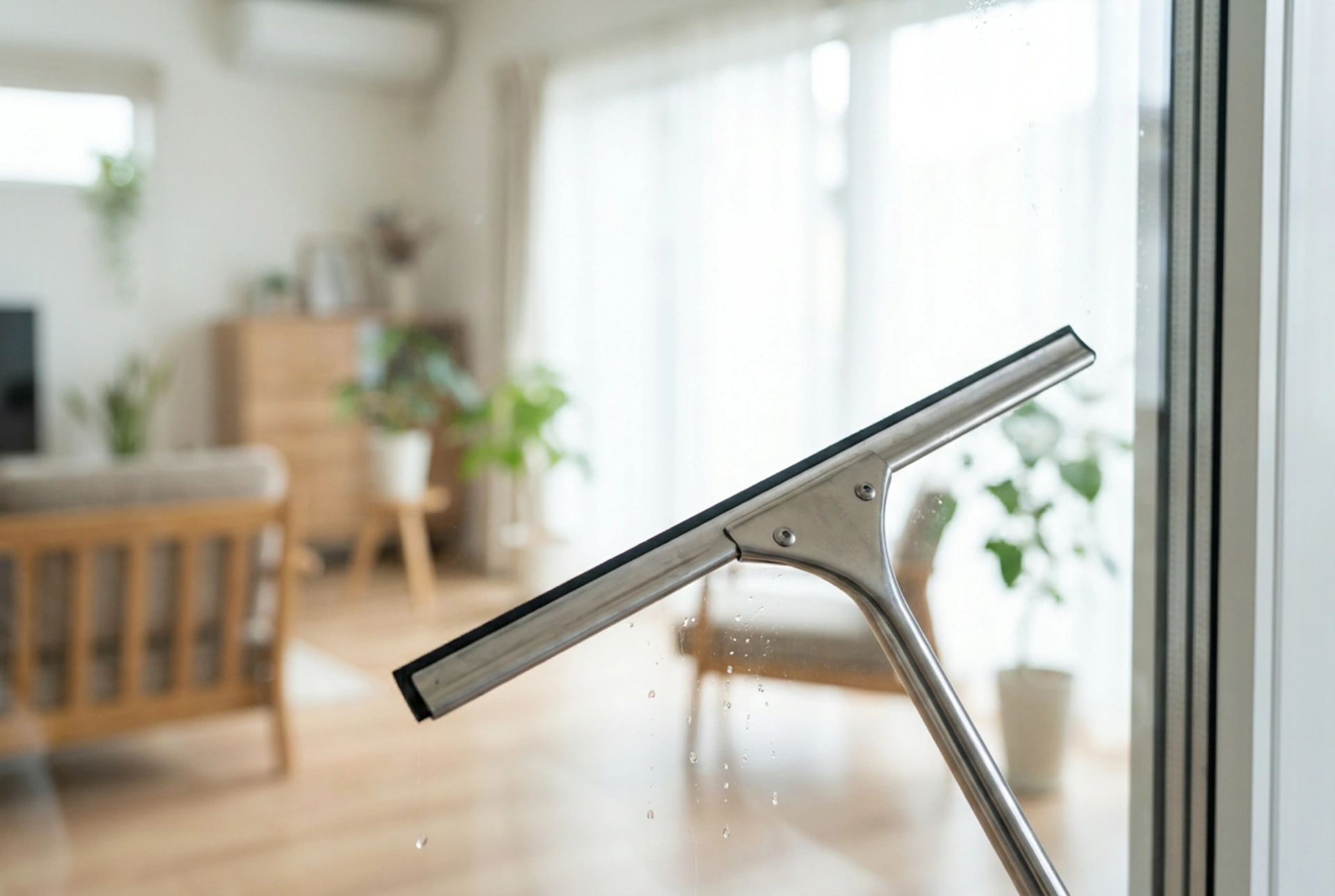
Using a professional-grade rubber squeegee, glide across the window in a continuous, overlapping pattern. Angle the blade at approximately 45 degrees to direct the water downwards. After each pass, wipe the rubber blade dry with a clean, dry microfiber cloth. Finally, use a dry, woven glass cloth to wipe away any moisture remaining at the very edges of the frame.