

Aluminium range hood filters are highly efficient at trapping airborne grease, but their delicate mesh structure is easily damaged by aggressive cleaning methods. Understanding the chemical vulnerability of aluminium is key to removing stubborn grease without causing irreversible corrosion, pitting, or dark discolouration.
The Vulnerability of Aluminium: Why Harsh Chemicals Fail
Aluminium is an amphoteric metal, meaning it reacts chemically with both highly acidic and highly alkaline substances. Many standard household degreasers, heavy-duty oven cleaners, and dishwasher detergents sit at extreme ends of the pH scale. Dishwasher tablets, for example, often contain sodium silicates and carbonates that create a highly alkaline environment (pH 10 to 12) inside the machine. When aluminium is exposed to these substances, its natural protective aluminium oxide layer is chemically stripped away. This exposes the raw metal underneath, leading to rapid oxidation, a dull grey or black tarnish, and a structural weakening of the fine, multi-layered mesh. Once this structural damage occurs, the mesh becomes brittle, starts to fray, and loses its ability to trap grease effectively.
The Physics and Chemistry of Safe Degreasing
To safely dissolve kitchen grease—which consists of polymerised animal fats, vegetable oils, and trapped dust particles—you must rely on a combination of moderate thermal energy, mild surfactants, and weak alkaline agents. This approach lifts the grease without attacking the underlying metal. Surfactants, found in high-quality washing-up liquids, feature molecules with both hydrophilic (water-attracting) and hydrophobic (grease-attracting) ends. These molecules surround the grease droplets, lowering the surface tension of the water and allowing it to penetrate and lift the oils from the aluminium surface. Sodium bicarbonate (baking soda) serves as an ideal booster. With a mild pH of approximately 8.3, it provides just enough alkalinity to help saponify fats (turning them into water-soluble soaps) without reaching the corrosive thresholds that damage aluminium.
Step-by-Step Gentle Restoration Protocol
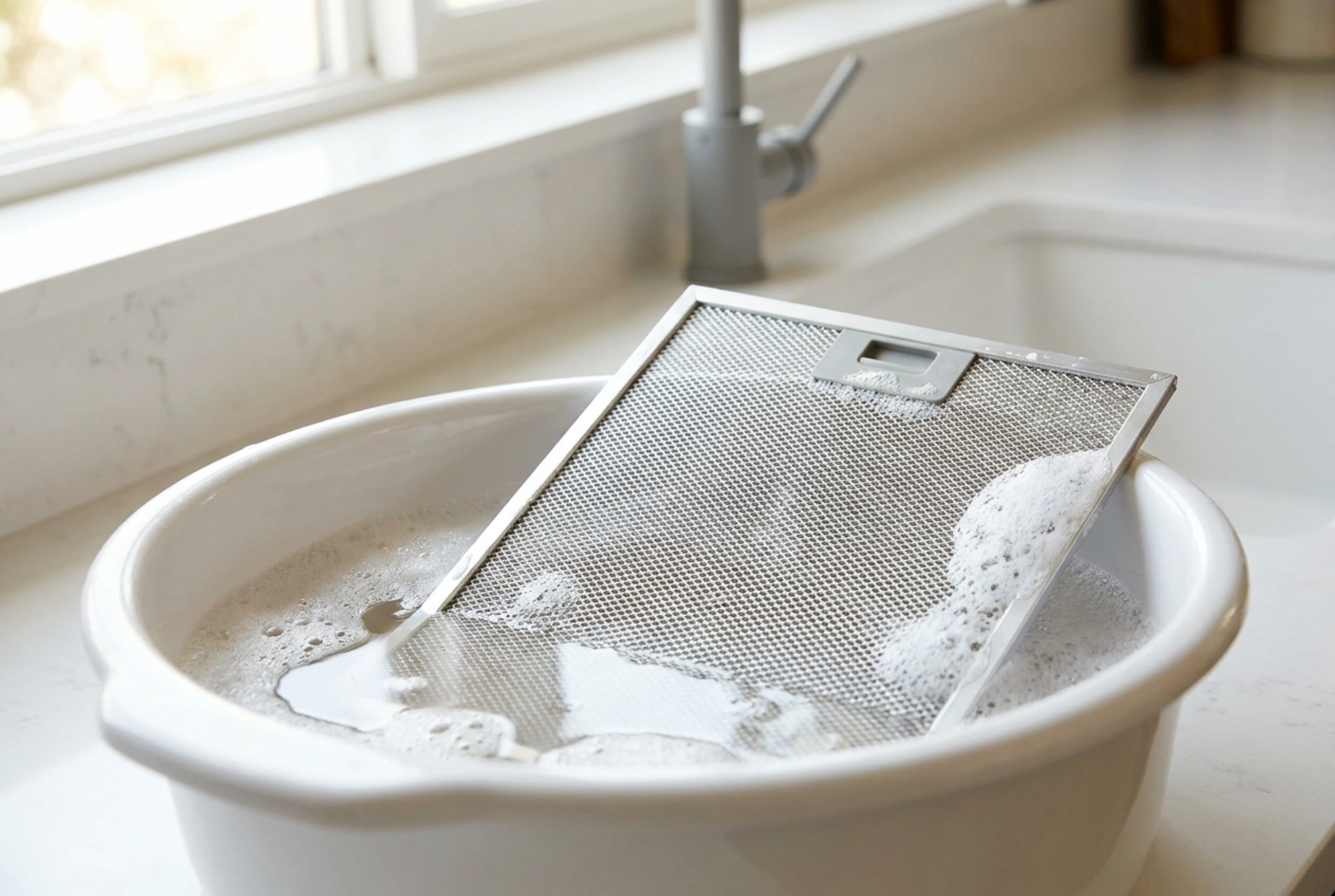
To clean your filter safely, prepare a dedicated soaking bath that utilises temperature and time rather than harsh chemicals or abrasive scrubbing.
- Step 1: Preparation. Lay a clean towel or a non-slip silicone mat inside a deep basin or a clean kitchen sink to prevent the metal filter frame from scratching. Fill the basin with warm to hot water, ideally between 50°C and 60°C. This temperature range is crucial because it matches or exceeds the melting point of most saturated fats, liquefying the grease without causing thermal warping.
- Step 2: Add the Active Agents. Stir in a generous squirt of neutral-pH washing-up liquid and approximately 50 to 100 grams of sodium bicarbonate. Mix thoroughly until the powder is fully dissolved and the water is soapy.
- Step 3: Submerge and Soak. Fully submerge the aluminium filter in the solution. Let it soak undisturbed for 20 to 30 minutes. This period of quiet soaking allows the surfactants and mild alkali to break down the lipid bonds deep within the overlapping layers of the mesh.
- Step 4: Gentle Agitation. If grease remains in the tight crevices, use a soft-bristled nylon brush or a non-scratch sponge. Gently brush in the direction of the mesh weave. Avoid circular scrubbing or pressing down heavily, as this can easily warp, dent, or separate the delicate metal layers.
- Step 5: Rinse and Dry. Rinse the filter thoroughly with warm, clean water to remove all emulsified grease and soap residue. Shake off any excess water and prop the filter vertically on a dry cloth to air-dry completely before reinstalling it into the range hood.
Maintaining Filter Efficiency and Airflow
Regular maintenance prevents grease from oxidising into a hard, shellac-like varnish that is much harder to remove. Cleaning your aluminium filters every four to six weeks, depending on your cooking habits, ensures optimal airflow and reduces the strain on your range hood extractor motor. Never use steel wool, wire brushes, or abrasive scouring powders, as these will mechanically destroy the fine wire grid, permanently reducing the filter's grease-trapping capacity.