

Delicate sheer curtains collect dust and yellow over time, but improper machine washing can permanently crease or tear their fragile synthetic or natural fibers. Controlling temperature and mechanical agitation is the key to preserving their structure while restoring their original brightness.
The Material Science of Delicate Curtains
Most modern sheer curtains are woven from synthetic polymers like polyester and polyamide (nylon), or delicate natural fibers such as cotton and linen mixtures. Synthetics are highly susceptible to thermal degradation. When exposed to water temperatures above 40°C, these polymers reach their glass transition temperature, softening the fibers. If the fabric is bent or compressed while soft, these creases become permanently locked into the material once it cools down. Additionally, mechanical friction in the washing drum causes fibrillation—the splitting of microscopic fibers—which manifests as unsightly pilling and a loss of the fabric's original sheen.
The Critical Step of Dust Removal and Pre-soaking
Before placing curtains into the washing machine, mechanical and chemical pre-treatment is essential. Curtains act as giant air filters, trapping massive amounts of dry dust, soot, and pollen. If you submerge dusty curtains directly into water, these particles form a fine mud that penetrates deep into the swollen fibers, resulting in a dull, greyish tint. Take the curtains outdoors and gently shake them to release loose particulates.
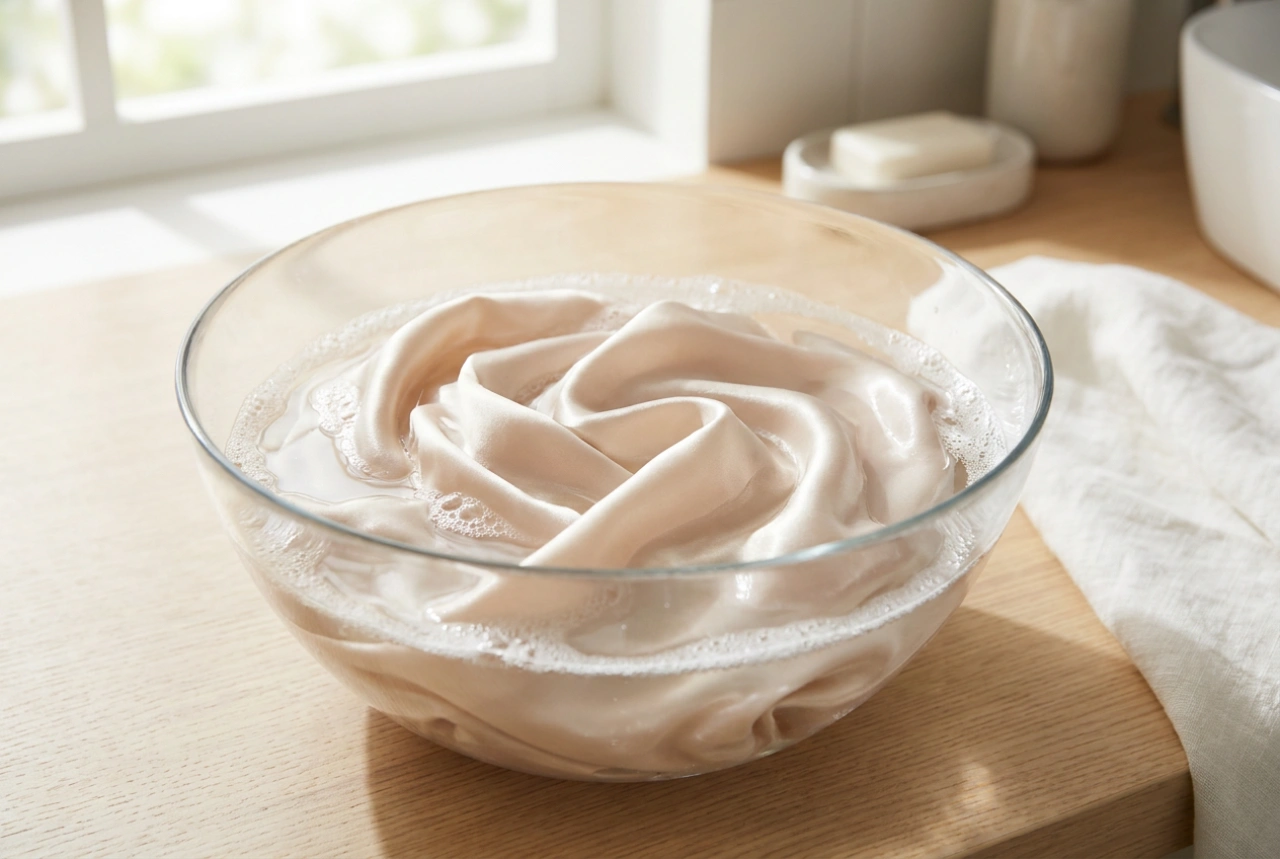
For yellowed or greyed fabrics, a pre-soak is necessary to break down organic binders. Fill a tub with lukewarm water (around 30°C) and dissolve oxygen-based bleach or sodium bicarbonate (baking soda). Unlike chlorine-based bleaches, which can degrade synthetic fibers and turn polyester yellow, oxygen bleach uses active oxygen to break chemical bonds in pigment molecules without damaging the polymer chains. Soak the curtains for 30 to 60 minutes before moving them to the washing machine.
Setting the Parameters: Temperature and Spin Cycle
To wash curtains safely, select a dedicated delicates or wool cycle. These cycles are programmed with specific drum movements and water levels. The drum does not tumble continuously; instead, it uses a cradle-like rocking motion, reducing mechanical friction. To optimize this process, configure your machine with these exact settings:
- Strict Temperature Control: Set the temperature to 30°C. This temperature is high enough to activate modern surfactants in your detergent but low enough to prevent thermal creasing of synthetic fibers.
- Reduced Spin Speed: Limit the spin speed to a maximum of 400 to 600 RPM. High spin speeds subject wet fabric to extreme centripetal force, pressing it hard against the perforations of the drum and creating stubborn creases.
- High Water Level: Ensure the cycle uses a high water-to-fabric ratio to allow the curtains to float freely and minimize fiber-to-fiber friction.
Protecting Fibers with Mesh Bags and Proper Detergents
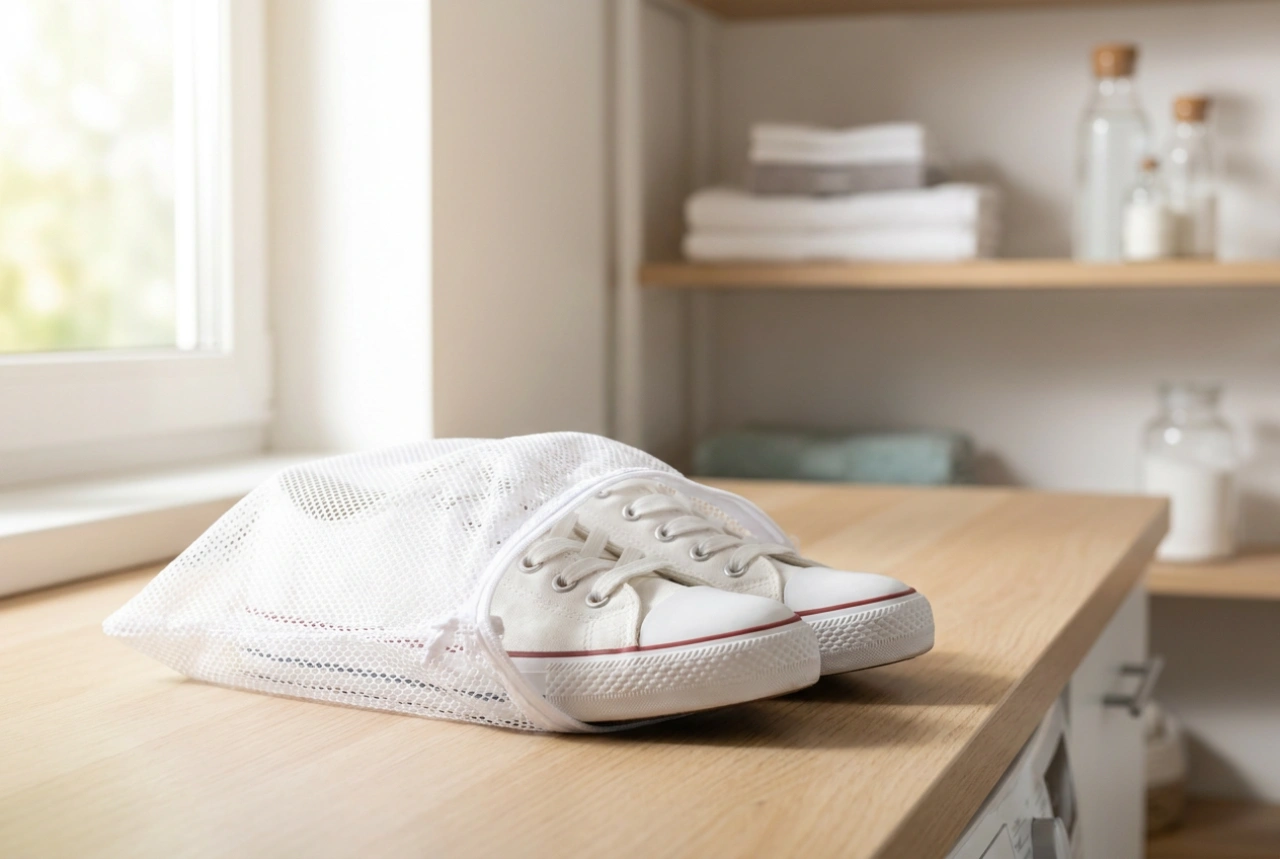
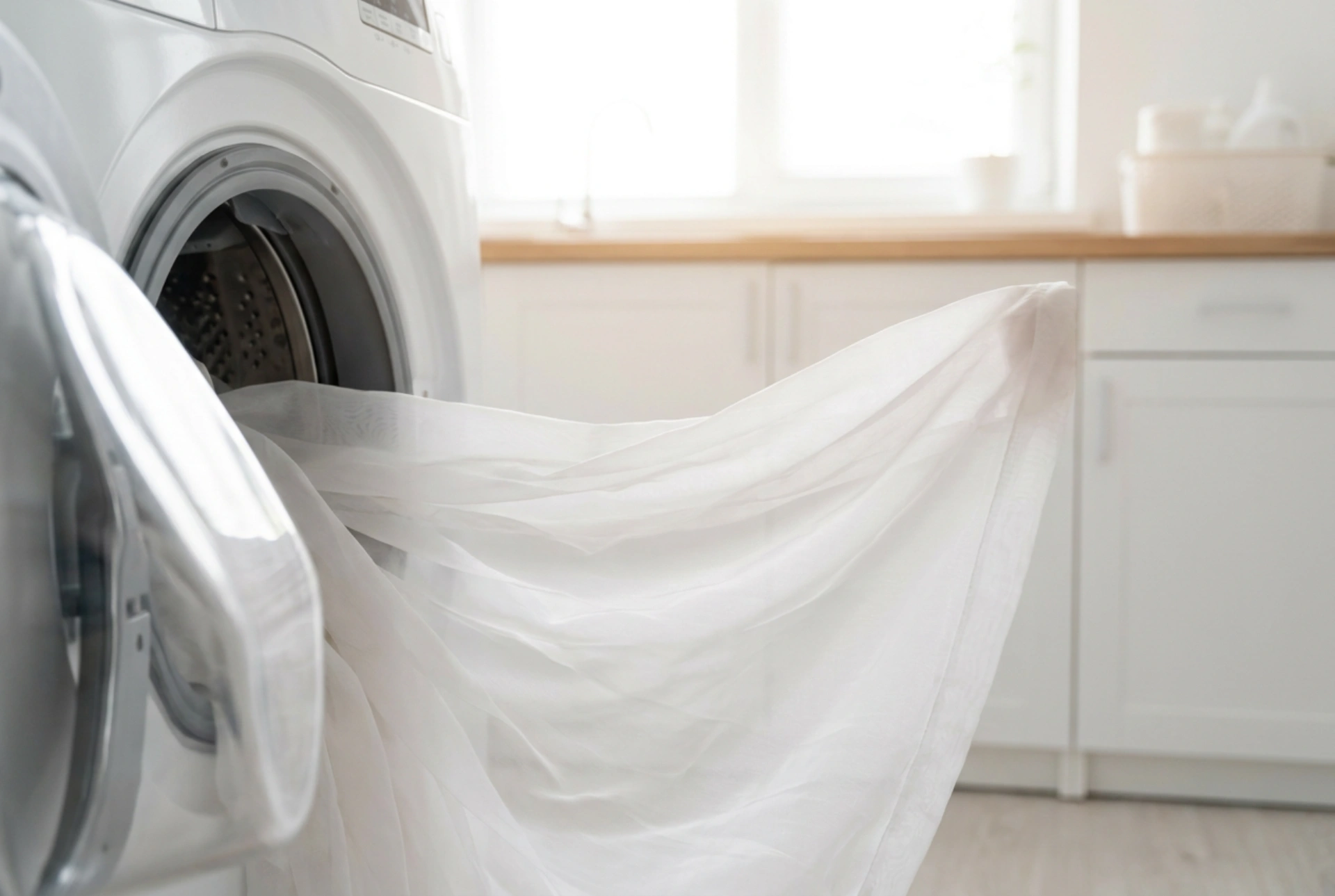
Always place your folded curtains inside a large, mesh laundry bag. This creates a physical barrier that prevents the delicate fabric from rubbing directly against the stainless-steel drum or getting caught in the door seal. Avoid overloading the machine; the curtains should occupy no more than one-third of the drum capacity to allow them to float freely in the wash liquor.
Use a mild, liquid detergent formulated for delicates. Powder detergents can leave undissolved crystalline residues in the fine weave of the curtain, which attract dust faster once hung. Avoid fabric softeners. Fabric softeners coat fibers in a hydrophobic silicone layer, which locks in yellowing compounds and makes future dust removal much more difficult.
Hanging and Natural Tension Drying
The final step in preserving the shape of your curtains involves gravity. Do not tumble dry sheer curtains, as the dry heat and mechanical action will ruin them. Instead, remove them from the washing machine immediately after the gentle spin cycle. While they are still damp, hang them directly back onto the curtain rods.
The weight of the water remaining in the damp fabric acts as a natural tensioner, gently pulling the fibers down and smoothing out any minor creases as they dry in place. Ensure the room is well-ventilated to allow the moisture to evaporate quickly, leaving you with perfectly smooth, clean, and fresh-smelling curtains without the need for tedious ironing.