

Maximising under-bed storage requires a strategic balance between physical accessibility and material protection. Because the space under a bed frame suffers from restricted airflow and acts as a natural gravity trap for household dust, choosing the right items and containment methods is critical to maintaining both the quality of your belongings and the ease of retrieving them.
The Physics of the Under-Bed Environment
To understand what belongs under your bed, you must first understand the microclimate of this specific zone. The gap between the floor and your mattress base is characterised by low air circulation and high electrostatic accumulation. Dust, which consists largely of skin flakes, fabric fibres, and microscopic debris, settles quickly in low-velocity air zones. When you slide containers back and forth, you generate friction, which can attract these particles to plastic storage boxes via static electricity.
Furthermore, temperature fluctuations near the floor can create micro-condensation zones, especially on external walls or uninsulated flooring. Storing organic materials like leather, paper, or damp textiles in airtight plastic bins can trap moisture, leading to fungal growth and musty odours. Therefore, the choice of container material—breathable canvas versus sealed polyethylene—must align directly with the molecular properties of the items stored inside.
What to Store: High-Rotation Seasonal Items
The ideal candidates for under-bed storage are items that require low-to-medium access frequency. Storing daily-use items here leads to physical strain and rapid disorganisation. Instead, allocate this space to:
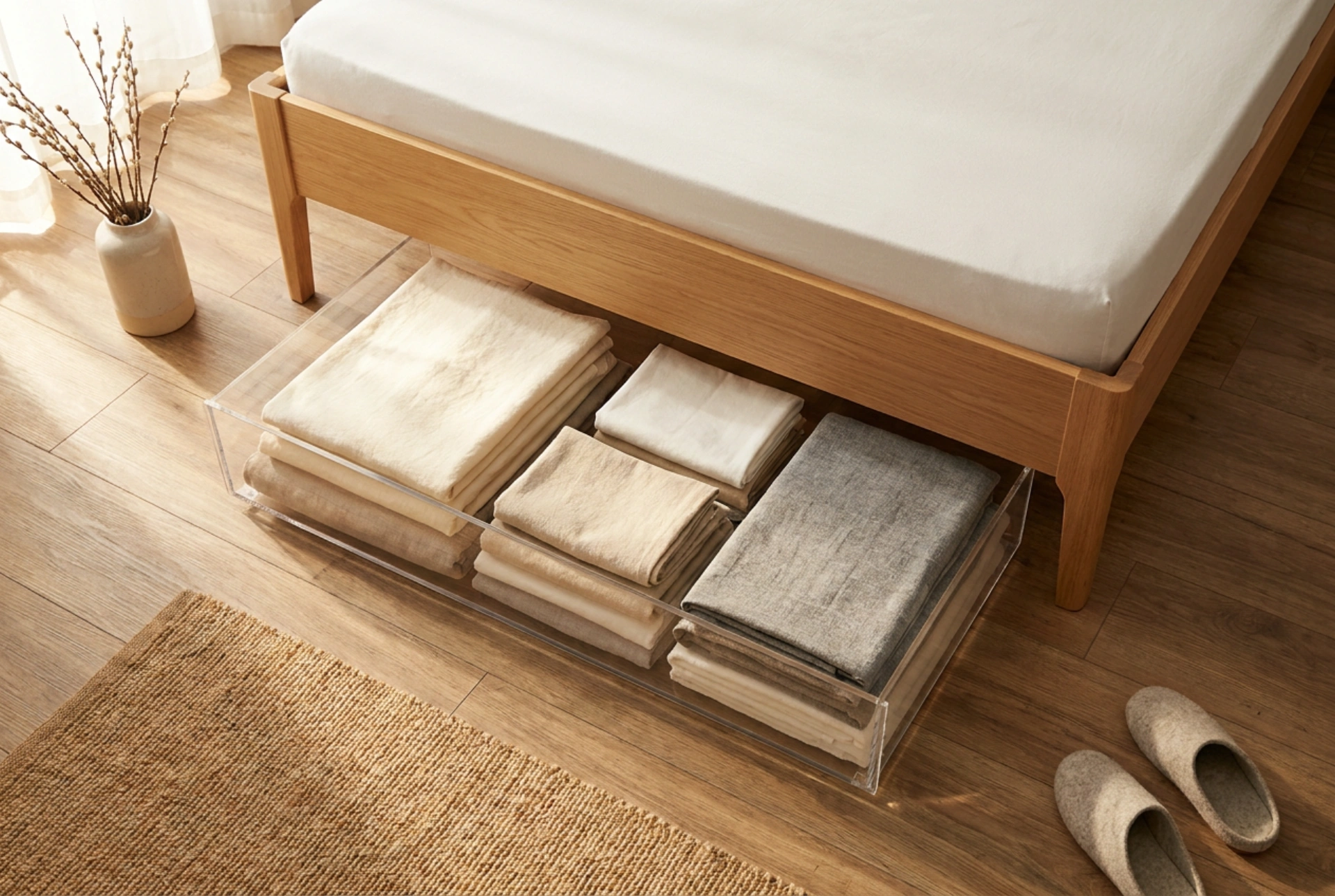
- Seasonal Linens and Bedding: Heavy winter duvets, woollen blankets, and spare pillowcases are perfect for under-bed placement. Because these are bulky, placing them flat in low-profile containers frees up valuable eye-level wardrobe space.
- Out-of-Season Clothing: Heavy knitwear, winter coats, or summer swimwear should be rotated twice a year. Wool and natural fibres should be cleaned thoroughly before storage, as organic residues attract pests like clothes moths.
- Bulky, Low-Frequency Textiles: Tablecloths, guest towels, and sleeping bags are easily preserved here if kept in dust-proof containers.
Optimising Retrieval: Folding and Loading Techniques
How you arrange items within the container dictates how easy they are to retrieve. Traditional stacking forces you to lift every layer to reach the bottom item, disrupting the organisation and discouraging use. Instead, employ the vertical filing method.
By folding garments and linens into tight, self-supporting rectangular packets and standing them vertically side-by-side, you create a filing system where every item is visible from a single top-down glance. When retrieving an item, you simply lift it out without disturbing the surrounding pieces. Additionally, distribute the weight logically: place heavier items toward the wheels or the front handle of the container to lower the physical effort required to slide the box out from under the bed.
Protecting Textiles from Degradation
To ensure your stored textiles remain pristine and ready for use, you must actively manage humidity and compression. While vacuum-sealing bags are highly efficient for reducing volume, they should be used with caution. Natural loft fibres, such as goose down in duvets or pure wool in jumpers, rely on trapped air pockets for insulation. Prolonged compression breaks down these delicate structures, permanently reducing their thermal efficiency.
Instead, use breathable fabric zip containers for natural fibres to allow moisture to evaporate naturally. To combat potential humidity build-up in sealed plastic containers (which are excellent for keeping dust out of synthetic fibres), insert silica gel packets. These packets contain highly porous silicon dioxide, which adsorbs water molecules from the air, maintaining a low relative humidity inside the container and preventing the development of mildew.