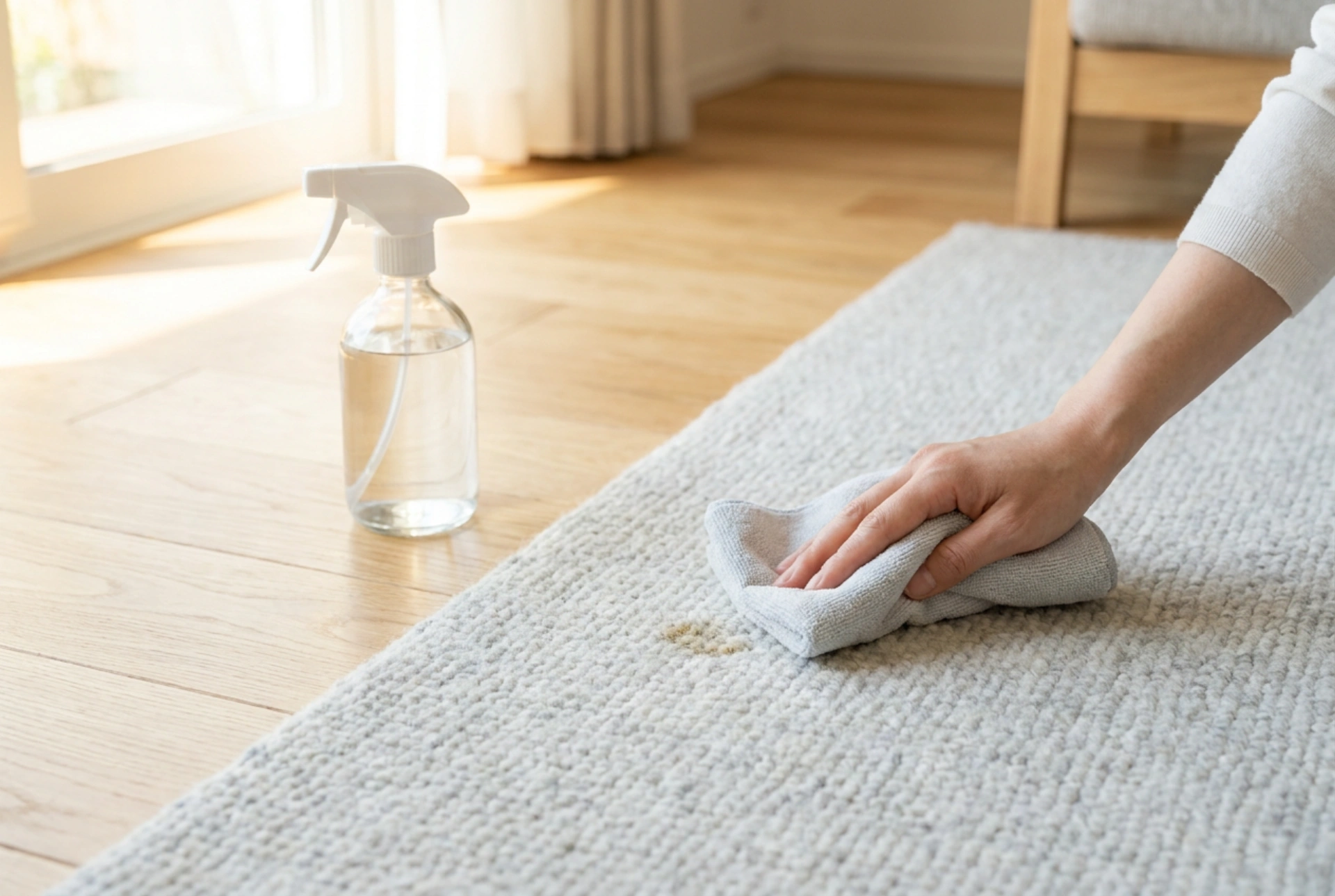


Overwetting a carpet during cleaning can lead to structural damage, mould growth, and unsightly browning due to capillary action. Mastering the dry foam technique and understanding liquid tension allows you to refresh carpet fibres effectively while keeping the backing dry.
The Physics of Wicking and Backing Damage
When water penetrates deep into a carpet's pile, it reaches the backing material, which is often made of jute, latex, or polypropylene. If these materials remain wet for more than 24 to 48 hours, they become breeding grounds for fungal spores. Furthermore, excessive moisture triggers a physical phenomenon known as wicking. As the surface fibres dry, they pull moisture up from the deep backing through capillary action. This rising water carries dissolved dirt, residues, and natural lignin dyes from jute backings to the surface, resulting in stubborn brown stains that reappear after cleaning. Keeping the moisture confined to the top third of the carpet pile prevents this cycle entirely.
The Chemistry of Dry Foam Cleaning
To clean carpet fibres without soaking them, you must manipulate the physical state of your cleaning solution. Standard liquid applications rely on heavy saturation to dissolve soil, whereas the dry foam method uses air to expand the surface area of the active agents. Surfactants in carpet cleaners contain hydrophilic (water-attracting) and hydrophobic (water-repelling) properties. When agitated vigorously with a sponge or a specialized whip, these molecules trap air, creating a dense, stable foam with extremely low water content. This dry foam encapsulates dirt on contact, emulsifying oily soils and lifting particulate matter without allowing gravity to pull free liquid down into the carpet backing.
Step-by-Step Low-Moisture Application Protocol
Executing a dry-foam clean requires a disciplined sequence to ensure dirt is extracted rather than driven deeper into the pile.
1. Thorough Dry Extraction
Before introducing any moisture, vacuum the carpet slowly in multiple cross-directional passes. This removes up to 80% of dry, insoluble soil (like sand and dust). Applying moisture to a dusty carpet creates mud, which is significantly harder to extract and requires more water to rinse.
2. Generating and Applying the Foam
Mix your concentrated carpet shampoo with warm water according to the manufacturer’s ratio, but do not apply it directly. Squeeze a clean, high-density sponge repeatedly inside the bucket to generate a thick layer of dry foam that resembles shaving cream. Scoop only this foam onto a soft-bristled utility brush. Work the foam into the carpet pile using gentle, overlapping circular motions. The mechanical action of the bristles spreads the foam evenly, allowing the surfactants to bond with the dirt on the fibres.
3. Blotting and Soil Transfer
Never scrub aggressively, as this distorts the carpet fibres and forces moisture downward. Instead, use a clean, dry microfibre cloth to dab and blot the treated area. Microfibre possesses a natural capillary draw that pulls the dirt-laden foam out of the carpet and locks it into the cloth's dense weave. Rotate the cloth frequently to use clean sections, preventing soil re-deposition.
Optimising Drying Conditions to Prevent Pile Matting
Even when using dry foam, a minimal amount of moisture will remain on the outer sheath of the carpet fibres. Accelerating the evaporation process is vital to maintain the texture and bounce of the pile. Open windows to create a cross-breeze, or position a standard floor fan to blow air horizontally across the cleaned surface. Maintain an ambient room temperature of approximately 18 to 22 degrees Celsius; excessive heat can damage delicate synthetic fibres, while cold air slows down evaporation. Once the carpet is completely dry to the touch, run a vacuum cleaner over the area one final time to lift and align the fibres, restoring the soft, uniform texture of the pile.