

Maintaining clean pillows is essential for both sleep hygiene and respiratory health, as they continuously accumulate sweat, sebum, and dead skin cells over time. To restore their original loft and eliminate allergens without damaging the delicate inner filling, you must apply the correct principles of household chemistry and textile physics.
Material Chemistry: Down vs. Synthetic Fillings
The internal composition of your pillow dictates the exact cleaning method required. Natural fillings, such as down and feathers, consist of keratin proteins. These natural structures rely on microscopic structures and trace natural oils to trap air and provide loft. Traditional laundry detergents often contain enzymes like proteases, which are formulated to digest protein-based stains. If used on down pillows, these enzymes will chemically degrade the feathers, stripping their natural protective oils and rendering them brittle. Therefore, natural fillings require a specialized, enzyme-free, neutral-pH liquid detergent to preserve their structural integrity.
Synthetic pillows, typically filled with polyester microfibres, behave differently. Polyester is highly hydrophobic (water-repelling) but lipophilic (oil-attracting), meaning it easily binds with bodily sebum. While synthetic fibres are resilient against enzymes, they are highly sensitive to thermal energy. Subjecting polyester to high temperatures can cause the synthetic polymers to soften, fuse, and clump permanently. Consequently, synthetic pillows must be washed at moderate temperatures, generally not exceeding 40°C, to preserve their elasticity and volume.
Optimising the Wash Cycle and Mechanical Action
To prevent structural damage, the mechanical forces within the washing machine must be carefully managed. Avoid top-loading washing machines equipped with a central agitator, as the twisting motion can easily tear pillow seams and compress the delicate filling. A front-loading machine is ideal because it uses gravitational drop and gentle tumbling to penetrate the fabric shell. Always wash pillows in pairs. Washing a single pillow creates an asymmetrical weight distribution during the spin cycle, leading to severe drum imbalance, inefficient water extraction, and potential machine damage. Setting the spin speed to a moderate 800 RPM ensures maximum water removal without subjecting the internal fibres to excessive centrifugal stress.
The Crucial Role of Thorough Rinsing
Because pillow fillings are highly porous, they act as efficient chemical filters, trapping surfactant molecules deep within their core. If detergent residue is left behind, it creates a sticky, hygroscopic film on the fibres. This residue actively draws moisture from the surrounding air and accelerates the accumulation of organic dirt. To prevent this, you must run at least two or three additional rinse cycles. Refrain from using fabric softeners; these products deposit a hydrophobic silicone-based layer over the fibres, which collapses the natural loft of down and reduces the moisture-wicking capabilities of synthetic materials.
Thermodynamic Drying and Preventing Microbial Growth
The final and most critical step is ensuring the pillow is completely dry to prevent the growth of mould, mildew, and fungi such as Aspergillus. Tumble drying is highly superior to air drying, as air drying takes too long, allowing moisture to pool in the centre of the pillow and create an anaerobic environment for bacteria. Use a low to medium heat setting on your tumble dryer to avoid thermal damage to the fibres.
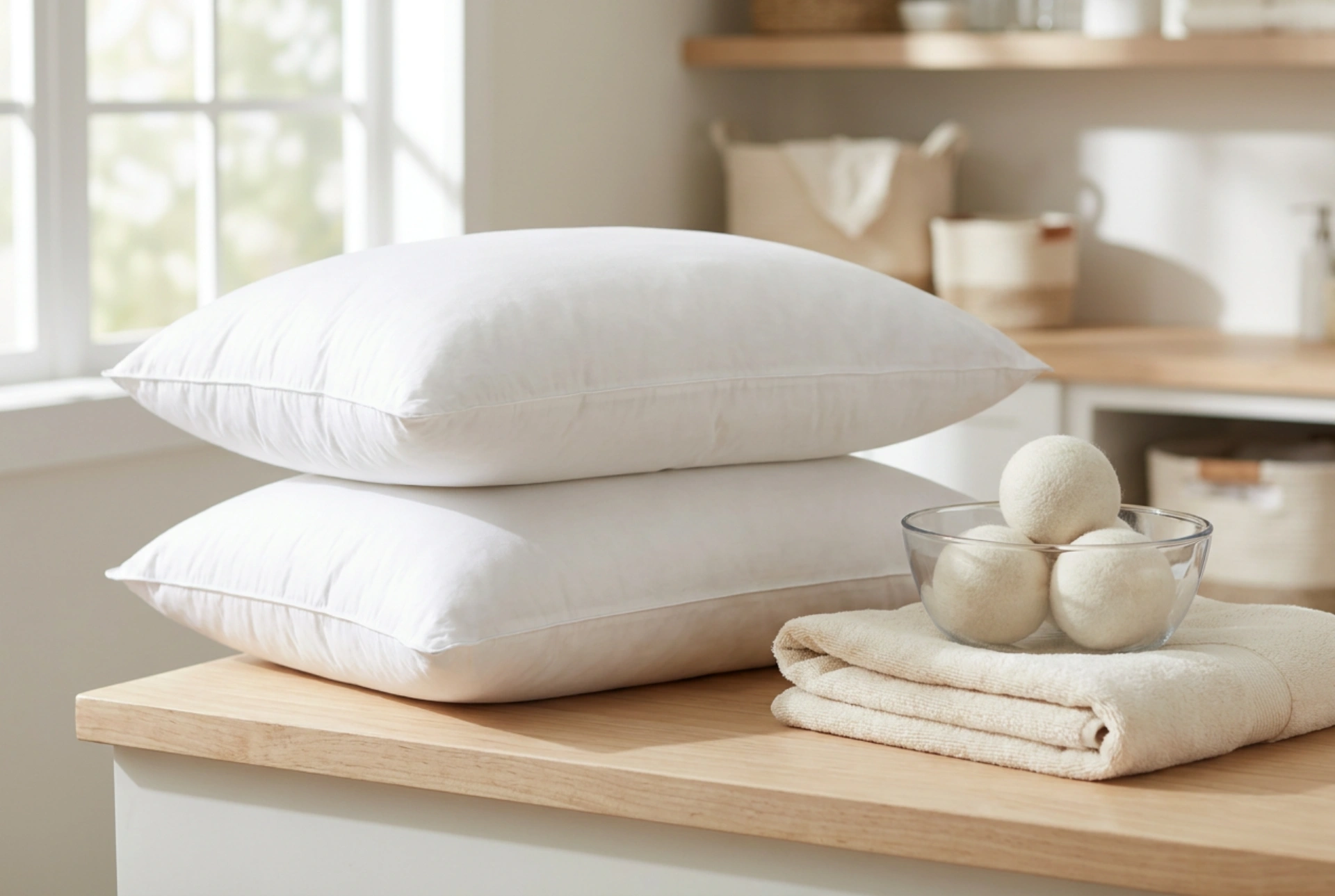
To facilitate even drying and restore fluffiness, place two or three wool drying balls into the drum. As the dryer spins, these balls physically impact the pillows, breaking up wet clumps of down or synthetic fibres. This mechanical agitation creates open air pathways within the filling, allowing warm air to circulate freely and accelerate evaporation. Periodically remove the pillows during the drying cycle, shake them vigorously to redistribute the filling, and allow them to cool down completely before testing for dryness. If a pillow feels heavy or cool to the touch in the centre, moisture is still present, and the drying process must be repeated.
Quick Checklist for Optimal Pillow Care
- Load Balance: Always wash two pillows at once to maintain drum stability during the spin cycle.
- Detergent Choice: Use liquid, enzyme-free detergents for down, and standard mild detergents for synthetic fills.
- Rinse Frequency: Add at least two extra rinse cycles to thoroughly purge trapped surfactants.
- Mechanical Lofting: Use wool drying balls in the tumble dryer to break up clumps and maximise airflow.