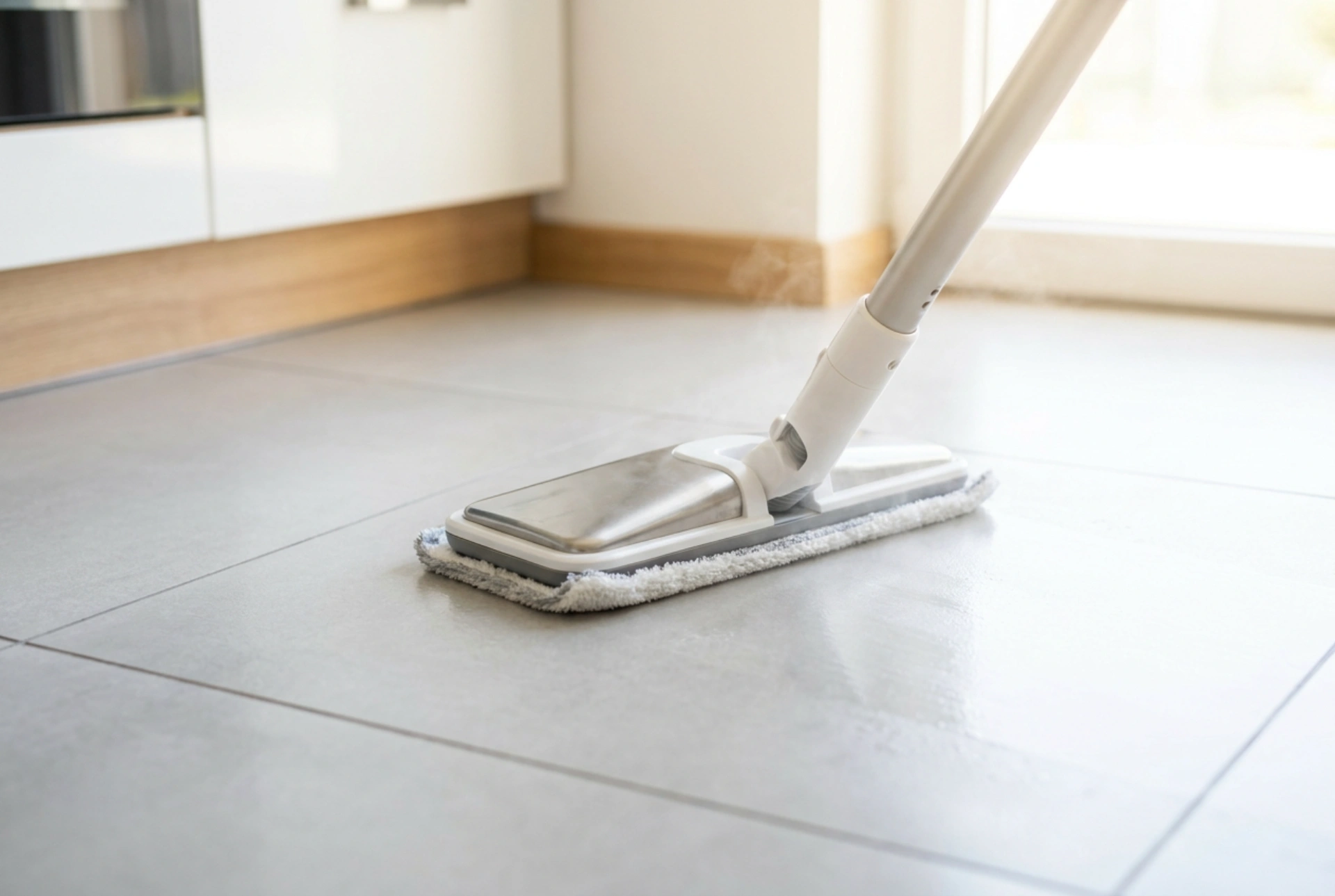


Steam cleaning tile floors offers an efficient, chemical-free sanitisation method, but improper technique often results in unsightly streaks, cloudy residue, and even permanent damage to cementitious or epoxy grouts. Achieving a flawless, streak-free finish while preserving the structural integrity of your floor requires understanding the physics of heat transfer, moisture evaporation, and surface tension.
The Science of Streaks: Why Distilled Water Matters
Streaks and cloudy films on tile surfaces after steam mopping are primarily caused by two factors: dissolved minerals in the water and the suspension of liquefied dirt. When tap water is heated to generate steam, it carries calcium, magnesium, and silica minerals. As the steam contacts the cold tile, it condenses into water droplets, dissolves surface grime, and then rapidly evaporates. This rapid evaporation leaves behind the microscopic mineral deposits (limescale) and any unbound soil, resulting in a hazy residue.
To eliminate this physical reaction, always fill your steam appliance with distilled or demineralised water. Distilled water contains zero dissolved solids, meaning it evaporates completely without leaving any mineral footprint. Furthermore, distilled water acts as a hungry solvent, more effectively binding to and lifting polar dirt molecules from the tile glaze compared to mineral-saturated tap water.
Protecting Grout from Thermal Shock and Moisture Saturation
Grout is the most vulnerable component of a tiled surface. Most residential grout is cement-based, making it highly porous and susceptible to moisture absorption. Epoxy grout, while waterproof, is sensitive to extreme heat. Direct, prolonged exposure to high-temperature steam can cause thermal expansion at different rates between the rigid tile and the semi-flexible grout, leading to micro-fractures, crumbling, or the softening of epoxy binders.
To clean safely without compromising the structural integrity of the grout joints, observe the following parameters:
- Control the Temperature: Use the lowest effective steam setting for regular maintenance. High-pressure, high-temperature steam is rarely necessary for routine cleaning.
- Maintain Constant Motion: Never allow the steam head to rest in one position while active. A stationary steam head concentrates intense heat and pressure on a single spot, forcing moisture deep into the porous grout lines and weakening the adhesive bond beneath the tiles.
- Seal Integrity: Only steam clean tiled areas where the grout has been properly sealed. Unsealed grout absorbs water rapidly under steam pressure, creating a damp environment that promotes subsurface mould growth.
Pre-Cleaning Mechanics: Preventing the 'Mud' Effect
A common mistake is introducing steam to a floor that has not been thoroughly dry-swept or vacuumed. When high-temperature water vapour hits loose dust, hair, and fine debris, it instantly converts these particles into a thin slurry of mud. The microfiber pad of the steam mop cannot absorb this slurry efficiently; instead, it redistributes the liquefied dust across the floor, drying into stubborn streaks.
Always vacuum the tiled surface using a hard-floor brush attachment first. Pay close attention to the grout channels where loose dust accumulates. Only when the dry particulate matter is completely removed should the steam phase begin.
Pad Management and Movement Technique
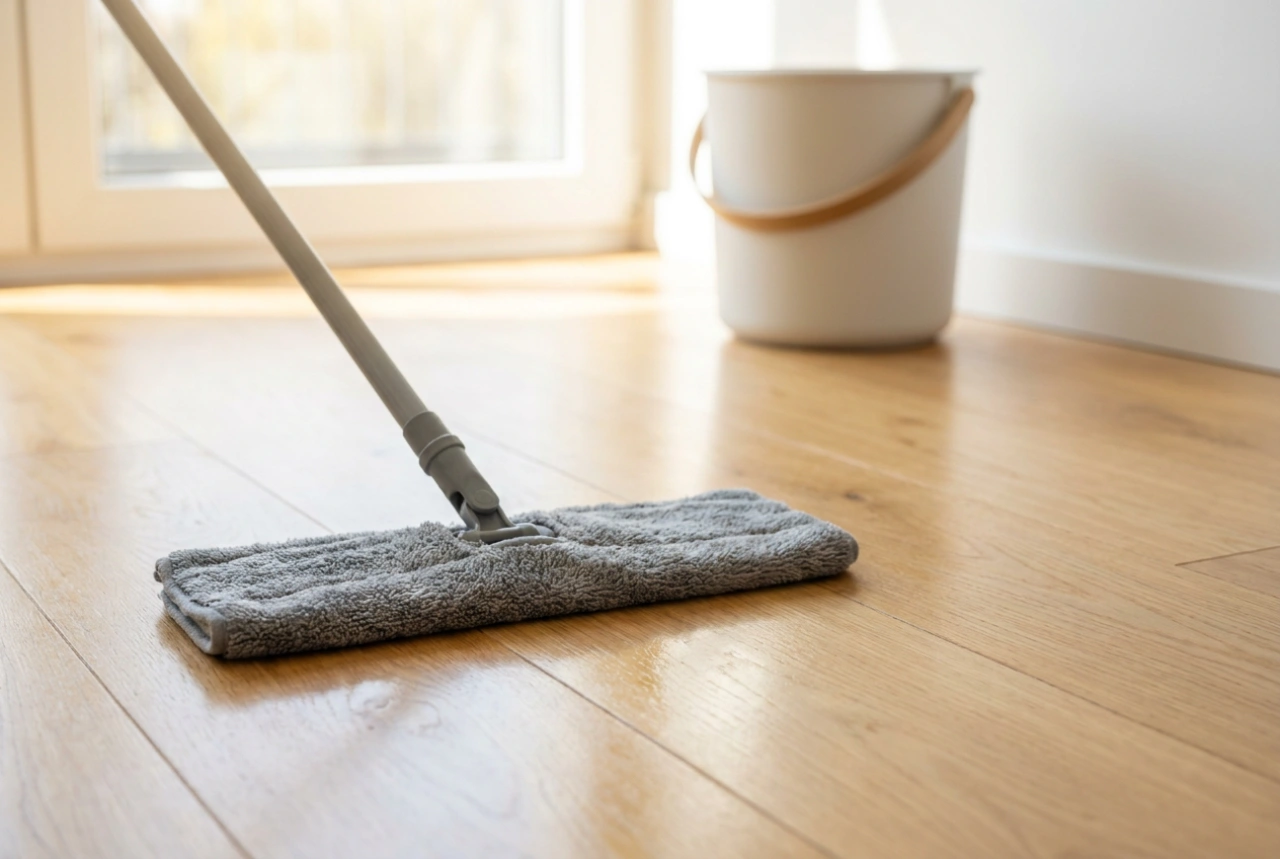
The microfiber pad attached to the steam mop head is responsible for lifting and trapping the liquefied soil. Microfiber works via capillary action and electrostatic charges, but it has a finite holding capacity. Once the pad becomes saturated with moisture and dirt, it ceases to absorb and begins to smear dirty water back onto the tiles.
- Frequent Swaps: Change the microfiber pad every 15 to 20 square metres. If the pad looks visibly grey or feels overly damp, replace it immediately with a fresh, dry one.
- The S-Pattern Glide: Work in a continuous, overlapping S-shape motion, pulling the mop backward so you do not step on the freshly cleaned, damp tile. This ensures even heat distribution and prevents footprints from setting into the drying surface.
Avoiding Chemical Additives
Do not mix chemical detergents, floor cleaners, or essential oils into the steam mop's water reservoir unless specifically formulated and permitted by the manufacturer. High heat alters the chemical structure of many surfactants, causing them to degrade, bake onto the tile surface, and form a sticky, dirt-attracting film that is incredibly difficult to remove. The physical action of pure steam is entirely sufficient to break down oils and grease without chemical assistance.