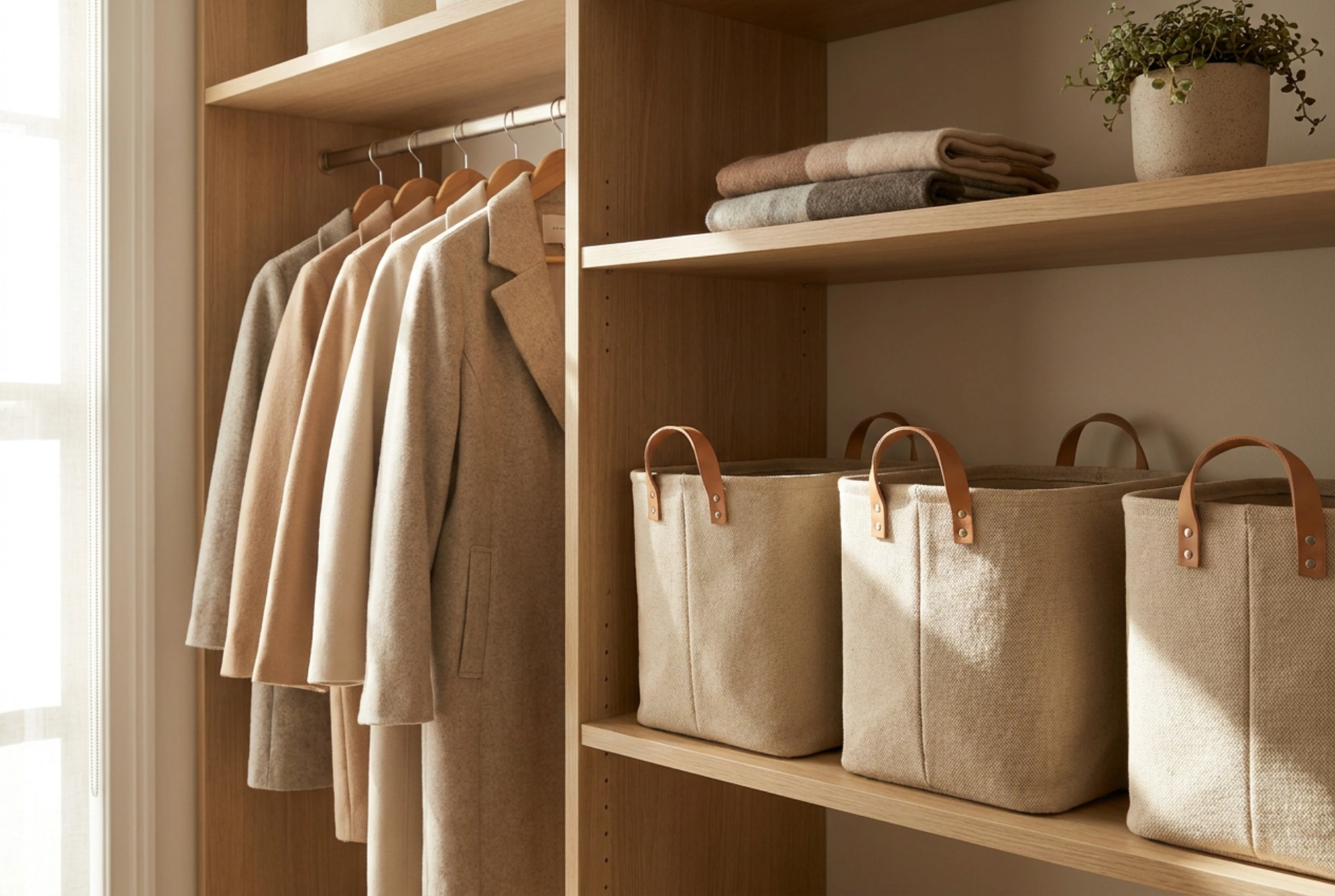


Optimising a small hallway wardrobe requires a systematic approach to structural load, volume compression, and microclimate control to keep heavy outerwear and bags accessible without damaging their physical structures.
Maximising Space Through Hanger Mechanics and Weight Distribution
The choice of hanger is not merely aesthetic; it directly affects the volume of space your garments occupy and how well they maintain their shape. Heavy winter coats made of wool or heavy synthetic blends exert significant gravitational pull, which can deform the shoulders of the garment if hung on thin wire hangers. Conversely, thick plastic hangers consume unnecessary horizontal rod space.
- Wooden Hangers: Best for heavy wool coats. The broad contoured shoulders mimic human anatomy, distributing the weight of the coat evenly and preventing the fabric from stretching or slipping.
- Metal Hangers with Non-Slip Coating: Ideal for lightweight jackets and raincoats. Their ultra-thin profile saves up to forty percent more horizontal space compared to wooden alternatives, while the rubberised coating prevents slick fabrics from sliding off.
To maximise efficiency, organise your coats by length rather than colour. By placing longer coats on one side and shorter jackets on the other, you clear valuable floor space beneath the shorter garments. This newly opened vertical zone can then be utilised for shoe racks or storage bins, effectively doubling the functional capacity of the wardrobe floor.
Preventing Material Deformation in Bags and Accessories
Bags are highly susceptible to structural damage when stored incorrectly in confined spaces. Suspending a heavy bag by its strap from a narrow hook concentrates the gravitational load on a tiny surface area. Over time, this tension stretches leather, cracks synthetic coatings, and weakens the stitching where the strap joins the main body of the bag.
To preserve the structural integrity of your bags, implement the following storage techniques:
- Wide S-Hooks: If hanging is your only option, use flat, wide-curved hooks that distribute the weight of the strap over a broader surface area. Empty the contents of the bag beforehand to reduce the constant gravitational pull.
- Shelf Dividers and Flat Storage: Storing bags upright on a shelf is the safest method. Use acrylic or metal shelf dividers to keep them vertical without crushing one another. For soft-sided bags, insert acid-free tissue paper or bubble wrap inside to help them maintain their shape.
- Canvas Baskets: Group small clutches and canvas tote bags into breathable fabric baskets. This keeps them compiled in one zone while protecting them from dust and friction.
Managing Relative Humidity and Airflow
Hallway wardrobes are high-traffic areas where damp coats, wet umbrellas, and dirty shoes are frequently introduced. This introduces moisture into a small, enclosed space, creating a microclimate with high relative humidity. Without proper management, this moisture can lead to musty odours, fabric degradation, and the growth of mould or mildew on organic materials like leather and wool.
To counteract this, always maintain a minimum gap of two centimetres between hanging garments. This small spacing allows for convective airflow, enabling ambient air to circulate and evaporate residual dampness. Avoid packing coats tightly together, as this traps humidity and compresses the loft of insulated jackets, reducing their thermal efficiency over time.
Additionally, place natural desiccant bags containing silica gel, activated charcoal, or cedarwood blocks inside the wardrobe. Silica gel actively adsorbs water molecules from the air, keeping the relative humidity within a safe range of forty to fifty percent, while activated charcoal neutralises organic odour molecules instead of merely masking them.
The Order of Operations for Seasonal Rotation
A small wardrobe cannot function efficiently if it is cluttered with off-season items. Implementing a twice-yearly rotation protocol is essential for reclaiming space.
First, thoroughly clean all garments before storing them away. Body oils, sweat, and microscopic food particles attract pests such as clothes moths. Woollen items should be brushed to remove surface dust, while synthetic jackets should be washed according to their care labels. Once completely dry, store off-season garments in breathable canvas garment bags or under-bed storage containers. Avoid airtight plastic bags for natural fibres, as they can trap residual moisture and cause yellowing or fabric rot over extended periods.