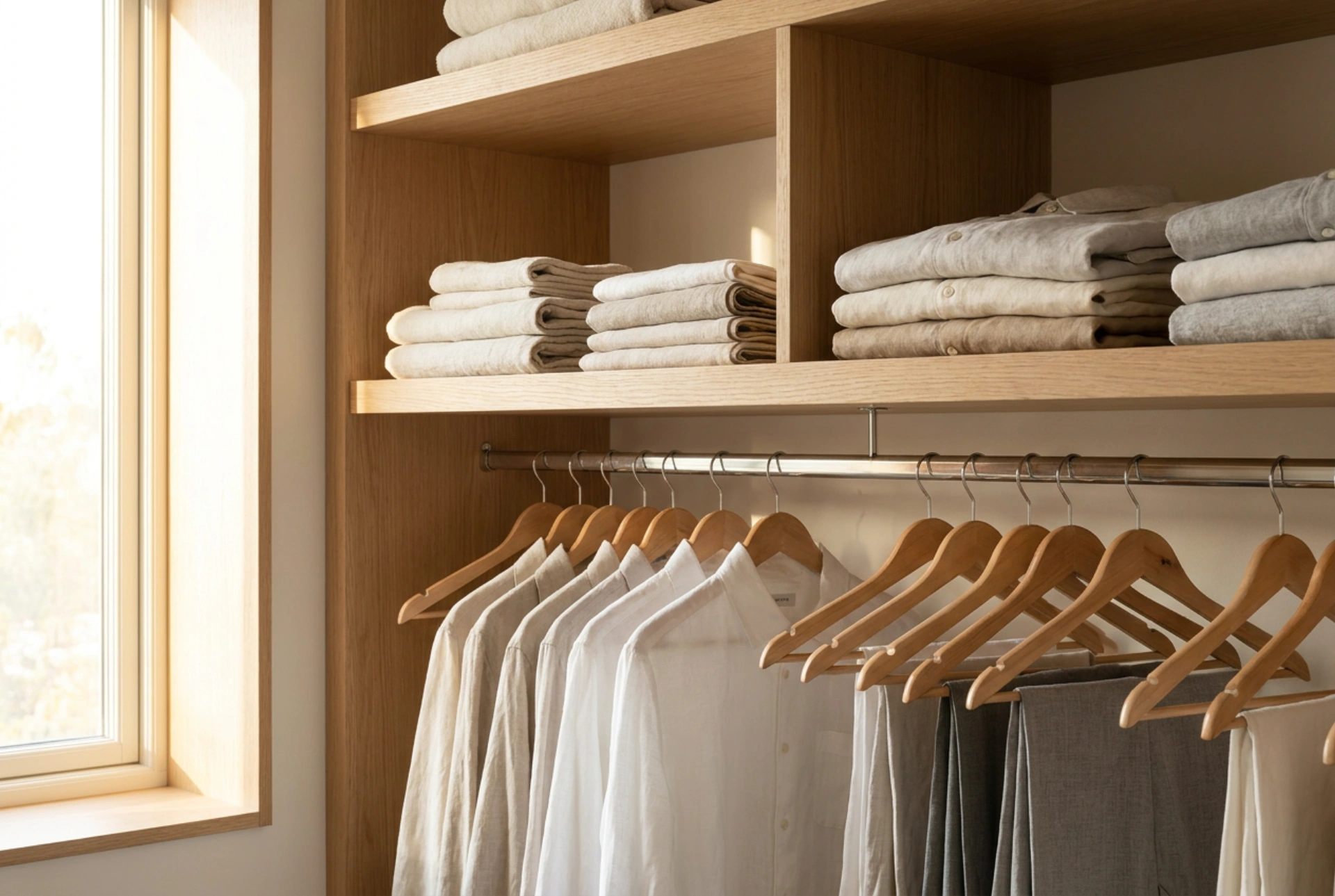


Designing an efficient wardrobe requires more than dividing space; it demands an understanding of human ergonomics, structural physics, and the material science of textiles. By planning your storage around gravity, air circulation, and reach zones, you can create a system that preserves your clothing and streamlines daily routines.
Ergonomic Zoning: Designing Around the Human Body
An efficient wardrobe relies on three distinct vertical zones based on physical reach and frequency of use. The primary zone, stretching from hip to eye level (approximately 70 to 160 centimetres from the floor), is the most accessible. This area should host daily wear, active drawers, and frequently used hanging rods. Positioning items here eliminates physical strain and reduces the time spent searching.
The lower zone, from the floor to hip height, is ideal for heavy items or pull-out systems. Heavy footwear, storage boxes, and laundry hampers sit here naturally, keeping the physical center of gravity of the wardrobe low and stable. The upper zone, above 160 centimetres, is reserved for seasonal rotation and lightweight items like bedding. Storing dense, heavy items high up creates physical strain during retrieval and poses structural risks to shelf supports over time.
Textile Physics: Airflow and Structural Support
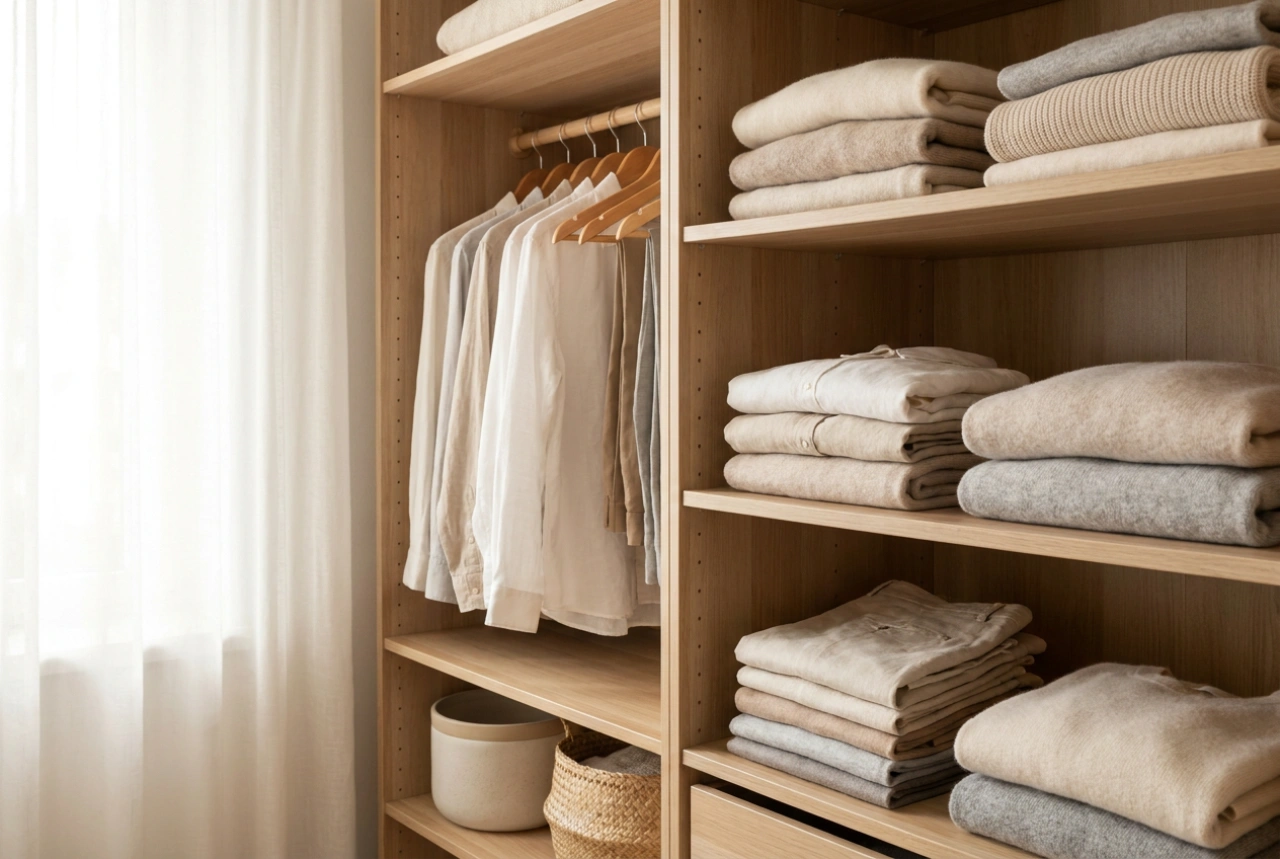
Clothing is made of natural and synthetic fibres that require specific environmental conditions to prevent degradation. Densely packed garments restrict airflow, trapping ambient humidity and creating microclimates ripe for mustiness or fibre rot. To prevent this, aim for a minimum of two centimetres of clearance between hung items on a rod.
- Hanging vs. Folding: Heavy knitwear, such as wool and cashmere, should never be hung. Gravity pulls the loose knit structure downward, permanently distorting the shoulders and lengthening the garment. These must be stored flat. Conversely, structured garments like blazers and linen shirts require contoured wooden hangers to distribute weight across the shoulder seams and maintain their tailored shape.
- Stack Depth and Compression: Deep shelves often lead to double-stacking, where clothes behind are forgotten and air circulation is completely blocked. Keep shelves shallow (around 30 to 35 centimetres deep) or use fully extending drawers to bring the contents into the light. High stacks of folded clothing compress the bottom items, crushing fibres and locking in stubborn creases. Limit folded piles to no more than five items high.
Optimising Volumetric Ratios and Linear Capacity
To design a balanced layout, calculate your storage needs in linear meters. Measure your existing collection of long hanging items (coats, dresses) and short hanging items (shirts, trousers). Long hanging requires a vertical clearance of 130 to 150 centimetres, while short hanging only needs 90 to 110 centimetres. Utilizing double hanging rods—one above the other—doubles your capacity for short garments within the same footprint.
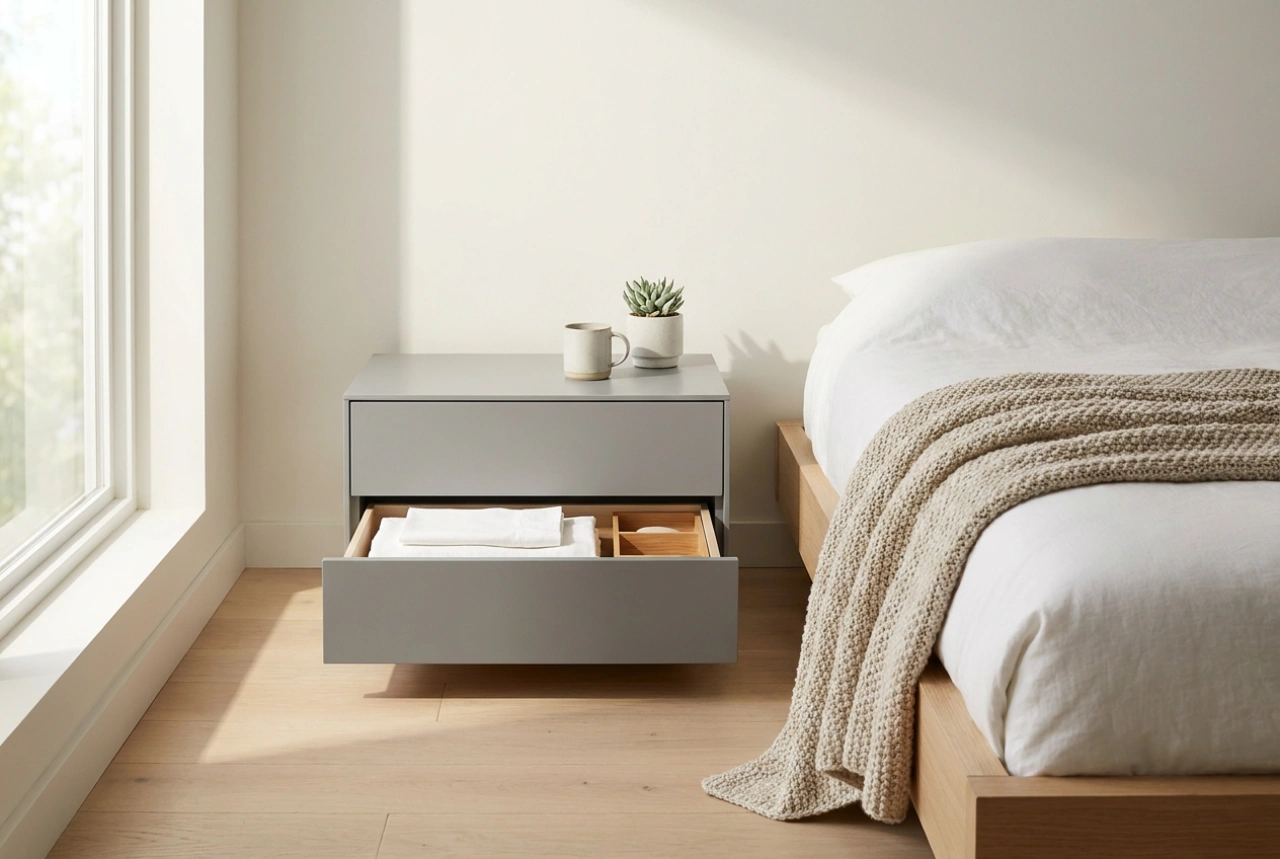
Drawers are chemically and physically superior for storing smaller items like undergarments and socks. Using shallow drawers with adjustable internal dividers prevents items from shifting and bunching when the drawer is operated. This layout utilizes the entire volume of the drawer container, preventing wasted vertical space that occurs when small items are placed on deep, open shelves.
Material Integrity and Environmental Factors
The materials you select for your wardrobe interiors directly impact the lifespan of your textiles. Raw, unsealed wood can release natural acids and organic compounds over time, which can yellow delicate fabrics like silk and fine cotton. Ensure all internal surfaces are finished with non-reactive, stable materials such as high-pressure laminates or water-based, solvent-free sealants. Adequate ventilation is also essential; incorporating small, discrete ventilation grilles in the backing panel or doors allows continuous air exchange, balancing humidity levels and protecting your wardrobe from stagnant air pocket formation.