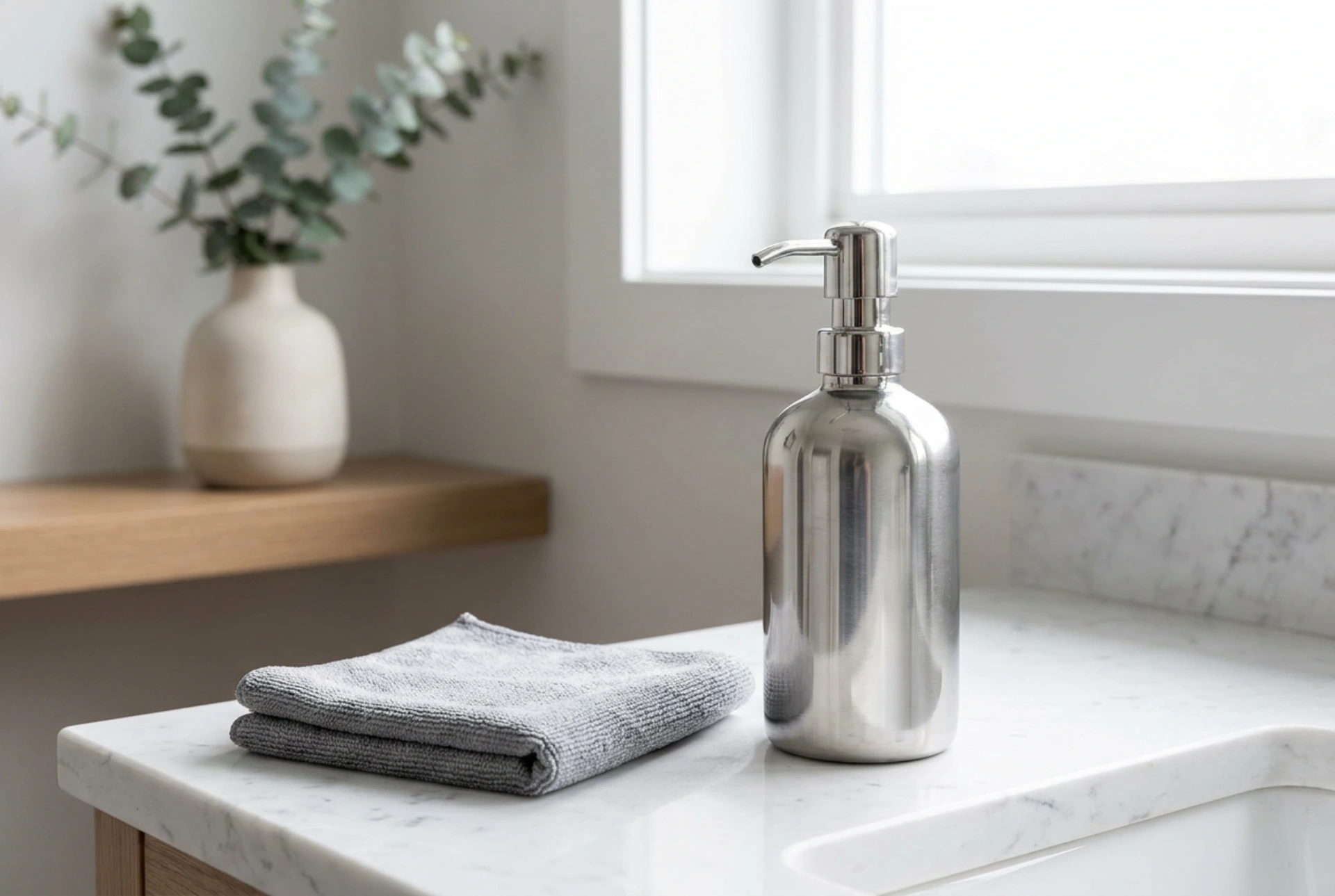


Maintaining the pristine, mirror-like finish of a metallic toilet brush holder requires understanding how mineral deposits interact with polished surfaces. By applying the principles of chemistry and correct physical techniques, you can eliminate stubborn water stains and prevent future streaks without scratching the delicate metallic plating.
Understanding the Enemy: Mineral Scaling and Soap Scum
The unsightly white spots and streaks on your metallic bathroom accessories are not just dried water. They are primarily calcium carbonate and magnesium deposits, commonly known as limescale, left behind when hard tap water evaporates. When these minerals combine with airborne soap particles and humidity, they form a resilient film that clings to smooth surfaces. Traditional scrubbing with abrasive pads will permanently micro-scratch polished chrome or stainless steel, dulling its reflective capacity. To safely remove these deposits, you must dissolve them chemically rather than scraping them off mechanically.
Chemical Dissolution Without Surface Damage
To break down the alkaline minerals without degrading the protective electroplated layer of your accessory, you need a mild, controlled acid. Strong mineral acids or chlorine-based cleaners can cause pitting and irreversible discoloration on silver-toned metallic surfaces. Instead, rely on weak organic acids.
- Citric Acid Solution: Dissolve one tablespoon of citric acid powder in 250 ml of warm distilled water. Distilled water is crucial because it contains no minerals of its own, ensuring a completely clean rinse.
- Diluted Acetic Acid (White Vinegar): A 1:1 mixture of standard white vinegar and distilled water works exceptionally well for dissolving light mineral bonds.
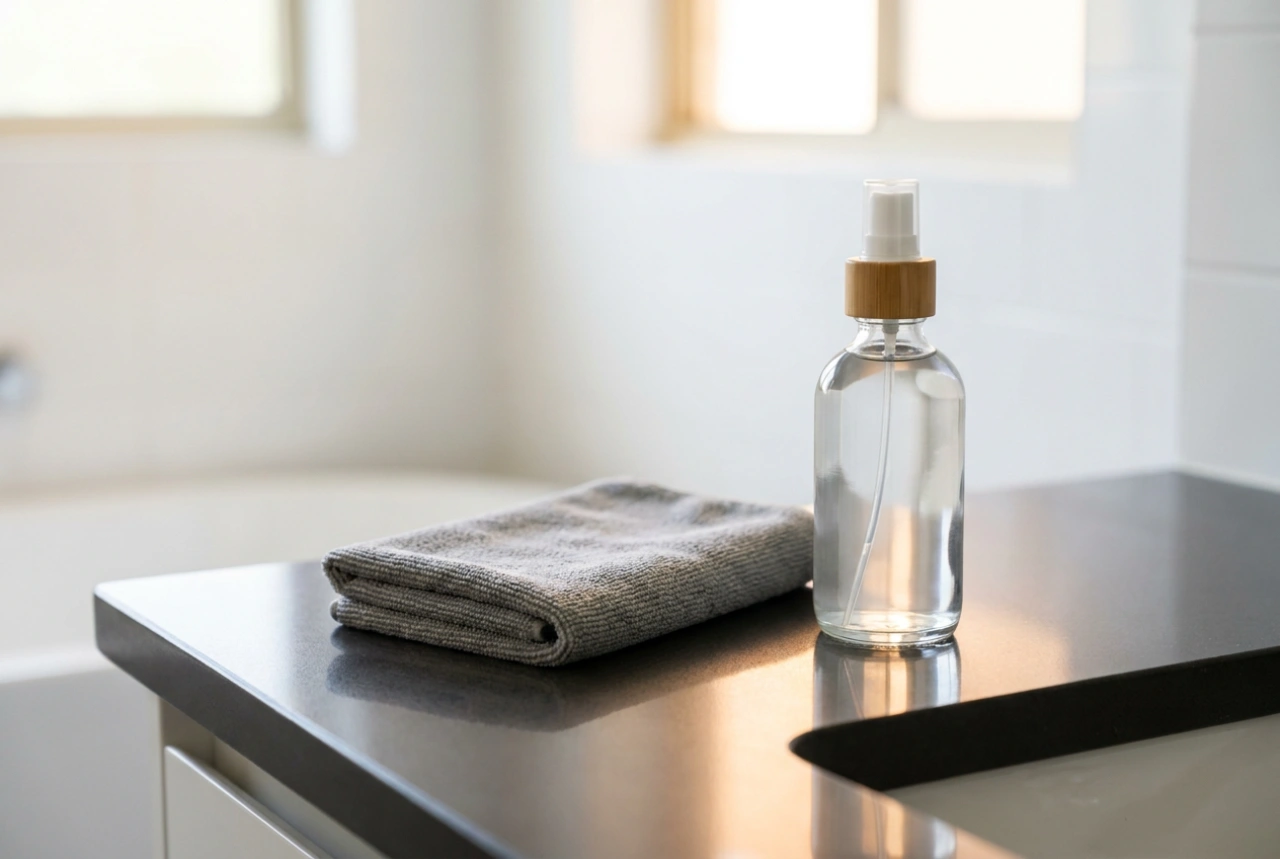
Apply the solution using a soft spray bottle. Allow the acid to sit on the surface for two to three minutes. This gives the hydrogen ions enough time to break down the calcium carbonate matrix into water-soluble calcium salts, which can then be effortlessly wiped away.
The Physics of Wiping: Direction, Materials, and Temperature
The technique used to wipe and dry the metallic holder determines whether you achieve a streak-free shine. Standard cotton towels leave behind microscopic lint fibres and retain too much moisture, which leads to slow evaporation and subsequent spotting. Instead, use a high-density, split-fibre microfiber cloth.
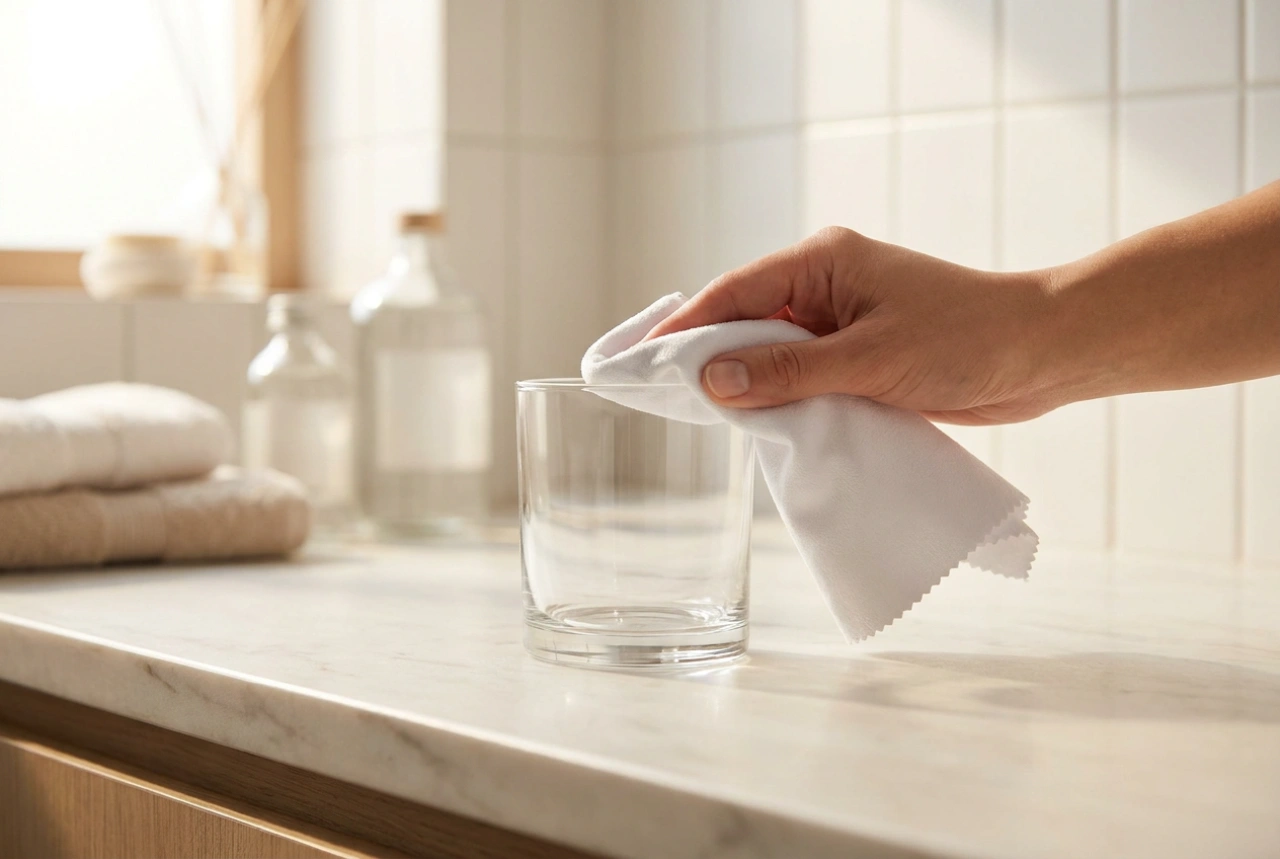
First, rinse the dissolved mineral residue off the holder using lukewarm water. Warm water lowers the surface tension of the liquid, allowing it to sheet off more easily. Immediately follow with a dry, clean microfiber cloth. Wipe in consistent, single-direction linear motions—either vertically or horizontally—rather than circular patterns. Circular wiping tends to redistribute tiny mineral particles and oil residues, creating visible halos under overhead bathroom lighting.
Creating a Hydrophobic Barrier to Prevent Future Water Spots
Once the metallic surface is clean and dry, you can apply material science to prevent future spotting. By reducing the surface energy of the metal, you can force water droplets to bead up and roll off rather than flattening and evaporating in place. This is achieved by applying a micro-thin hydrophobic layer.
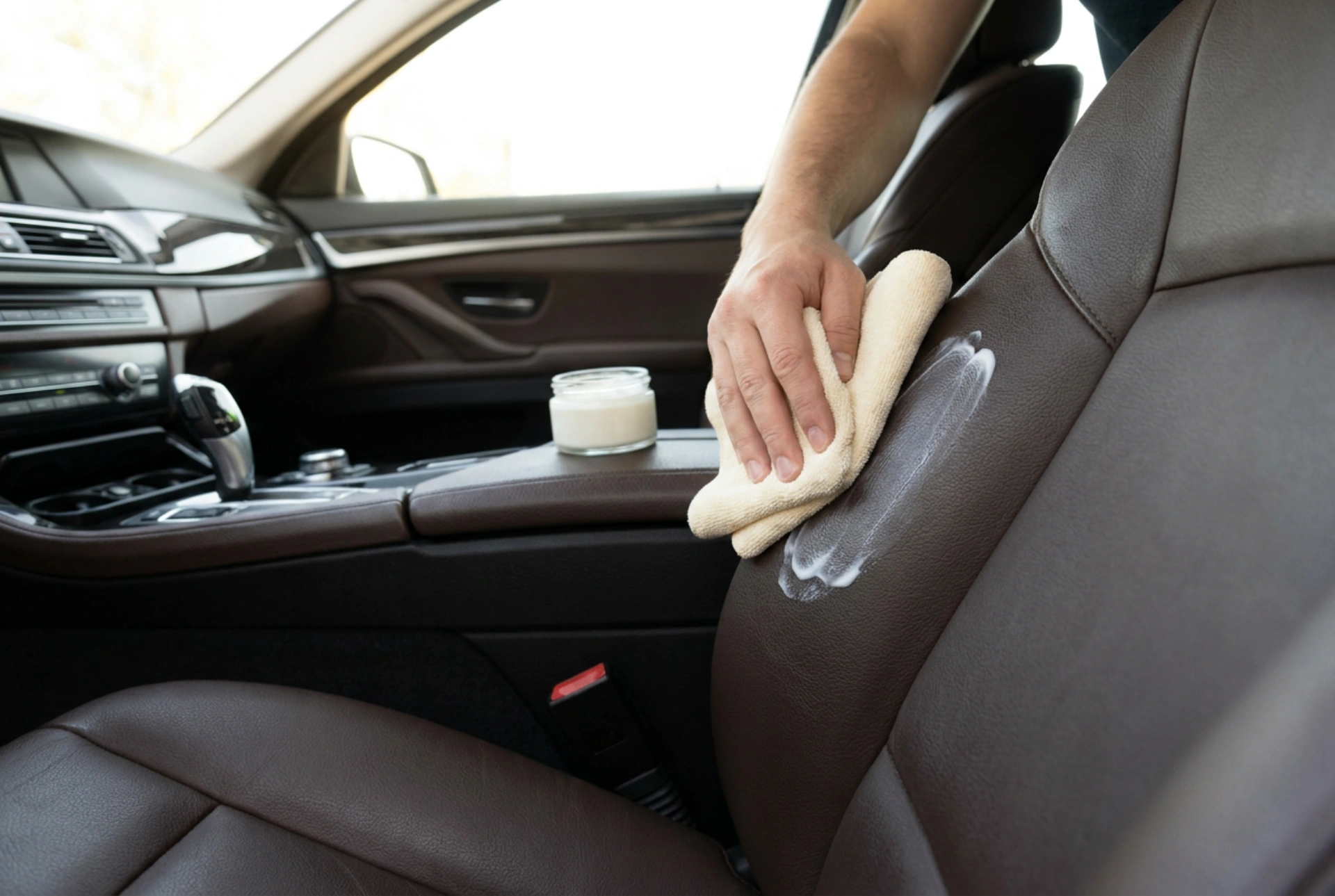
Place a single drop of pure mineral oil or liquid paraffin onto a dry microfiber cloth and buff it thoroughly into the clean metallic surface. The oil fills the microscopic imperfections of the metal, creating a slick, water-repellent barrier. When water splashes onto the holder, it will slide down to the base instead of drying on the polished body. This simple step reduces the frequency of cleaning by up to eighty percent.
Weekly Maintenance Routine Checklist
- Step 1: Spray the holder with a 5% citric acid solution to dissolve active mineral deposits.
- Step 2: Wipe down with a damp microfiber cloth to remove dissolved salts.
- Step 3: Buff dry immediately with a clean, dry microfiber cloth using linear strokes.
- Step 4: Apply a microscopic layer of mineral oil once a month to maintain the hydrophobic protection.