

Maintaining a pristine white shoe cabinet and hallway requires more than superficial dusting; it demands an understanding of material science, friction mechanics, and chemical interactions. White surfaces immediately highlight carbon black scuffs from rubber soles and organic soil, making structured preventative care essential.
The Science of White Surfaces and Soil Adhesion
White shoe cabinets, typically made from melamine-faced chipboard or polyurethane-lacquered MDF, are highly susceptible to electrostatic charge. Synthetic finishes naturally accumulate static electricity through friction during daily use, actively pulling fine ambient dust from the air. When shoes are placed inside, the physical contact between the rubber or thermoplastic elastomer soles and the white shelf creates a mechanical transfer of carbon black—the reinforcing agent used in shoe manufacturing. This friction leaves stubborn black streaks that cannot be removed by simple dusting because the polymer chains of the sole have mechanically bonded with the micro-textured surface of the cabinet finish.
Chemical Principles of Safe and Effective Cleansing
To remove scuffs and dirt without degrading the protective topcoat of your white furniture, you must avoid abrasive physical cleaners. Scouring powders containing calcium carbonate or silica create microscopic scratches on the lacquer. While these scratches might seem invisible at first, they permanently ruin the gloss level and create microscopic valleys where dirt, moisture, and fungal spores can easily lodge, making future cleaning progressively harder.
- Surfactants for Polar Soil: Use mild non-ionic surfactants dissolved in warm water. These molecules lower the surface tension of water, allowing it to penetrate and emulsify greasy, organic dirt carried in from the streets.
- Isopropyl Alcohol for Polymeric Scuffs: For rubber heel marks, apply a small amount of isopropyl alcohol at seventy percent concentration to a microfiber cloth. The alcohol acts as a mild solvent that swells the rubber residue without dissolving the underlying polyurethane lacquer or melamine resin, allowing you to wipe the scuff away easily.
- Oxygen Bleach for Disinfection: To tackle yellowing or organic stains inside the compartments, a diluted solution of sodium percarbonate (oxygen-based bleach) is highly effective. It breaks down chromophores through oxidation without releasing corrosive chlorine gas, preserving the bright white polymer.
Moisture Management and Airflow Dynamics
An enclosed shoe cabinet is a microclimate. Wet footwear introduces liquid water and organic debris, creating a high-humidity environment with restricted airflow. This promotes the hydrolysis of shoe glues and provides an ideal breeding ground for bacteria and mold. To prevent this, never store shoes immediately after wearing. Allow them to air-dry and cool down to ambient room temperature for at least two hours. Inside the cabinet, ensure a minimum of two centimeters of clearance between the shoe tops and the shelf above to facilitate natural convective airflow. Placing moisture-absorbing silica gel packs or activated charcoal inserts in the rear corners will actively lower the relative humidity and adsorb volatile organic compounds that cause unpleasant odors.
Preventative Physics: Barriers and Material Protection
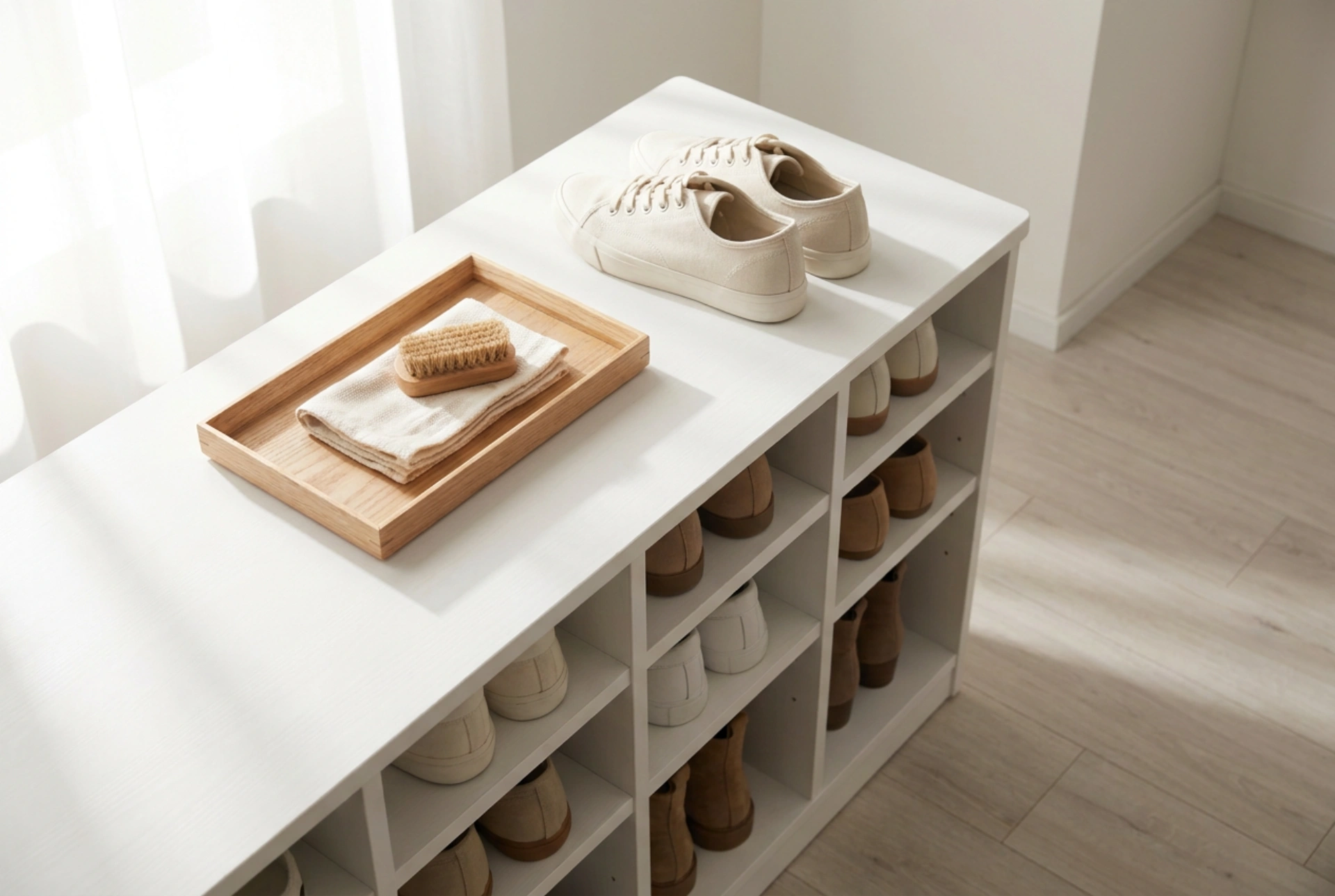
The most effective maintenance strategy is physical isolation. Outfitting your white shelves with custom-cut, transparent ethylene-vinyl acetate or silicone liners prevents direct contact between the shoe soles and the melamine surface. These liners feature high chemical resistance, are non-porous, and can be easily removed and washed under running water. Additionally, using a natural wood valet tray on top of the cabinet provides a designated physical boundary for keys, coins, and metal objects, preventing localized impact damage and scratches to the delicate white top surface.