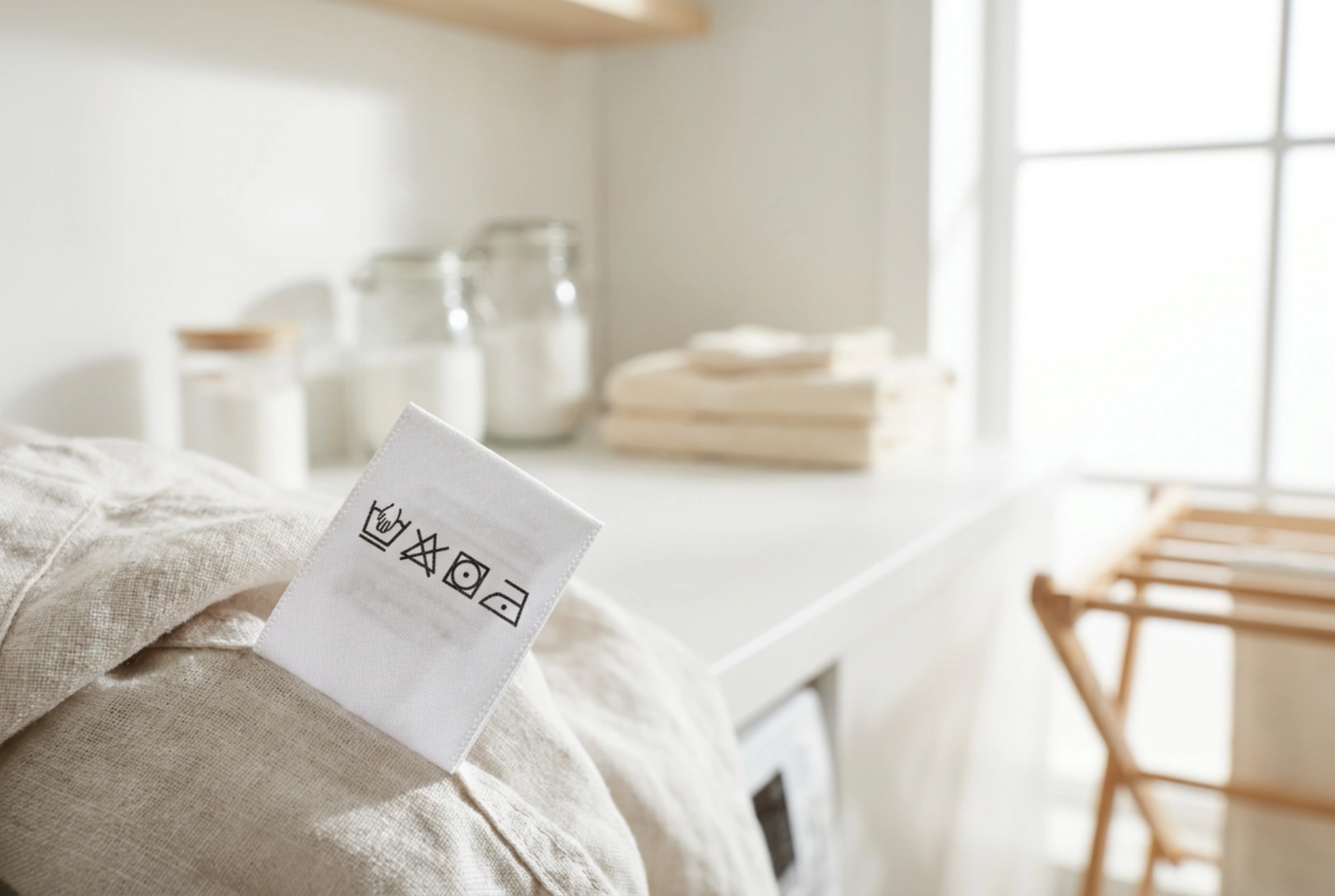


Fabric care labels are not merely suggestions; they are chemical blueprints designed to preserve textile integrity against thermal and mechanical stress. Understanding the science behind these symbols and how solvents interact with specific fibres is key to preventing irreversible garment damage.
The Science of Solvents: Why Dry Cleaning Prevents Distortion
To understand why certain garments require dry cleaning, we must examine the molecular interaction between fibres and liquids. Water is a highly polar solvent. When hydrophilic natural fibres, such as wool or silk, are immersed in water, the water molecules penetrate the amorphous regions of the fibre polymer chains. This breaks the temporary hydrogen bonds holding the chains together, causing the fibres to swell and lose strength. During mechanical agitation in a washing machine, these swollen fibres frictionally lock against each other, a process known as felting in wool, leading to permanent shrinkage.
In contrast, professional dry cleaning utilizes non-polar liquid solvents instead of water. Historically, tetrachloroethylene has been the industry standard due to its excellent ability to dissolve non-polar soils like oils, grease, and fats. Because non-polar solvents do not penetrate the crystalline structure of polar fibres, the fibres do not swell, and the hydrogen bonds remain intact. Today, gentler alternatives like hydrocarbon solvents are also used to minimize mechanical strain and protect delicate finishes while effectively dissolving oily binders that trap dirt within the weave.
Decoding the Circle: Professional Care Symbols Explained
The circle symbol on a textile label designates professional textile care. Within this circle, specific letters dictate the precise chemical and thermal environment required to clean the garment safely.
- The Letter P: Indicates that the garment can be cleaned using tetrachloroethylene as well as hydrocarbon solvents. This is the most common cycle, suitable for sturdy synthetics and robust natural fibres.
- The Letter F: Limits solvent choices to hydrocarbons or specialized petroleum-based solvents. These have a higher flash point and milder dissolving power, making them ideal for delicate fabrics or garments with glued-on embellishments.
- The Letter W: Denotes professional wet cleaning. This uses highly controlled machinery to regulate mechanical action, water levels, and temperature, alongside specialized detergents to prevent fibre swelling.
- Underline Bars: A single bar beneath the circle mandates a mild process with reduced mechanical action. A double underline indicates a very mild process, reserved for highly sensitive textiles that cannot withstand physical agitation.
Washing, Bleaching, and the Physics of Thermal Stress
When caring for garments at home, the wash tub symbol dictates the maximum safe temperature and mechanical stress. Temperature limits are directly tied to the glass transition temperature of synthetic polymers. Exceeding this thermal threshold can cause synthetic fibres like polyester or nylon to soften, leading to permanent wrinkling, loss of pleats, or structural weakening.
The bleaching symbol (a triangle) governs chemical oxidation. A blank triangle allows for any oxidative bleach, including chlorine-based agents. However, chlorine bleach is highly alkaline and can degrade protein-based fibres like wool by hydrolyzing their peptide bonds. A triangle with two diagonal lines permits only oxygen-based (non-chlorine) bleach, which uses hydrogen peroxide chemistry to break down color-causing molecules without destroying delicate fibre structures.
How to Assess Garments Before Cleaning
Before executing any cleaning regimen, perform a systematic material assessment. First, identify the fibre blend. Protein fibres (wool, silk) and cellulose fibres (rayon, viscose) are prone to water damage and should default to professional dry cleaning if labeled. Second, inspect construction details; tailored jackets contain internal structural linings held together by adhesives that can dissolve in water or aggressive solvents. Finally, check for embellishments such as plastic buttons or sequins, which may degrade when exposed to heat and chemical solvents.