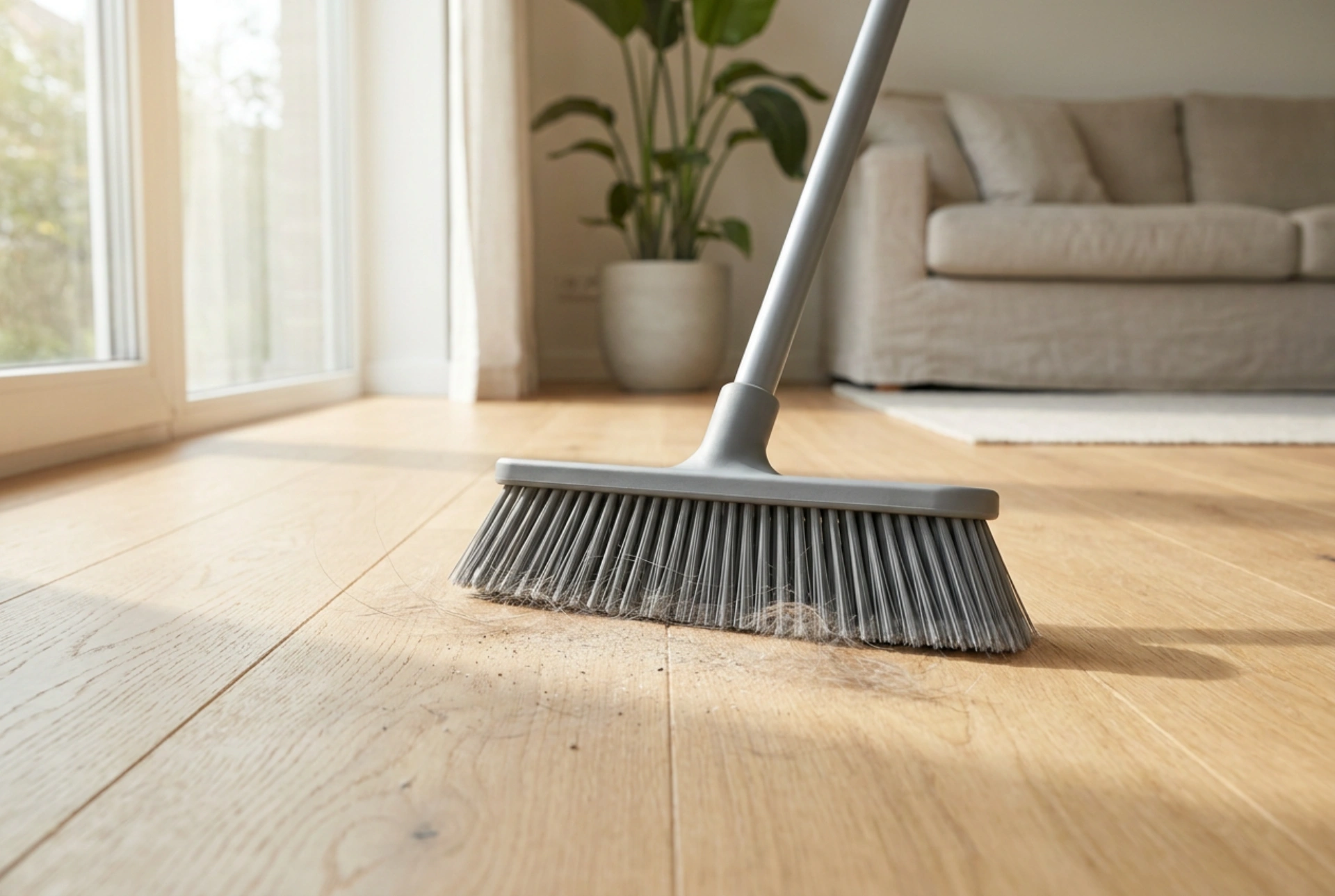


Silicone brooms offer a unique mechanical advantage over traditional bristles by utilising electrostatic attraction and surface friction to capture dust, hair, and fine debris without dispersing them into the air.
The Physics of Silicone vs. Traditional Bristles
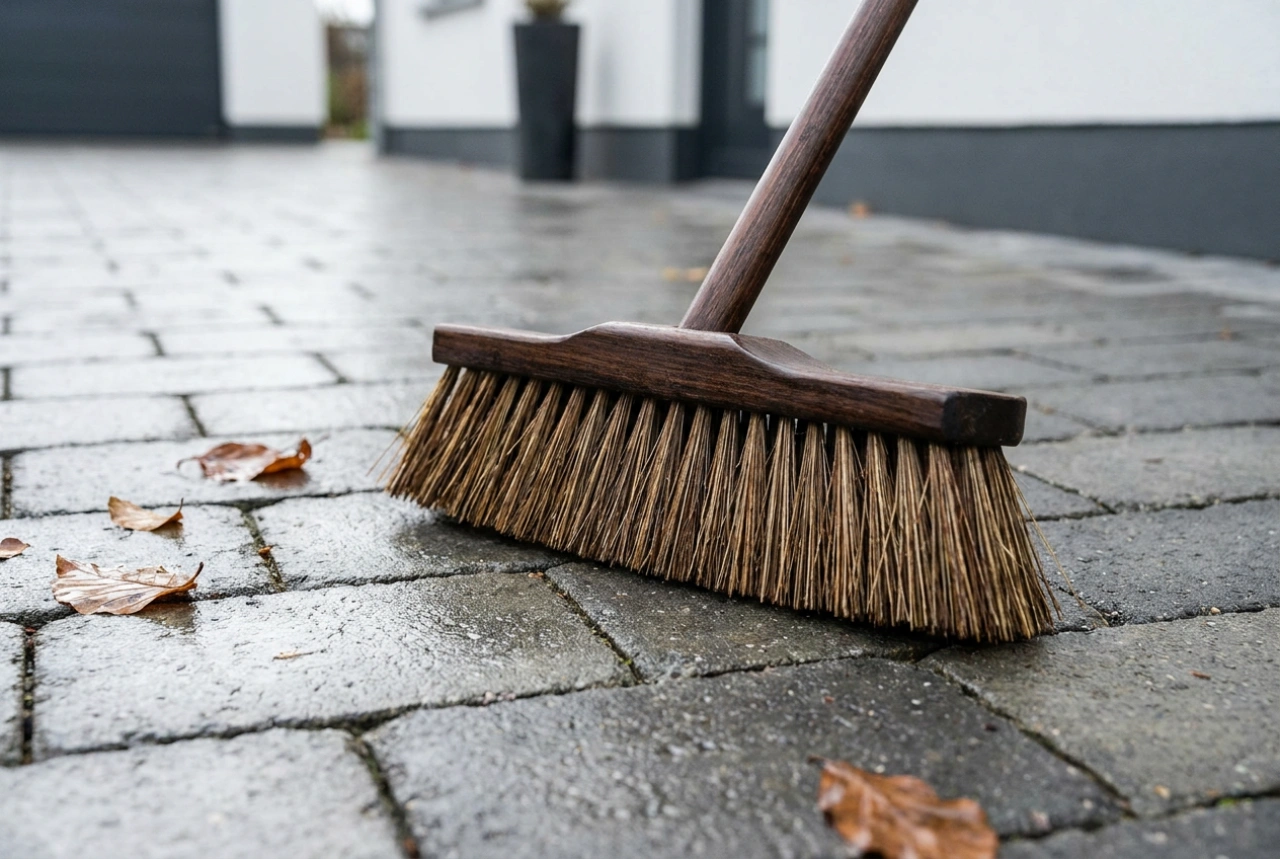
Traditional brooms rely on thousands of fine synthetic or natural fibers to sweep debris. While effective for larger particles, these bristles create turbulence as they bend and snap back, launching microscopic dust particles and allergens back into the air. This dispersion is a result of low surface contact area per bristle and the lack of a continuous sealing edge.
Silicone brooms solve this issue through material science. Silicone is a flexible elastomer with a high coefficient of friction. When pulled across a hard surface, the silicone blades or dense, rubberised nubs bend slightly, creating a continuous seal against the floor. This physical barrier prevents air from flowing underneath, trapping even the smallest particles. Furthermore, the friction between silicone and flooring materials (such as oak wood, ceramic tiles, or vinyl) generates a negative electrostatic charge. This static charge acts like a magnet, attracting lightweight particles such as pet dander, hair, and fine dust directly to the broom head rather than allowing them to float away.
Optimising the Sweep: Techniques and Movements
To maximise the efficiency of a silicone broom, the user must adjust their sweeping technique. Unlike standard brooms that require short, flicking motions, silicone brooms perform best with long, continuous pulling strokes.
- The Pull Motion: Place the broom head flat on the floor slightly ahead of you and pull it toward your body in a smooth, steady motion. Keeping the broom head at an angle of approximately 45 degrees ensures optimal contact between the silicone edge and the floor surface, maximising electrostatic build-up.
- Transitioning to Carpets: On low-pile rugs or carpets, the high friction of silicone is highly effective at extracting embedded pet hair. Use short, firm pulling strokes. The rubberised tips grab the fibers of the carpet, pulling up hair that vacuum cleaners often miss due to the binding nature of textile fibers.
- Controlling the Boundary: When approaching walls or baseboards, use the edge of the silicone head to scrape along the junction. The elasticity of the material allows it to deform and conform tightly to corners, leaving no blind spots.
Wet Applications and Liquid Management
Because silicone is non-porous and hydrophobic, it does not absorb water, oils, or cleaning solutions. This makes it an exceptional tool for managing wet spills or washing floors.
When liquid is present on a tile or concrete floor, a silicone broom functions as a highly efficient squeegee. By applying moderate downward pressure, you create a dry line that pushes liquid forward. This mechanism relies on surface tension: the continuous silicone blade breaks the liquid's surface tension, pooling it together and allowing it to be directed toward a drain or collected with a microfiber cloth. Unlike foam or sponge mops, which saturate and spread dirty water around, the hydrophobic barrier of silicone ensures that the dirty liquid is entirely displaced from the floor surface.
Hygiene and Material Maintenance
Traditional bristle brooms quickly become breeding grounds for bacteria, mould, and dust mites because organic debris and moisture get trapped deep within the bristle clusters. Cleaning them is difficult and often ineffective.
Silicone is chemically inert and highly resistant to temperature extremes and microbial growth. Cleaning a silicone broom requires minimal effort and maintains perfect hygiene:
- Rinsing: After sweeping or managing a wet spill, simply rinse the broom head under warm running water. Because silicone is hydrophobic, particles of dirt and hair will detach instantly.
- Sanitising: For deep disinfection, the silicone head can be washed with a mild chlorine-free detergent or even dipped in hot water (up to 100 degrees Celsius) without risk of warping or losing elasticity.
- Drying: Shake the broom gently to remove excess water droplets. It dries almost instantly, preventing the formation of damp-related odours or bacterial colonies.