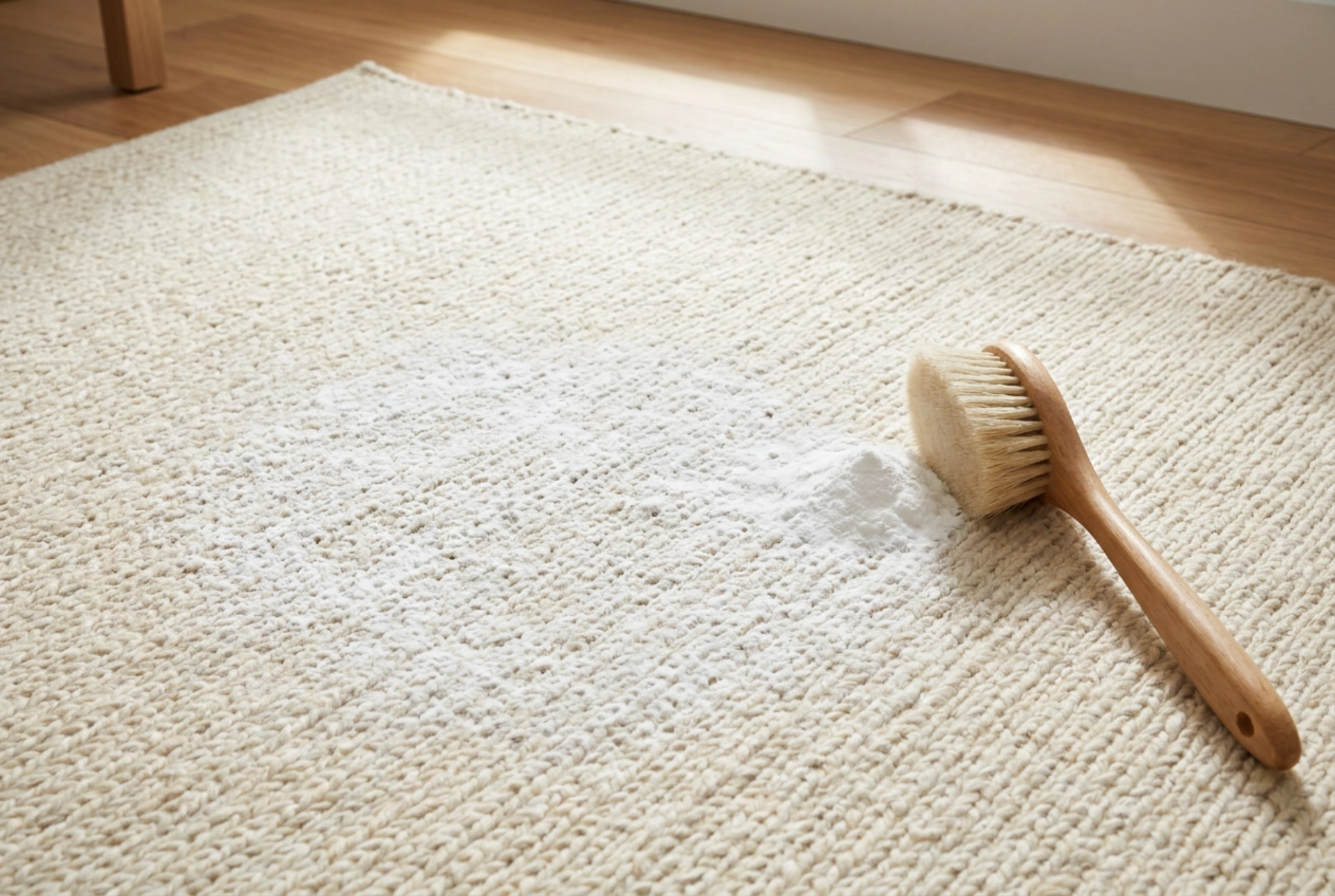


Dry carpet cleaning powders offer a highly effective, low-moisture method to lift bound oily soils from fibers without risking structural damage or fiber shrinkage. Understanding the chemical and physical mechanisms behind these compounds helps you achieve professional maintenance results at home while avoiding the pitfalls of over-saturation.
The Science of Adsorption: How Cleaning Powders Work
At the microscopic level, dry carpet cleaning powders operate on the principles of adsorption and capillary action. The powder is not merely a dry dust; it is typically composed of a porous carrier material—such as natural cellulose, polymer micro-sponges, or processed starch—which is pre-impregnated with a precise balance of water, mild solvents, and biodegradable surfactants. This mixture remains damp to the touch but does not contain free-flowing liquid.
When applied to the carpet, the surfactants in the mixture lower the surface tension of the oily films coating the carpet fibers. This allows the solvents to dissolve these hydrophobic soils, breaking their bond with the textile. Because the carrier particles have an incredibly high surface-area-to-volume ratio, they act as tiny sponges. Through capillary action, the suspended soil and solvent are drawn away from the carpet fiber and absorbed deep into the porous structure of the powder particles. As the carrier dries, the dirt remains chemically locked within the encapsulated powder, ready for removal.
When to Choose Low-Moisture Powder Over Wet Extraction
While hot water extraction is highly effective for deep restoration, dry powder cleaning is the superior choice under specific environmental and material conditions. Moisture is the primary enemy of certain carpet backings and natural fibers. For instance, wool and jute-backed carpets are highly susceptible to shrinkage, warping, and cellulosic browning when subjected to excessive water. Dry powder eliminates these risks entirely.
Furthermore, dry powder is invaluable when rapid turnaround times are required. Traditional wet cleaning can leave carpets damp for 12 to 24 hours, creating an ideal breeding ground for mold spores and dust mites. In contrast, a low-moisture powder system allows the carpet to be walked on immediately after vacuuming, making it highly practical for high-traffic hallways, home offices, and living spaces where long drying phases are disruptive.
The Crucial Role of Mechanical Agitation
Simply sprinkling the powder onto the carpet is insufficient; the chemical process relies heavily on physical manipulation to succeed. To facilitate the transfer of dirt, the powder must be actively worked into the carpet pile using a soft to medium-bristled brush. This mechanical agitation serves several critical functions:
- Pile Opening: Brushing separates the individual carpet fibers, allowing the cleaning particles to penetrate deep down to the base of the pile where heavy grit accumulates.
- Frictional Transfer: The physical rubbing action forces the solvent-laden powder into direct contact with the soiled fiber surfaces, accelerating the chemical detachment of grease and dust.
- Distribution: It ensures an even distribution of the active carrier particles, preventing localized saturation or dry spots.
When brushing, it is best to use a combination of linear and cross-directional strokes. This multidirectional agitation ensures that all sides of the twisted yarn fibers are treated, maximizing soil recovery.
A Step-by-Step Technique for Flawless Results
To achieve optimal soil extraction, follow a structured sequence of operations designed to respect the physical properties of both the fiber and the cleaning agent:
- Dry Soil Evacuation: Vacuum the area thoroughly using a vacuum cleaner equipped with a brush roll to remove up to 80% of loose, non-bound dry soil first. This prevents the cleaning powder from becoming overloaded with easily extractable dust.
- Powder Distribution: Scatter the powder evenly across the target area, focusing on high-contact zones where foot traffic transfers skin oils and outdoor grime.
- Agitation: Using a soft-bristled brush, work the powder into the carpet pile with firm, consistent, cross-directional strokes to ensure maximum integration without fraying delicate fibers.
- Dwell and Evaporation: Allow the powder to sit undisturbed for 30 to 45 minutes. During this phase, the solvent carrier evaporates, completing the encapsulation process and leaving the dirt bound inside dry, non-sticky crystals.
- Final Extraction: Vacuum the carpet slowly and thoroughly in multiple directions to lift the spent powder particles completely from the pile.